Rockwell's Table
In Stockbridge, Massachusetts, Norman Rockwell's Thanksgiving feast hangs on a museum wall. A short drive away in the village, the Red Lion Inn keeps welcoming real people to its tables. One scene is perfect and permanent. The other must be made again, every time.
You know the painting before you see it. A grandmother in an apron lowers a roasted turkey onto a crowded table. A grandfather stands at the head, hands ready. Faces turn toward the bird from both sides — smiling, mid-conversation, caught in the second before a meal begins. For more than eighty years, Freedom from Want has been the visual shorthand for American Thanksgiving.
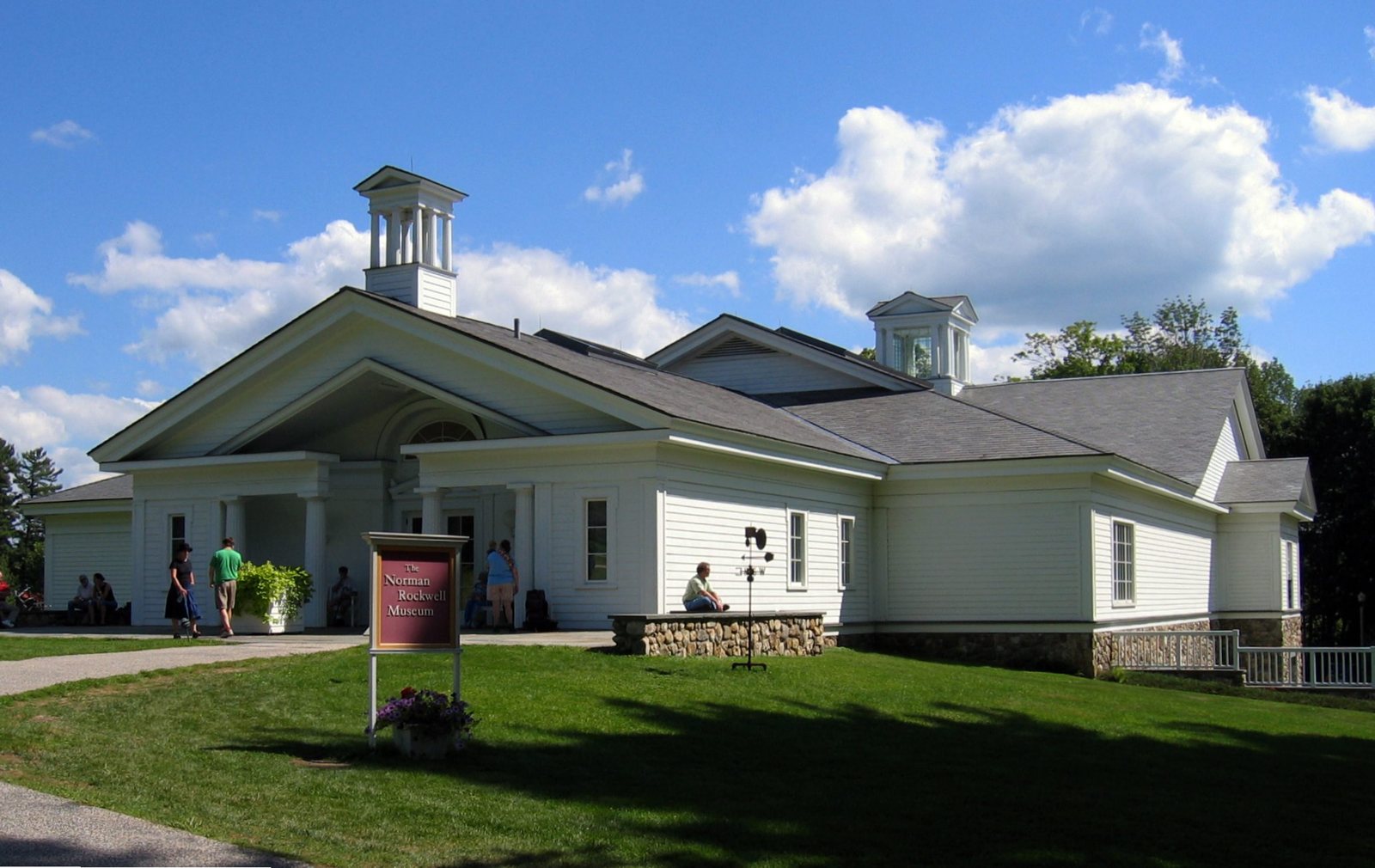
At the Norman Rockwell Museum in Stockbridge, in the Berkshires of western Massachusetts, the original is smaller than its reputation, a canvas less than four feet tall. Standing before it, a visitor might lean closer, the way you do when someone lowers their voice.
Up close, details lost in reproductions become visible: crystal water glasses catching the light, a celery dish and a fruit bowl at the center of the table, cranberry sauce no one has touched yet. At the lower right, a man's face turns partly out of the picture, glancing toward whoever is standing in the gallery.
That glance is a clue. The family in the painting never sat at that table together.
A family, assembled one by one
Rockwell made the picture during the Second World War, as one of four paintings inspired by Franklin D. Roosevelt's promise of basic freedoms. It was published in The Saturday Evening Post, paired with an essay by Filipino American writer Carlos Bulosan.
At the time, Rockwell was living in Arlington, Vermont. Every figure is a friend, family member, or neighbor, photographed individually in his studio and then painted into the scene. Rockwell's wife, Mary, and his mother, Nancy, are among them. The man at the lower right, glancing out at the viewer, is neighbor Jim Martin — a figure who appears in all four Four Freedoms paintings.
The woman placing the turkey is Mrs. Thaddeus Wheaton, the Rockwell family's cook. She modeled the matriarch and she cooked the real bird. Rockwell photographed her presenting the turkey on Thanksgiving Day 1942, and the Rockwell family ate the turkey afterward. Her husband stands at the head of the table. The setting itself was based on Rockwell's own dining room in Arlington.
The painting is not a record of a single dinner. During wartime, Rockwell assembled the dinner portrait by portrait, using people from his own road.
All four Freedoms now hang together in Stockbridge, in a gallery designed for the paintings. In 1973, Rockwell placed his personal collection in trust with the museum — a trust that includes all four Freedoms and another Stockbridge image that matters once you leave the gallery: Stockbridge Main Street at Christmas. The freedom celebrated in those paintings had been fought for in this valley long before Rockwell arrived.
The town Rockwell moved to, and painted
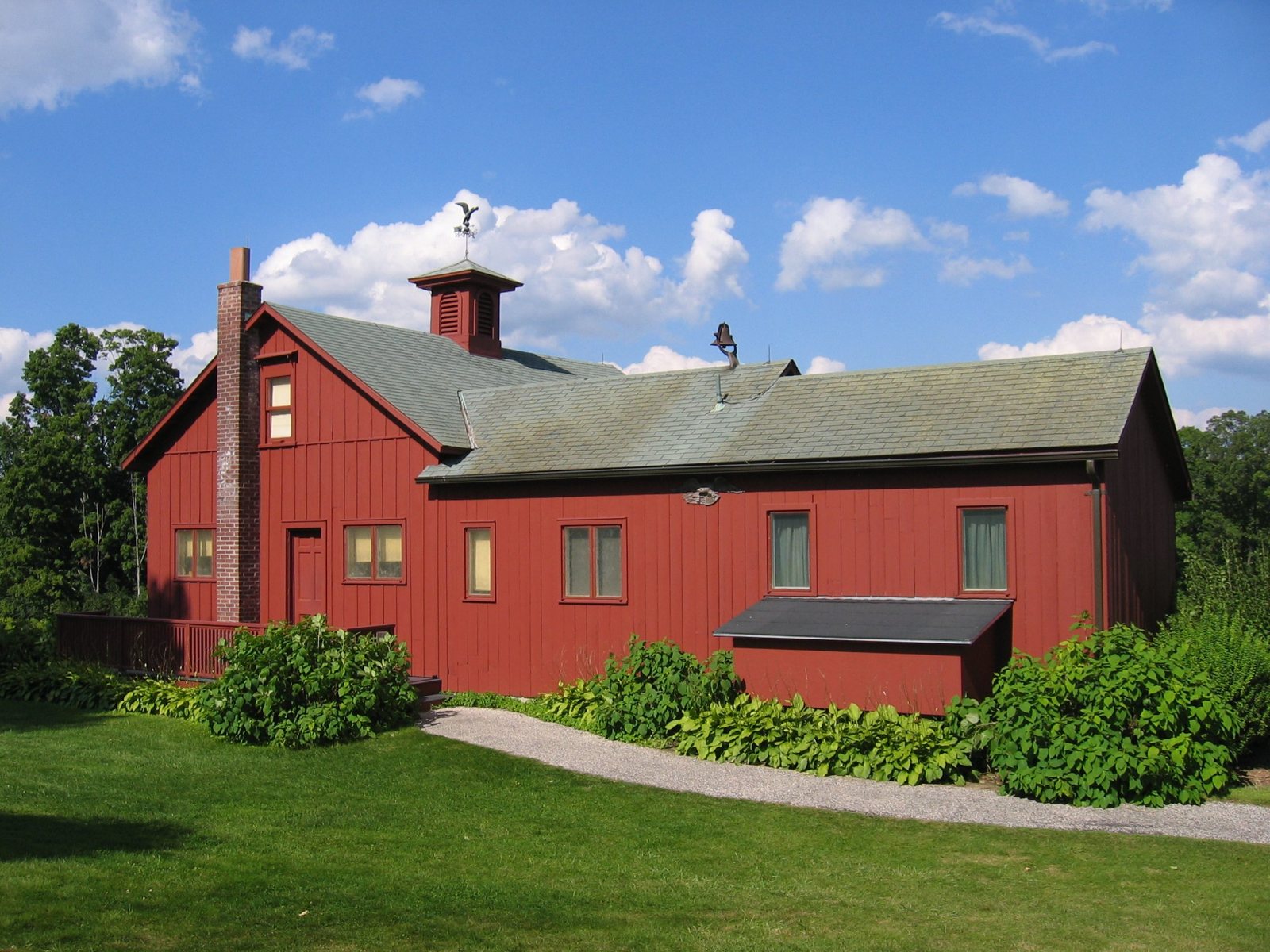
Rockwell moved to Stockbridge in 1953 and lived there until his death in 1978. His final studio was moved to the museum grounds after his death, its contents intact. The museum is closed Wednesdays, and Rockwell's final studio has closed for the season; check hours before going.
In 1967, Rockwell painted Stockbridge Main Street at Christmas — also titled Home for Christmas — for McCall's. It shows Main Street at dusk, lights coming on, and the Red Lion Inn at the right of the composition. The original is held in the museum's trust collection.
By late November, the Berkshires have let go of their leaves. Main Street turns quiet in the early dark, the front porches still there after the tourist-season color has passed. The Stockbridge in Rockwell's picture stays exactly as he painted it. The town outside the frame keeps changing.
And the town does not leave the picture on the wall. Each December, Stockbridge re-creates the painting's street for its Main Street at Christmas weekend — this year on December 5 and 6 — with the inn lit at the right of the scene. That weekend, a visitor can stand on Main Street and see Rockwell's painting come to life.
The painted table is perfect and frozen. Back in the village, the tables are set again every year.
A table that is still set
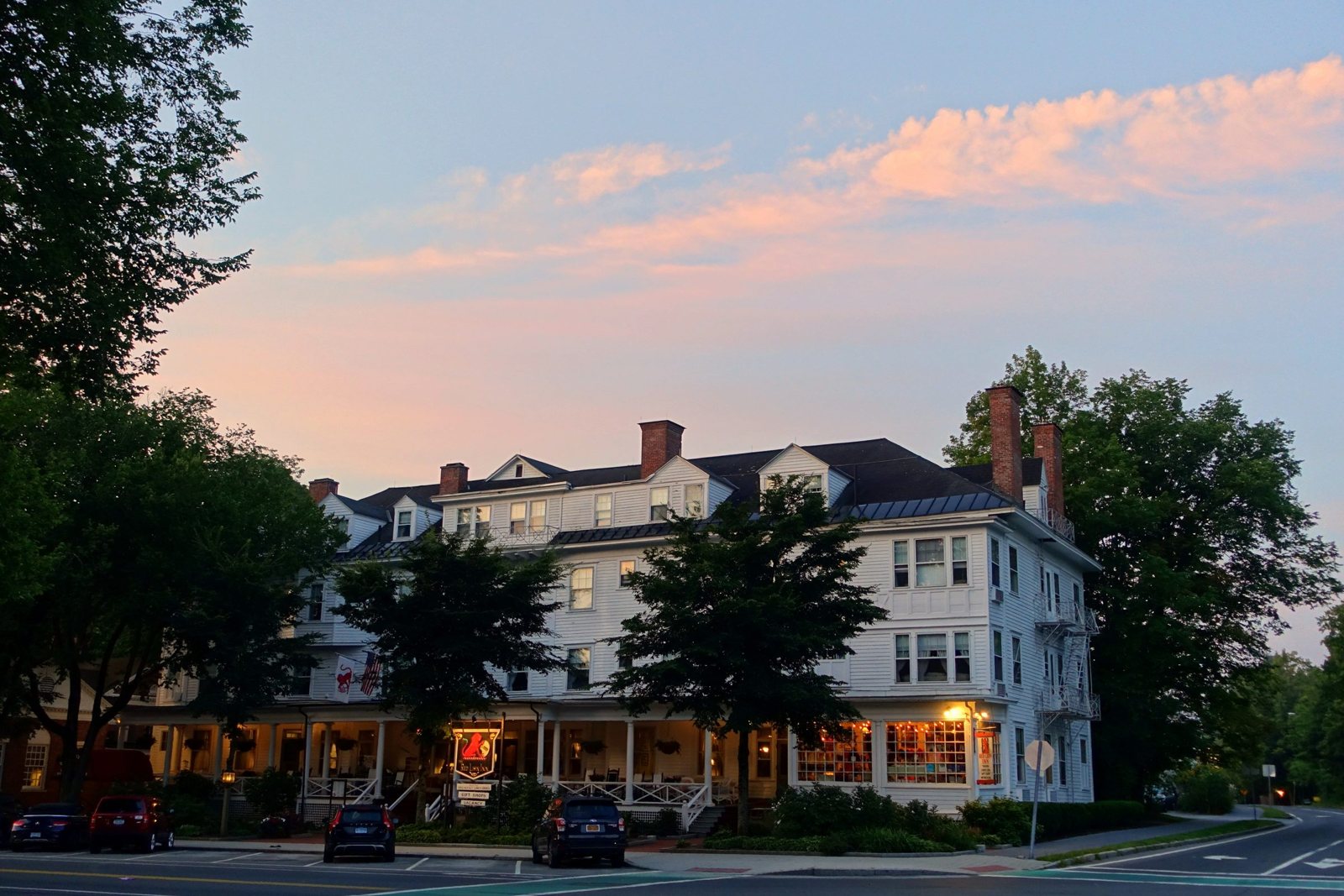
On Stockbridge's Main Street, the Red Lion Inn occupies a tavern site dating to 1773. Even the old lion sign has a local story: a red body for the Crown, its green tail hinting at colonial sympathy, at least as the story has been handed down.
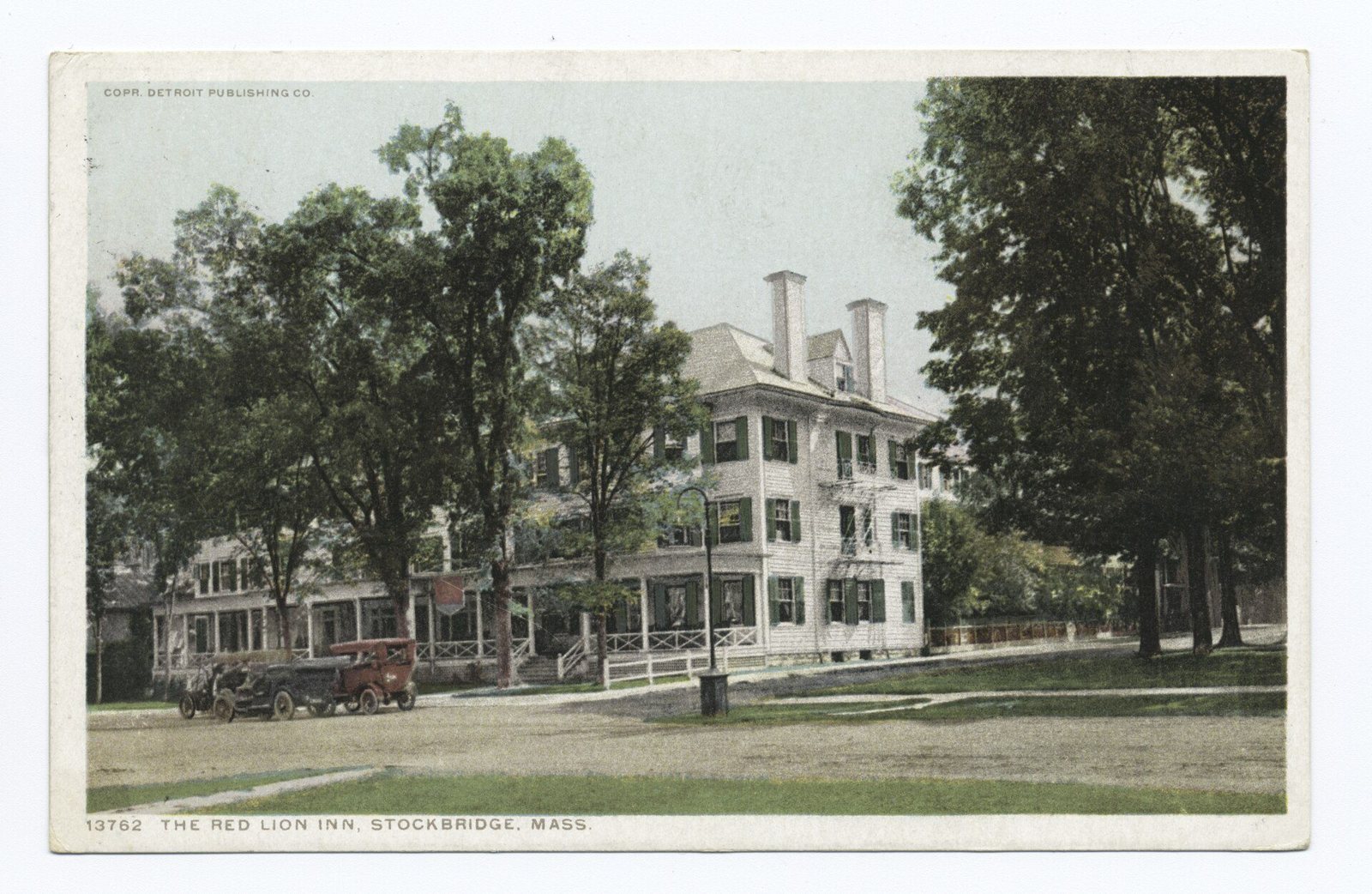
The present building is not the 1773 tavern. The original building burned in 1896 and was rebuilt on the site; hospitality continued, in a new building, on the same Main Street corner. In the late 1960s, threatened with demolition for a gas station, the inn was bought by Jack and Jane Fitzpatrick, and it has remained in their family's hands since.
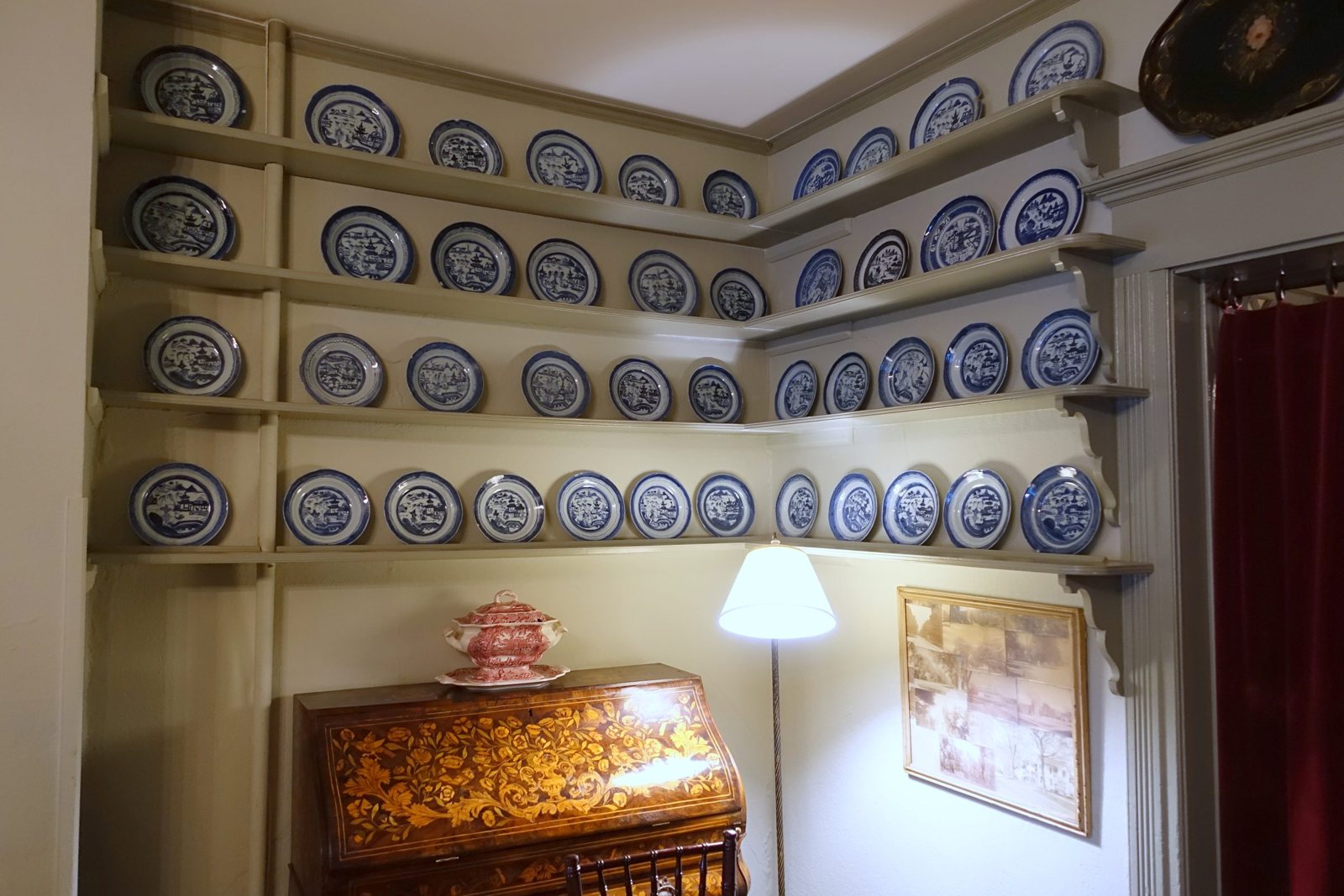
Inside, the Main Dining Room retains its formal old-fashioned style: crystal chandeliers, antique china, colonial pewter. Outside, a wide front porch runs the length of the Main Street facade, with rocking chairs facing the street Rockwell painted.
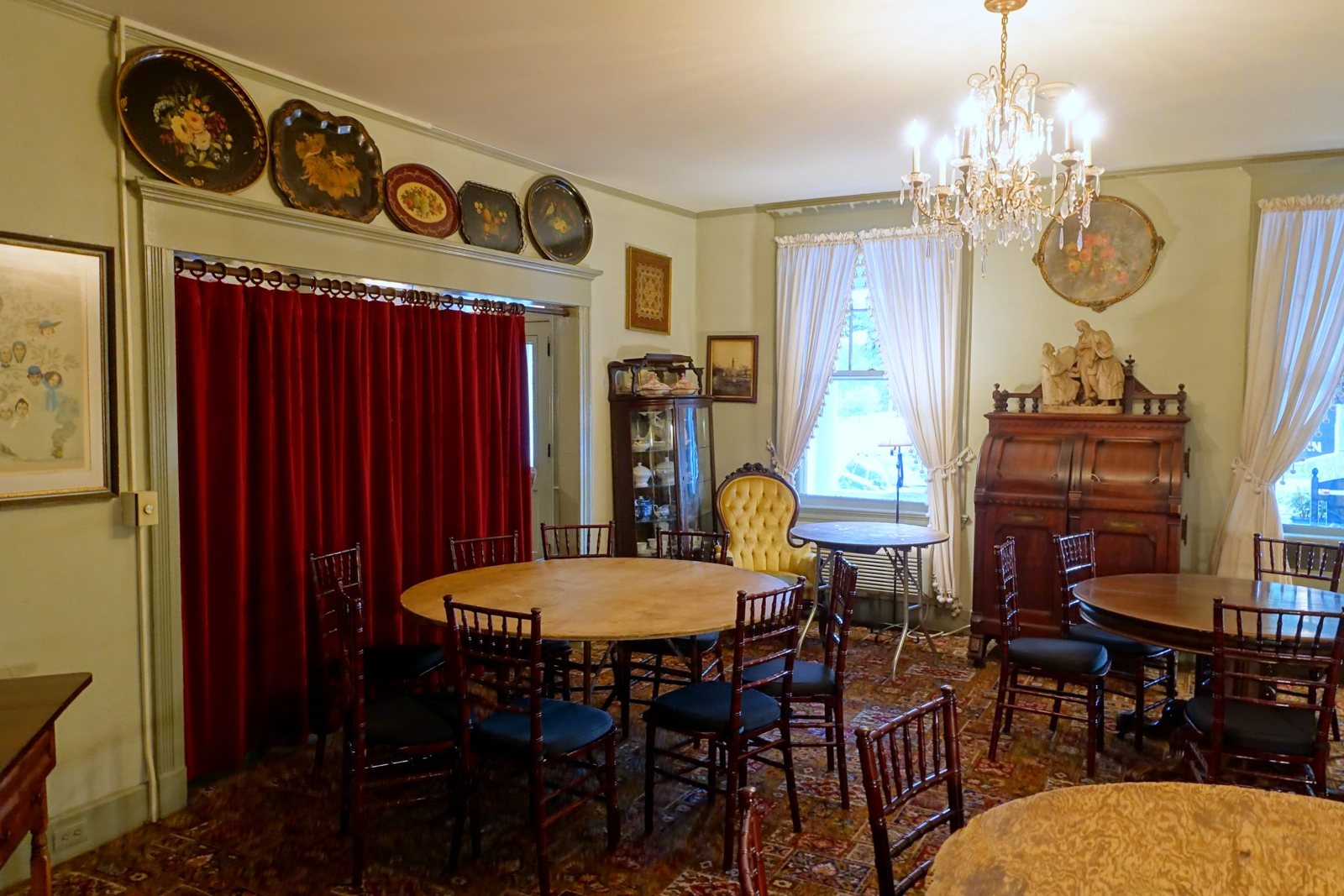
On Thursday, November 26, the inn serves its Thanksgiving dinner; book ahead.
Unlike the painted dinner, the inn's Thanksgiving meal takes real work. Someone must prepare the food, welcome the guests, and clear the plates afterward. The inn's staff make that gathering possible year after year.
The museum is closed that day, so see the painting another day that week.
Staying at the Inn
The place to stay is the inn itself. Its guestrooms — no two decorated alike — spread through the main inn and the guest houses around it. From the front of the inn, look out on the scene Rockwell painted: Main Street, the wide porch, the rocking chairs — the village Rockwell set at dusk in 1967 with this building at the right of the frame. Stay at the inn depicted in the painting, then come downstairs for a meal in its dining room. In this village, the inn is where the picture and the place share an address.
The older town underneath
The town has other stories that no Rockwell picture could hold. Stockbridge grew from a mission community established among Mohican people, whose descendants were displaced from this valley but never ceased to exist. The Stockbridge-Munsee Community still carries its name and ties to the place. It is living history, running alongside the tourist village.
Elizabeth Freeman, known as Mumbet, belongs to another story of freedom in the Berkshires. In 1781, in Brom and Bett v. Ashley at Great Barrington, she sued for her freedom and won. She later bought a home and worked as a midwife and healer. The word “freedom” had been fought over in this region long before Rockwell put a turkey on a table beneath it.
On Main Street, Rockwell's familiar scene sits alongside the town's other histories.
In the museum, the neighbors in the painting share a dinner they never actually ate together. Down Main Street, the inn's tables are filled by people with their own stories, their own reunions, and the ordinary work of a real meal.
Rockwell's table never has to be cleared. It holds the same conversation just before dinner, forever. The other table has to be laid, cooked for, cleared, and laid again. That is a less perfect picture of Thanksgiving, and a truer one.
Things to do in Stockbridge
Where to stay