Jerk Is Not a Sauce
Boston Bay and the Fire Behind Jamaica's Signature Dish
It starts with the Taíno, survives with the Maroons, and runs on pimento wood and Scotch bonnet. Jerk is a process, not a condiment — and Boston Bay is where it met the public.
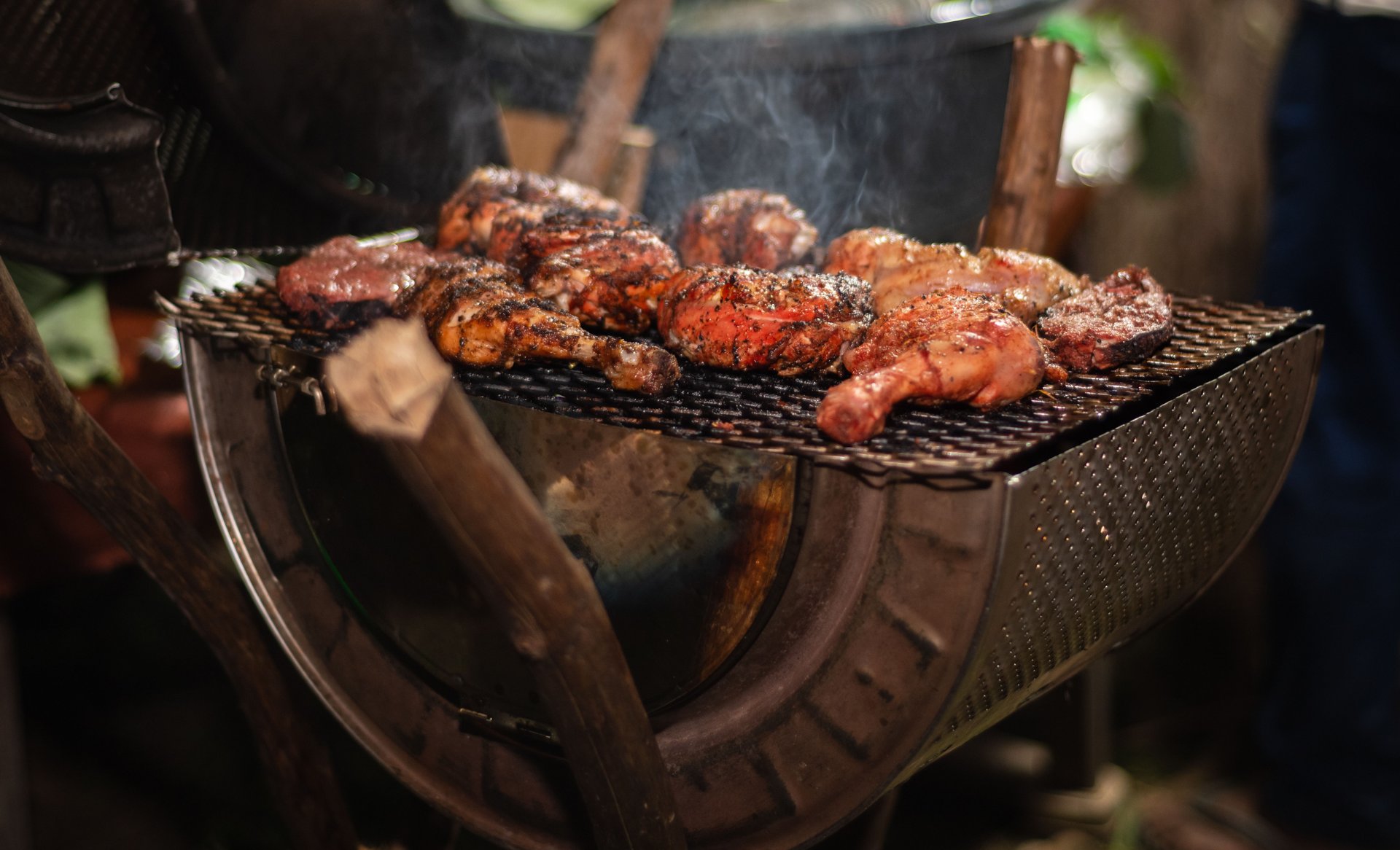
In Boston Bay, jerk is best understood not as a sauce but as a method built around seasoning, pimento wood, smoke and time. The bottle on a supermarket shelf abroad is the last chapter of a very long book, sold as the whole story.
It starts with the Taíno
Jerk has two documented starting points, and historians don't fully agree how they connect. One account: Jamaica's first people, the Taíno, smoked and dried meat on a raised frame over a slow fire — a technique also practiced elsewhere in the Caribbean and South America, and a likely ancestor of the word "barbecue." A second account, credited to Jamaica's own National Library, holds that the practice arrived with Coromantee hunters from West Africa, who roasted pork over open coals before being forcibly brought to the island. The name jerk is said to come from charqui, a word for dried meat that food historians trace through Quechua and Spanish — the same root that gave English "jerky."
The Maroons kept it alive
When England invaded in 1655, the Spanish freed the Africans they had enslaved, and many escaped into the mountains and became the Maroons. They took the Taíno method into the hills and jerked wild hog in pits — cooked low, sometimes underground, so the smoke would not betray where they lived. The technique survived because it had to. The jerk on a plate today descends from the version kept alive by people cooking where no one could find them.
Pimento twice, Scotch bonnet once
Pimento — Jamaica's name for allspice, and the island is still its leading source — works twice in jerk: the berry ground into the seasoning, and the wood laid on the fire, so the smoke tastes like the spice. The heat is Scotch bonnet, running 100,000 to 350,000 on the Scoville scale; a jalapeño manages 2,500 to 8,000. Around those two anchors go scallion, thyme, garlic, and ginger, in proportions no pitmaster fully discloses.
Boston Bay: where jerk met the public
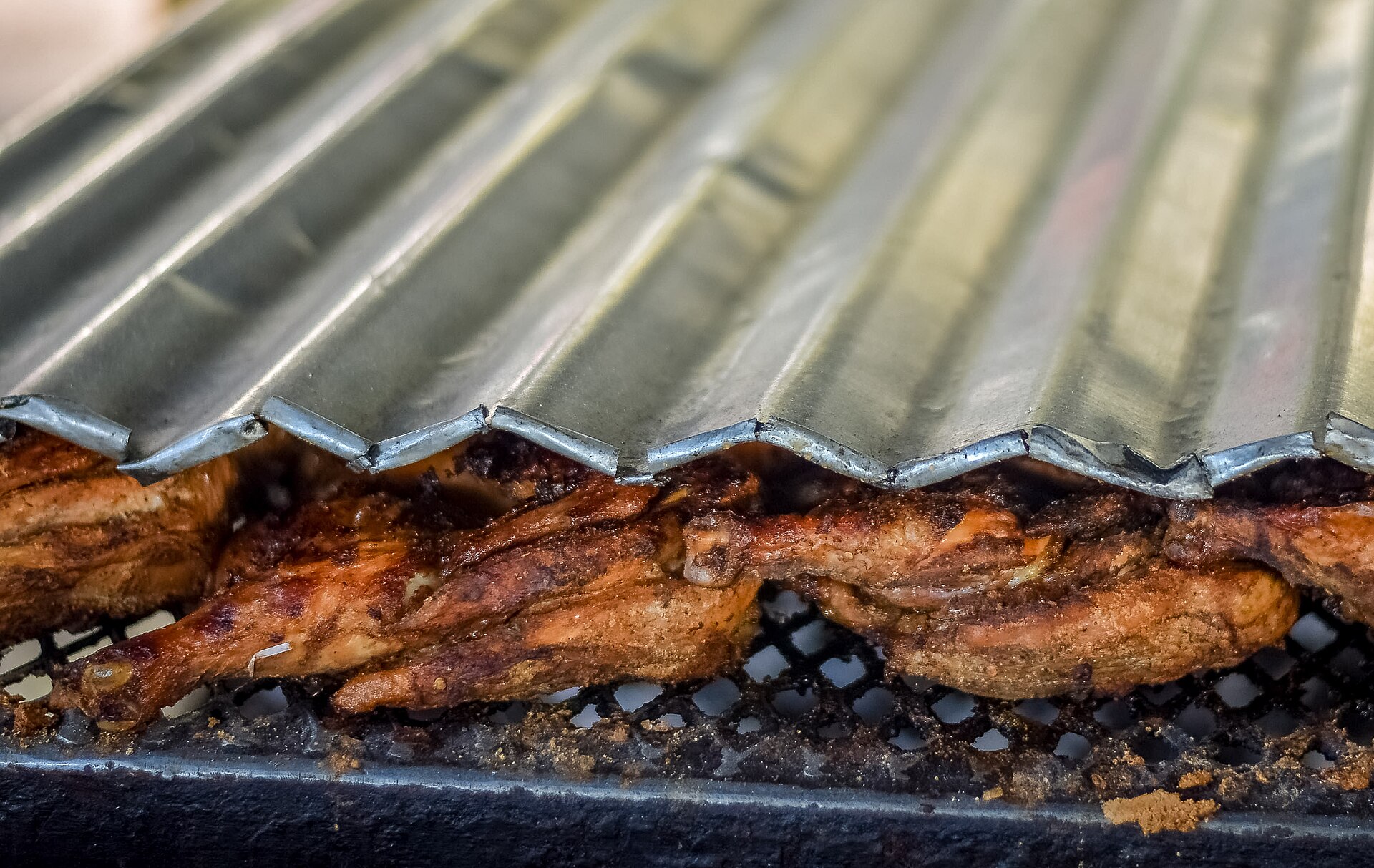
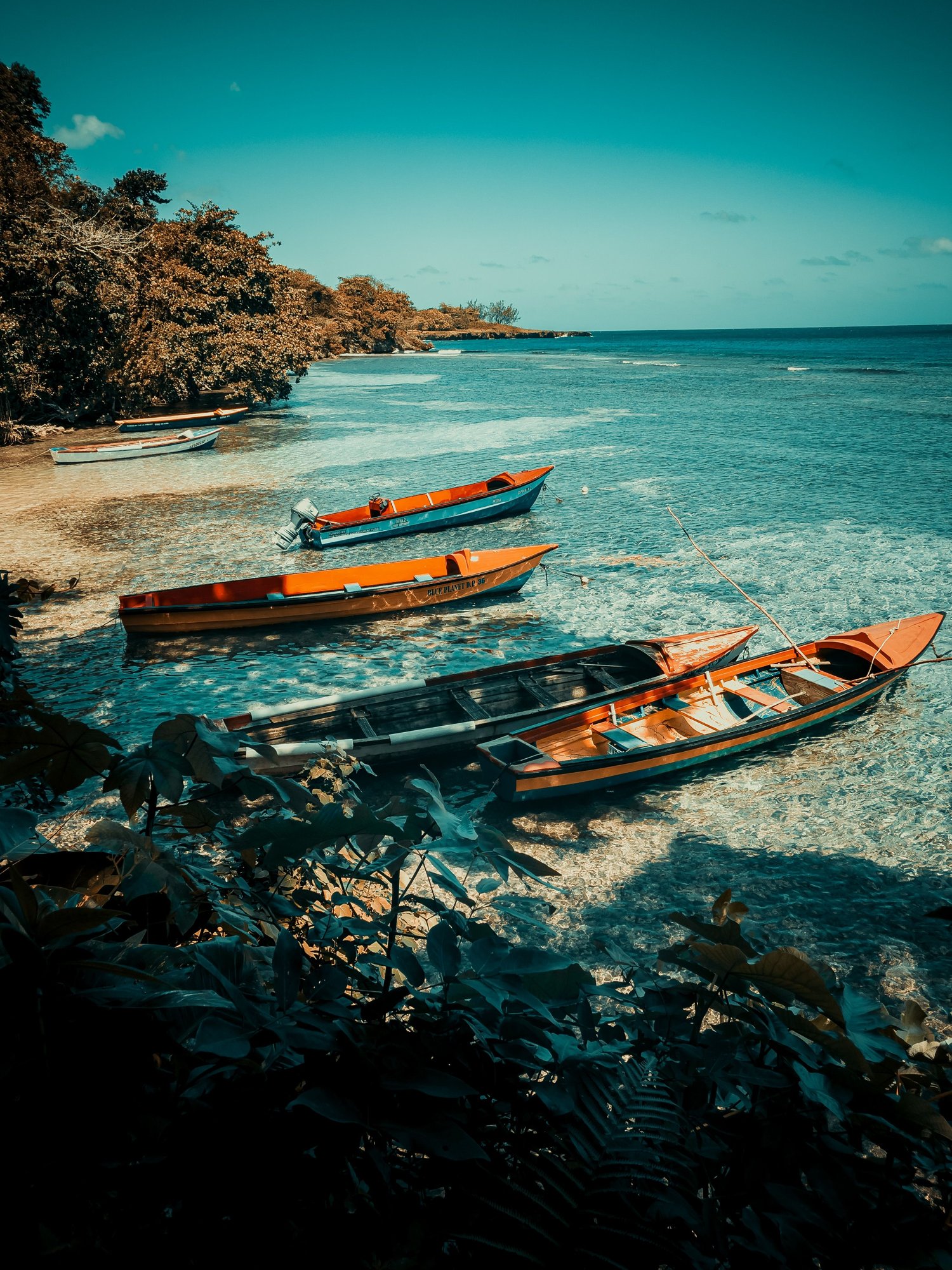
Boston Bay, east of Port Antonio on the Portland coast, is where jerk is said to have first been served to the public, and jerk centres have sold it there for generations. The setup has barely changed: meat over pimento logs under a sheet of corrugated zinc that holds the smoke in, sold by the portion with festival and breadfruit on the side. This is roadside food. If it comes off a buffet with a sauce boat beside it, something essential has been lost in translation.
Jerk today: the centre and the pan
The Boston Bay method grew an empire without changing its clothes. Scotchies, the island's most famous jerk centre, has operated since 2000 and now runs four locations across the island — Montego Bay, Ocho Rios, Discovery Bay, and Kingston — all cooking the Portland way: meat over pimento logs, covered with zinc to hold the smoke, the detail the Jamaica Tourist Board itself credits for the flavor. Politicians, sprinters, and vacation families eat off the same rustic tables. Kingston's answer is pan chicken — jerk cooked street-side in halved oil drums, the jerk pan, sold at night wherever the drums set up. And the bottled version that actually earns the name, Walkerswood, began as a community employment project in Walkers Wood, St. Ann, and traveled from local restaurants to Jamaican kitchens in London and beyond. Different scales, one test: wood smoke or it doesn't count.
The rest of the table
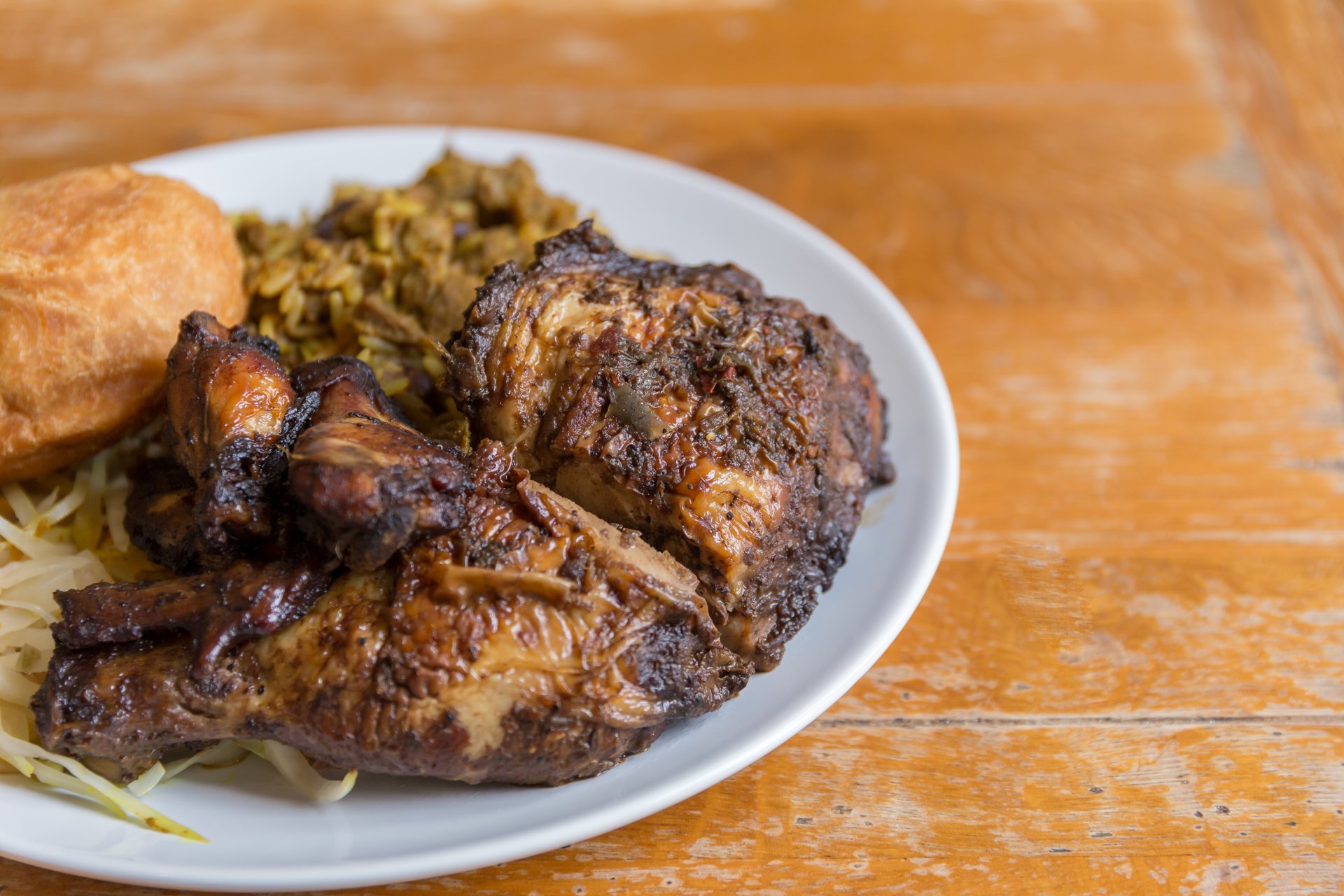
Jerk does not travel alone. Escovitch fish — fried whole, then pickled in vinegar with onion, carrot, and pepper — carries the Spanish escabeche in its name. The beef patty, Spanish and Cornish by ancestry, was turned into a national institution by Jamaican families of Chinese heritage, who built the two franchises — Tastee and Juici Patties — that commercialized it starting in the 1960s and '70s; it's properly eaten tucked inside a coco bread. Curry goat and festival round out the list. And the national dish, ackee and saltfish, holds down breakfast.
Whatever the form, the signature is the interaction of seasoning, heat and smoke.