The Mole That Remembers
In Oaxaca, mole negro can take days to make. It comes to weddings, funerals and the Day of the Dead table, carrying a story about labor, remembrance and what people owe one another.
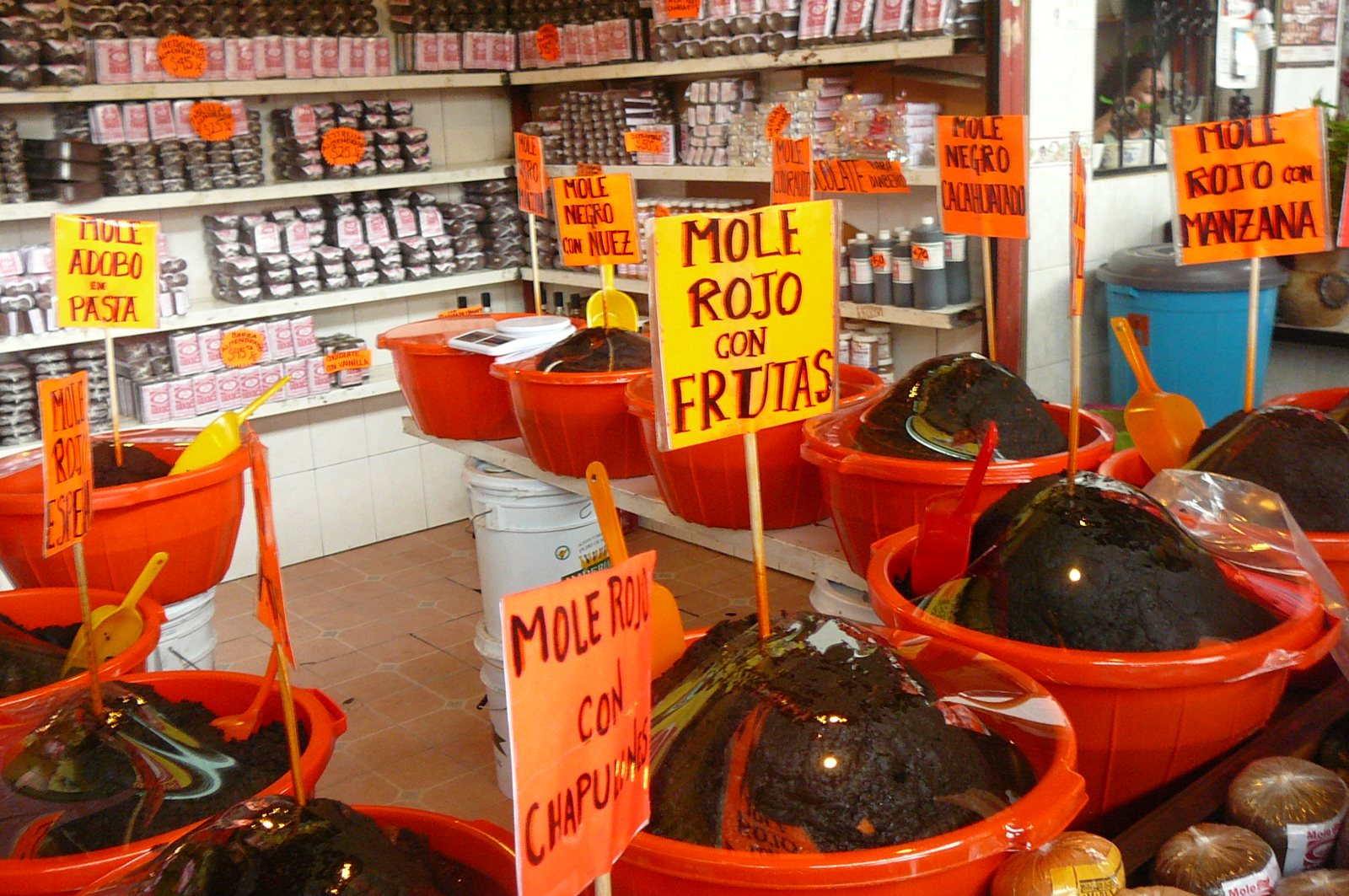
In a neighborhood mill in Oaxaca City, Mexico, toasted chiles, seeds, nuts and spices go in separately. What comes back is a thick, dark paste, the beginning of a sauce that can take days to finish. It will be stirred, tasted, corrected and cooked again, until the black is deep enough and the flavor holds. For some families, that work has a destination beyond the dinner table: an altar prepared for relatives who have died.
Oaxaca does not keep the American holiday. What it keeps instead runs all year.
In parts of Oaxaca, giving itself follows an older practice: guelaguetza, which makes giving a relationship that lasts beyond one meal. At weddings, harvests and funerals, people contribute food, gifts or work, with the understanding that help will be returned when another household needs it. Labor, food, and gifts are written down — in some families, in a guelaguetza book — and returned in kind when the giver's own day of need comes: "today for you, tomorrow for me" — the community's own formula, recorded by Guillermo Bonfil Batalla.
That system runs all year round: mole negro, made for weddings and funerals and, each November 1 and 2, set on home altars as food for the returning dead.
A canon, not a census
Ask after Oaxaca's seven moles and the list can change depending on the cook. Some are green with herbs, some red with chiles; some belong to celebrations, others to ordinary days. Mole negro is the one to follow. It is made for occasions that take real work — from the kitchen and from everyone around it.
The famous seven are most often listed as negro, rojo, coloradito, amarillo, verde, chichilo, and manchamantel — a canon, not a census. Even the seventh mole is disputed; cookbook author Susana Trilling titled a book My Search for the Seventh Mole and questions whether manchamantel, a chicken-and-fruit stew, is a true mole at all. The word itself is older than any list: mole derives from the Nahuatl mōlli — "sauce," "something ground."
Chocolate may enter the pot, but it is not what makes the sauce: chiles, seeds, nuts and spices have already done that. Where chocolate is used, it goes in at the end, a seasoning, not the substance.
Of the seven, negro is the fiesta mole — for weddings, funerals, and major celebrations, and the typical Day of the Dead dish in Oaxaca. Chichilo is the funerary mole and the hardest of the seven to find in restaurants.
The old chile
Mole negro begins with chilhuacle negro. Alongside mulato and pasilla chiles, it defines the sauce. Chilhuacle gives the sauce its deep flavor, and it is increasingly difficult to find.
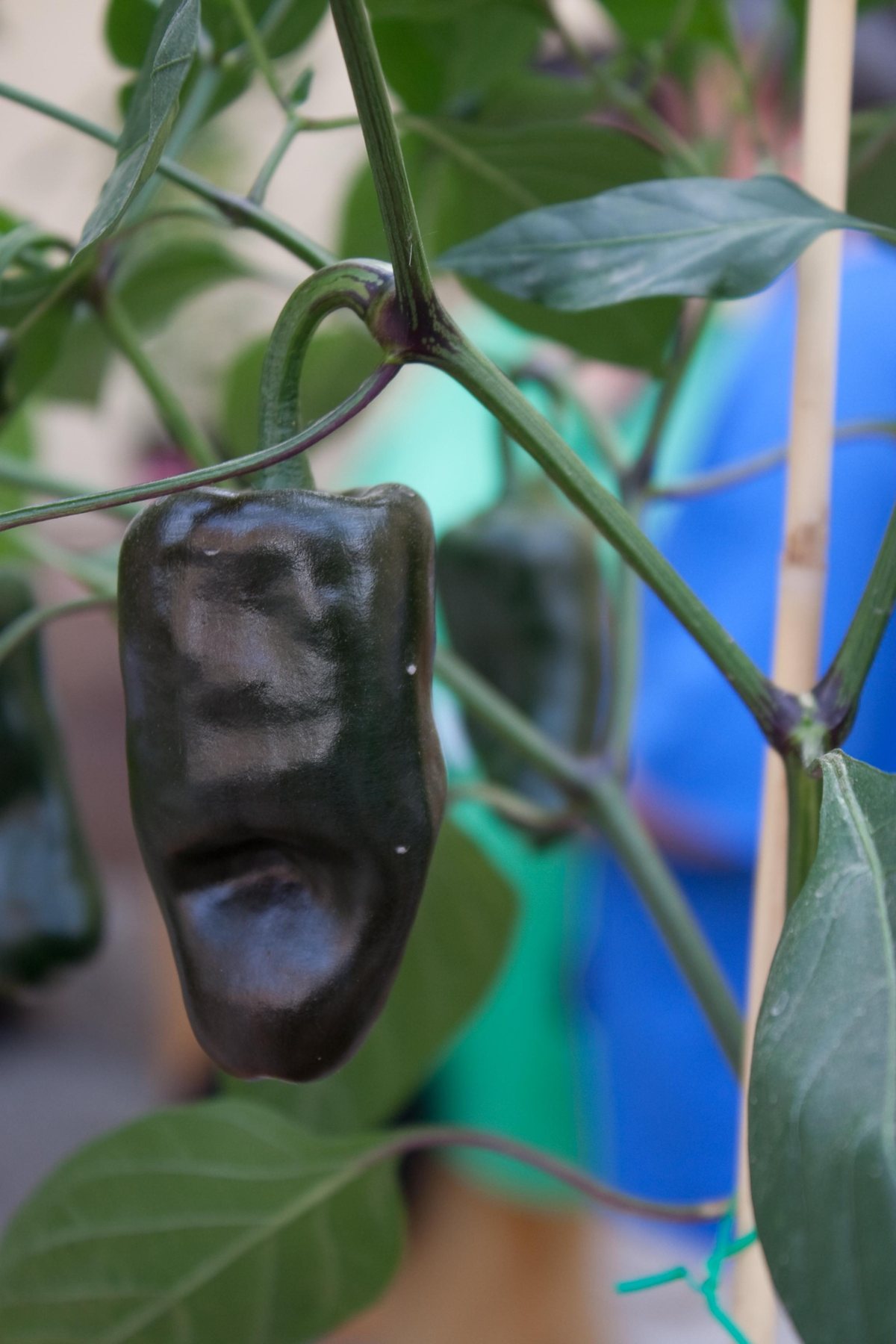
In Oaxaca's La Cañada region, growers keep the chilhuacle negro alive in small plantings. Its dark fruit brings notes of cacao, tobacco and dried fruit to the pot — the same flavors that come through in the finished sauce. Its name is Nahuatl for, roughly, "the old chile." This is no interchangeable chile: the knowledge of growing it, and the harvest itself, are part of what makes mole negro difficult to reproduce elsewhere. Its scarcity reflects the small growing area, the season and the few growers who continue to cultivate this difficult chile. By one report in The Takeout, only about seven farmers still grow it in the Cañada.
Sunday at Tlacolula
The ingredients for all of it move through the valley's markets, and the greatest of them fills Tlacolula, thirty kilometers east of the city, on Sundays, spilling from its hall into the surrounding streets. Vendors come in from the Sierra and the valley villages before dawn, many of them from Zapotec-speaking communities, and by mid-morning the tianguis has drawn the whole region into one place — a market that is also a meeting.
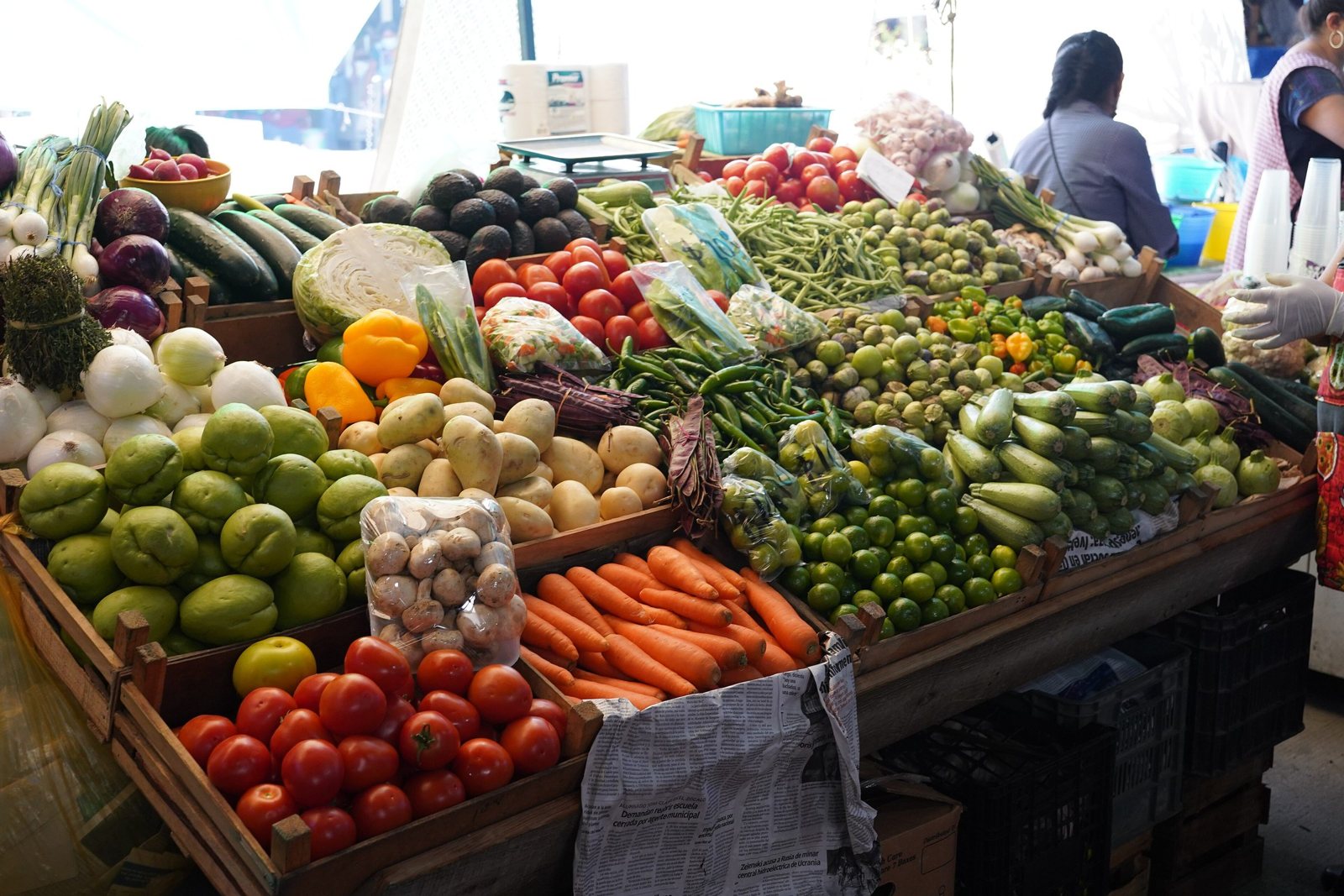
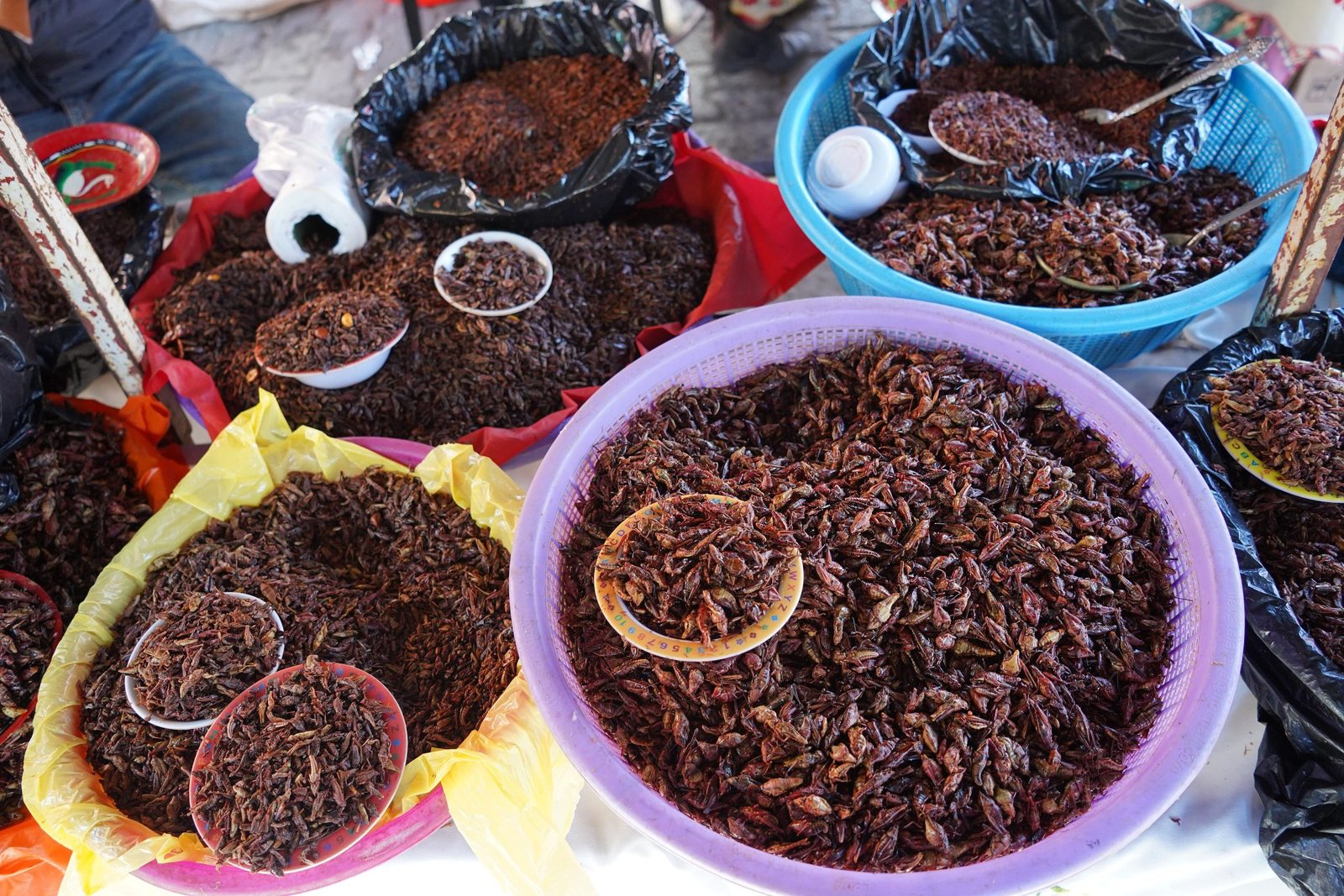
Goat barbacoa — barbacoa de chivo, the town's signature dish — comes out of an earthen pit, slow-cooked underground as a Sunday ritual. Tejate, the pre-Hispanic maize-and-cacao drink, is frothed in clay bowls. Chapulines are sold by weight, alongside quesillo and baskets of the valley's chiles, and red-clay pottery arrives from nearby San Marcos Tlapazola.
The mill and the metate
A mole being made starts with controlled burning. In the method Zarela Martínez describes from Teotitlán del Valle, a Zapotec town in Oaxaca's Central Valleys, cooks separate the chile seeds, toast the chiles to a crisp on the comal, and literally burn the seeds, then rinse them. That controlled burn gives the mole its black color and deep flavor; rinsing the seeds helps keep the bitterness in check.
From there, the ingredients are ground into paste in one of two ways. The older route is the metate, the stone grinding slab worked on the knees. The everyday route, for most home cooks making a full batch, is the neighborhood molino: market mills grind whatever a shopper carries in — toasted chiles, cacao, nuts, and spices — and return it as paste. Back at the stove, the paste is worked into a sauce in stages. There is no shortcut that gives a family back the hours spent grinding, stirring and tasting. Ready-ground pastes are also sold by the kilo, and families stock several.
At Mercado Benito Juárez, just south of the Zócalo — where mole pastes are sold and the molinos grind shoppers' own mixes — mole paste sits beside chocolate, baskets of chiles and blocks of quesillo. Nearby, in the pasillo de humo — the "smoke corridor" of Mercado 20 de Noviembre — meat sizzles over charcoal: tasajo, cecina, and chorizo cooked to order and eaten with handmade tortillas and salsas. The same markets that feed an ordinary lunch also supply the ingredients for a meal made only when a family has something to mark.
A tlayuda is a large toasted corn tortilla — bigger than a dinner plate — spread with asiento, refried beans, quesillo, cabbage and avocado, and eaten folded at stalls across the city. Where mole negro is made for occasions, the tlayuda is what the city reaches for on an ordinary day.
The cooks
Two restaurants worth visiting are run by cocineras tradicionales.
In Teotitlán del Valle, a Zapotec weaving town in Oaxaca's Central Valleys near Oaxaca City, Abigail Mendoza Ruiz and her sisters built Restaurante Tlamanalli around the cooking they inherited. Tlamanalli is a Nahuatl word meaning "offering." The family still uses the metate for food preparation, preserving its demanding hand-grinding technique. That work takes time, and Mendoza's preservation of it was honored with Mexico's 2022 National Prize for Arts and Literature in Popular Arts and Traditions, presented to Mendoza in 2023.
In Oaxaca City, Celia Florián's Las Quince Letras carries recipes passed down through her family, built on her grandmother Antonia's cooking. The Michelin Guide, which lists the restaurant as a Bib Gourmand, singles out the mole negro — "black as night, smoky, and tantalizingly charred" — and the kitchen serves a trilogy of moles on one plate, the most efficient education in the canon a single order can give. Like Tlamanalli's, its mole negro reflects generations of cooking knowledge and work.
Set for the dead
Mole negro also has a place on the family altar. For the Day of the Dead — November 1, Día de los Angelitos, for deceased children, and November 2, Día de los Difuntos, for adults — families in Oaxaca prepare ofrendas with the foods their dead loved in life. Mole negro may be set beside Oaxacan pan de muerto, fruit and a cup of hot chocolate. What took days to make is offered first to people who cannot take a seat at the table.
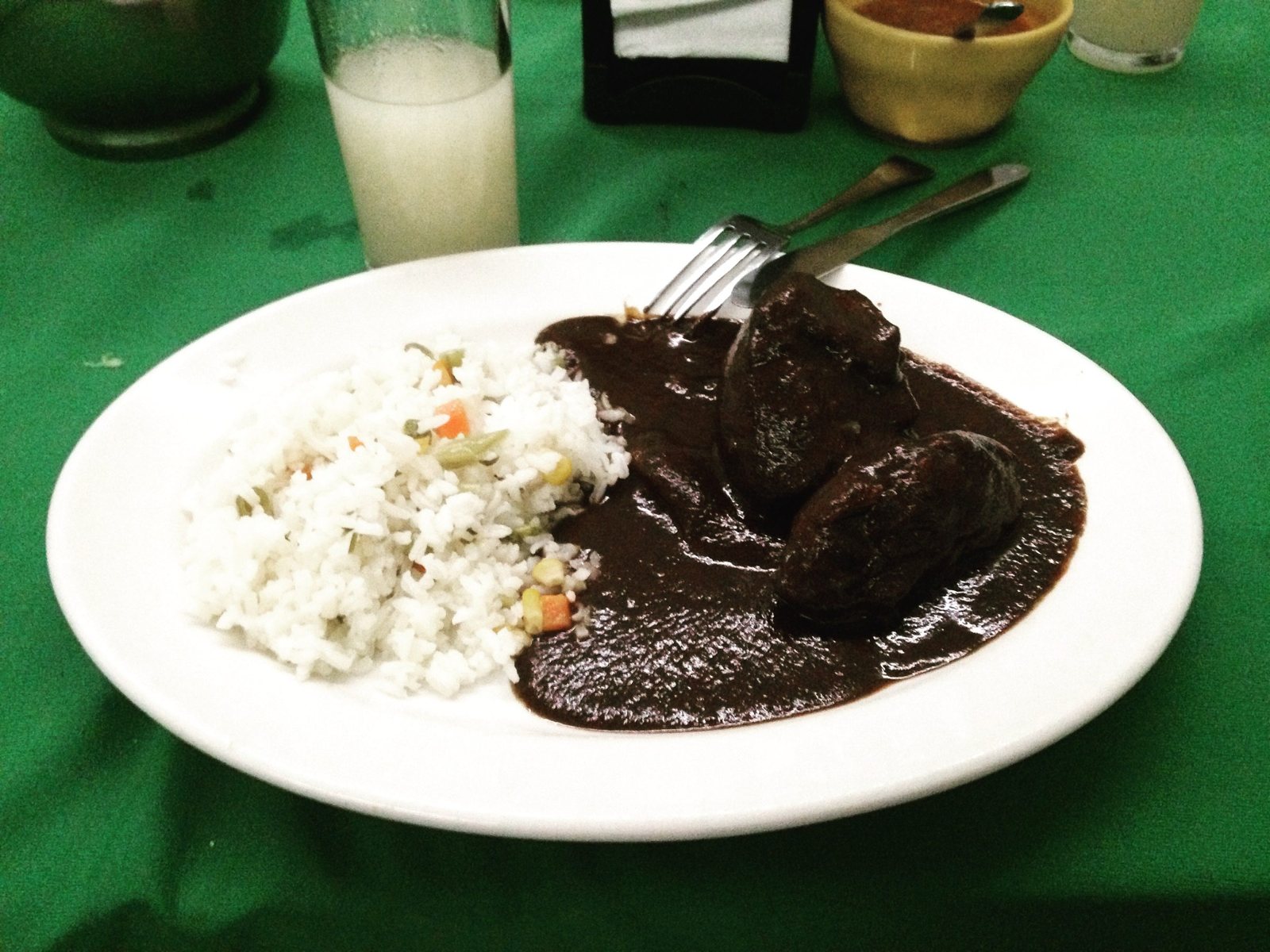
Mole negro is usually served with turkey or chicken, with rice and warm tortillas. The bird is guajolote, a turkey domesticated in Mesoamerica long before Plymouth — which makes the one true overlap with the American Thanksgiving table this: its centerpiece is a Mexican native, and in Oaxaca it comes home under mole. The shared ingredient is where the resemblance ends.
At cemeteries, some families bring plates and keep vigil — at Xoxocotlán and at the city's Panteón General among them. It is an intimate act of company and remembrance, whether or not a visitor is there to see it. These vigils extend the family's table to include the dead; visitors should respect them as private acts of remembrance, not entertainment.
The work of making mole is part of the offering. It is given before it is shared.
Above the valley
Long before a family kept a record of gifts returned, the valleys around Oaxaca were shaped by people planting maize, beans, squash and chiles together. Mexico is maize's center of origin, and 35 of Mexico's 59 native maize races are documented in Oaxaca. The milpa — maize intercropped with beans, squash, and chiles — is the system that carries them.
For the long view, go up. Monte Albán, the Zapotec capital, was founded around 500 BCE on an artificially leveled ridge some 400 meters above the valley floor, and stood there for more than a millennium — a capital set over the fields its people fed from. From its plazas to the markets below, the region's history has always been tied to what can be grown, shared and made into food.

Where to Stay
In Oaxaca City, the Quinta Real offers a stay in a building with a long and varied history. The Quinta Real occupies the ex-Convento de Santa Catalina de Siena, a Dominican convent whose community was established in 1576 in the heart of the Centro, its surviving buildings raised over the century that followed — later city offices, a school and a jail before it became a hotel in the 1970s. Its rooms gather around cloistered courtyards in green cantera stone, where the Centro's noise stops at the doorway. At its heart stand Los Lavaderos, the convent's laundry: a ring of stone washing pits around an octagonal fountain under a cupola, still fed by water running down from the mountains. Its restaurant keeps the old refectory's name — El Refectorio — and the former chapel hosts staged Guelaguetza performances: the July festival's dances, offered as a show, which is a different thing from the ledger of giving the guelaguetza keeps.
Recipes are only part of what these families preserve. Here, thanks is not saved for one day a year, or said over one bird. It is recorded and returned; it is ground on stone, burned black on purpose, and set on an altar for the people who taught the living how to make it. Then, and only then, dinner is served.
Things to do in Oaxaca
- Monte Albán half-day tour
- Oaxacan mole workshop with a traditional cook
- Oaxaca: Food and Markets Tour · 2.5 hours
- Oaxaca: Hierve el Agua Petrified Waterfalls and Pools Tour · 6 hours
- The Mezcal Journey · 6 hours
- We'll have lunch at the Tlacolula Market on Sunday and drink mezcal · 5 hours
Where to stay