Galveston Island
A Traveler's Guide to the Seawall, the Strand, and the Table
Ten miles of seawall, a nineteenth-century downtown, three glass pyramids rising out of the marsh, and a table worth planning a trip around — Galveston Island is a destination all its own.
Early morning is the island's honest hour.
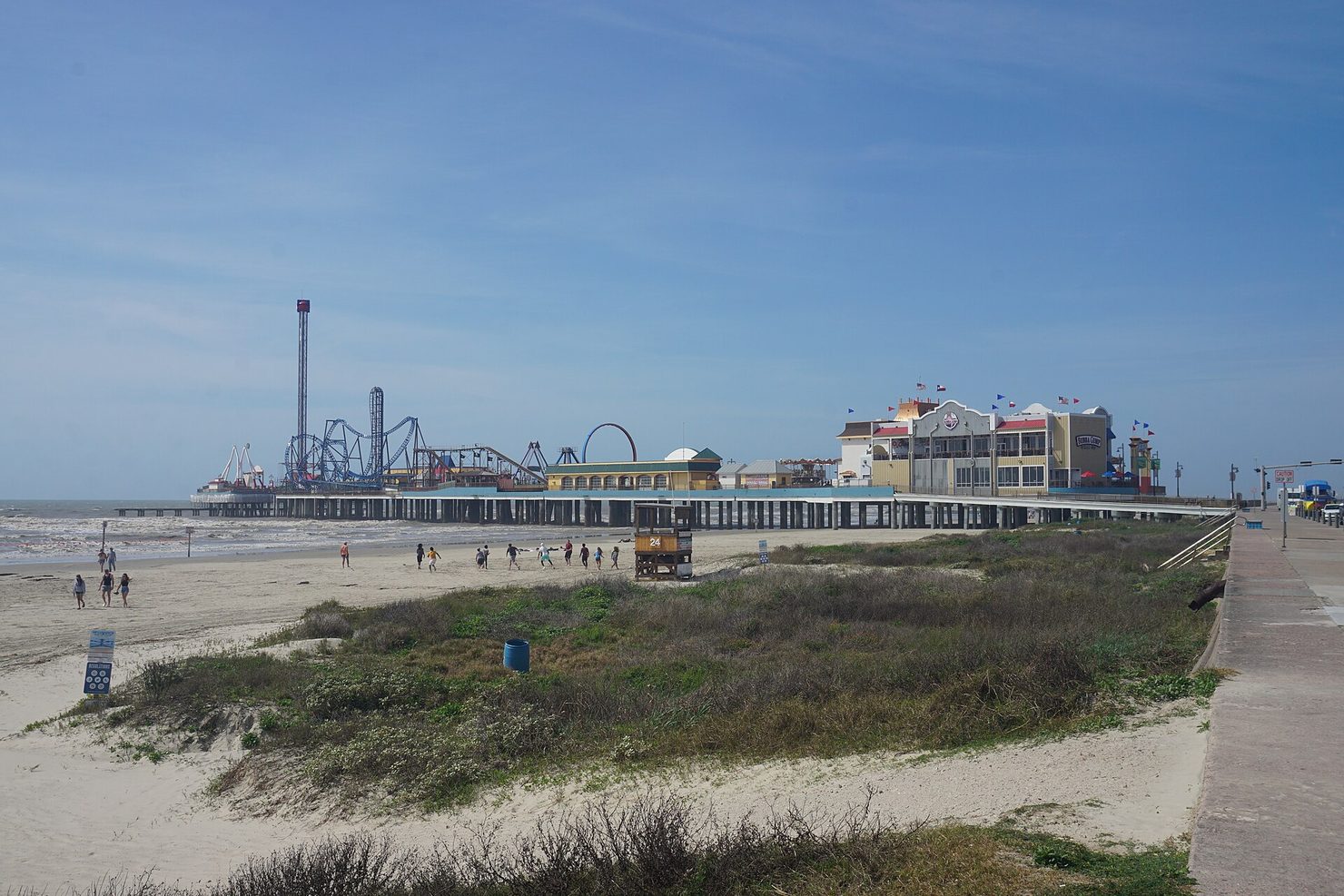
The Gulf lies flat and silver, the pelicans work the shoreline in their long single file, and the Seawall — before the beach umbrellas, before the traffic — belongs to the walkers, the cyclists, and the fishermen casting off the rock groins. Galveston wakes up like a working port town that happens to have a beach, because that is exactly what it is.
Galveston rewards a slow look, and it has been earning one for about a century and a half. It was one of the great ports of the Gulf when Houston was still a mudflat ambition, and the island it built — the grand downtown, the seawall, the piers — never stopped being a place in its own right. Give it a full day and it pays you back in layers: engineering, carnival lights, Victorian iron, and some of the most serious seafood cooking in Texas.
The Seawall: the island's front porch
After the hurricane of 1900 — still the deadliest natural disaster in American history — Galveston undertook a grade-raising project now recognized as a National Historic Civil Engineering Landmark: around 2,000 buildings were jacked up on hand-turned screws while dredges pumped roughly 16.3 million cubic yards of sand beneath them, raising some 500 city blocks behind a new seawall built in those same years. Atop that wall rose a boulevard that has been the island's front porch ever since.
The Gulf is the view, the wall is the seat, and nobody is in a hurry.
— Brian Voyles
The Seawall runs for miles along the Gulf — part fortification, part promenade. Ride a bike along it at sunrise. Walk it in the evening when the heat breaks. The benches face the water, the murals face the street, and the whole island seems to understand the arrangement: the Gulf is the view, the wall is the seat, and nobody is in a hurry. It is the simplest pleasure on the island and the one repeat visitors build their days around.
Pleasure Pier: a carnival over the water
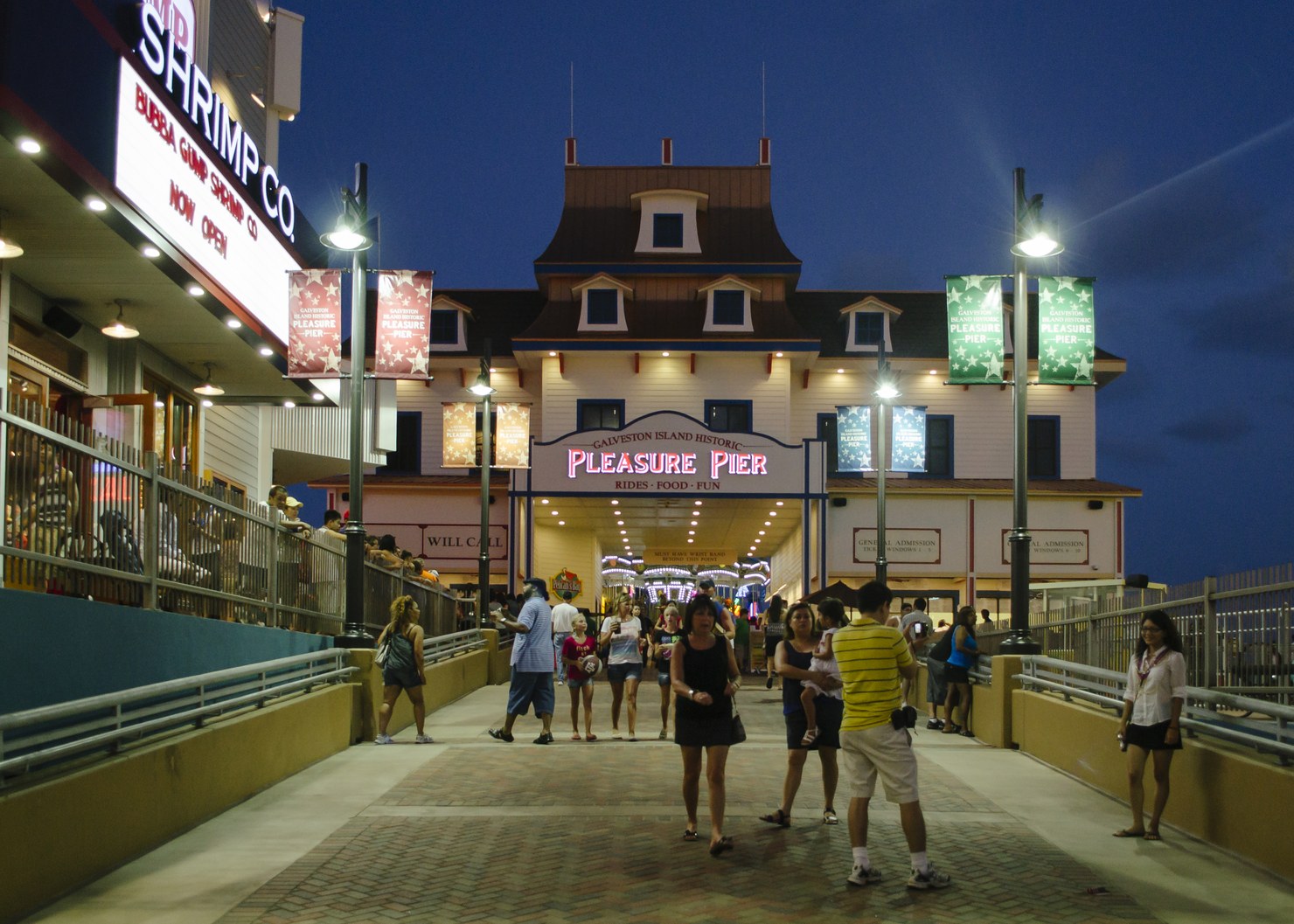
Halfway along the boulevard, the island does something delightfully unserious: it builds an amusement park out over the Gulf.
The Pleasure Pier reaches into the surf on the Seawall's line — roller coaster, Ferris wheel, midway lights strung above the waves. By day it is an amusement pier; by dusk, lit up against a darkening Gulf, it becomes the island's postcard: pure carnival, improbably floating. Ride the wheel at sunset and the whole geography of Galveston explains itself at once — beach behind you, open water ahead, the downtown's rooftops off to the east.
Moody Gardens: three pyramids in the marsh
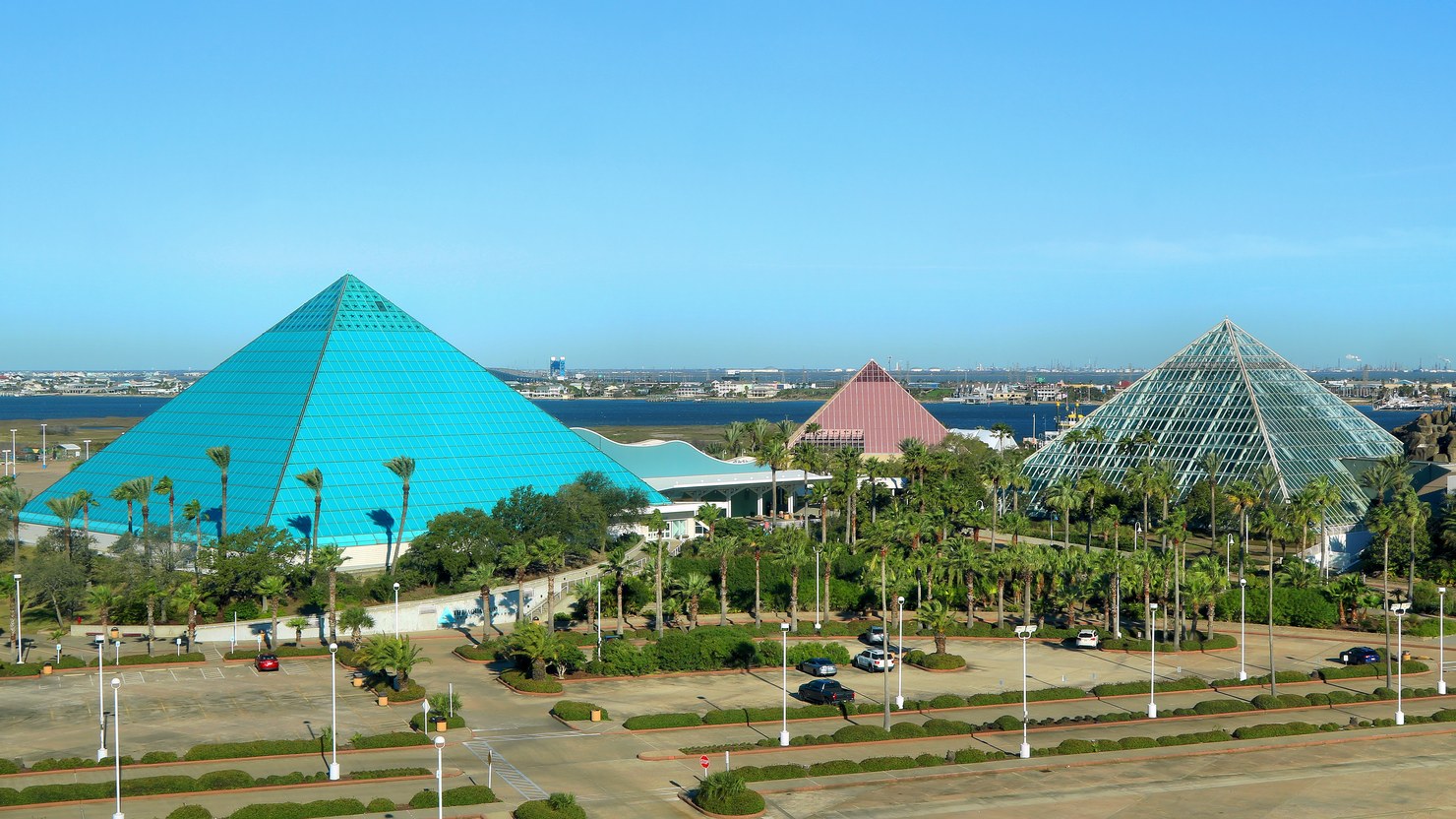
On the island's west end, three glass pyramids rise out of the coastal marsh like something a science-fiction illustrator planted in Texas — and they are the island's great all-weather answer.
One pyramid holds a rainforest, ten stories of it, canopy walkways and free-roaming birds over a river of orchids. One holds an aquarium built around the Gulf's own ecosystems and the oceans beyond them. The third rotates discovery exhibits through the year. Moody Gardens is the rare attraction that works identically for a honeymooning couple dodging a rainy afternoon and a family with three kids and a full day to spend — arrive at opening, and plan on staying longer than you intended.
The Strand — the island's nineteenth-century downtown
Downtown, a few blocks from the harbor, the Strand Historic District keeps the island's other face: block after block of cast-iron-front commercial buildings from the decades when Galveston was the Gulf's great port of entry and its merchants built like it.
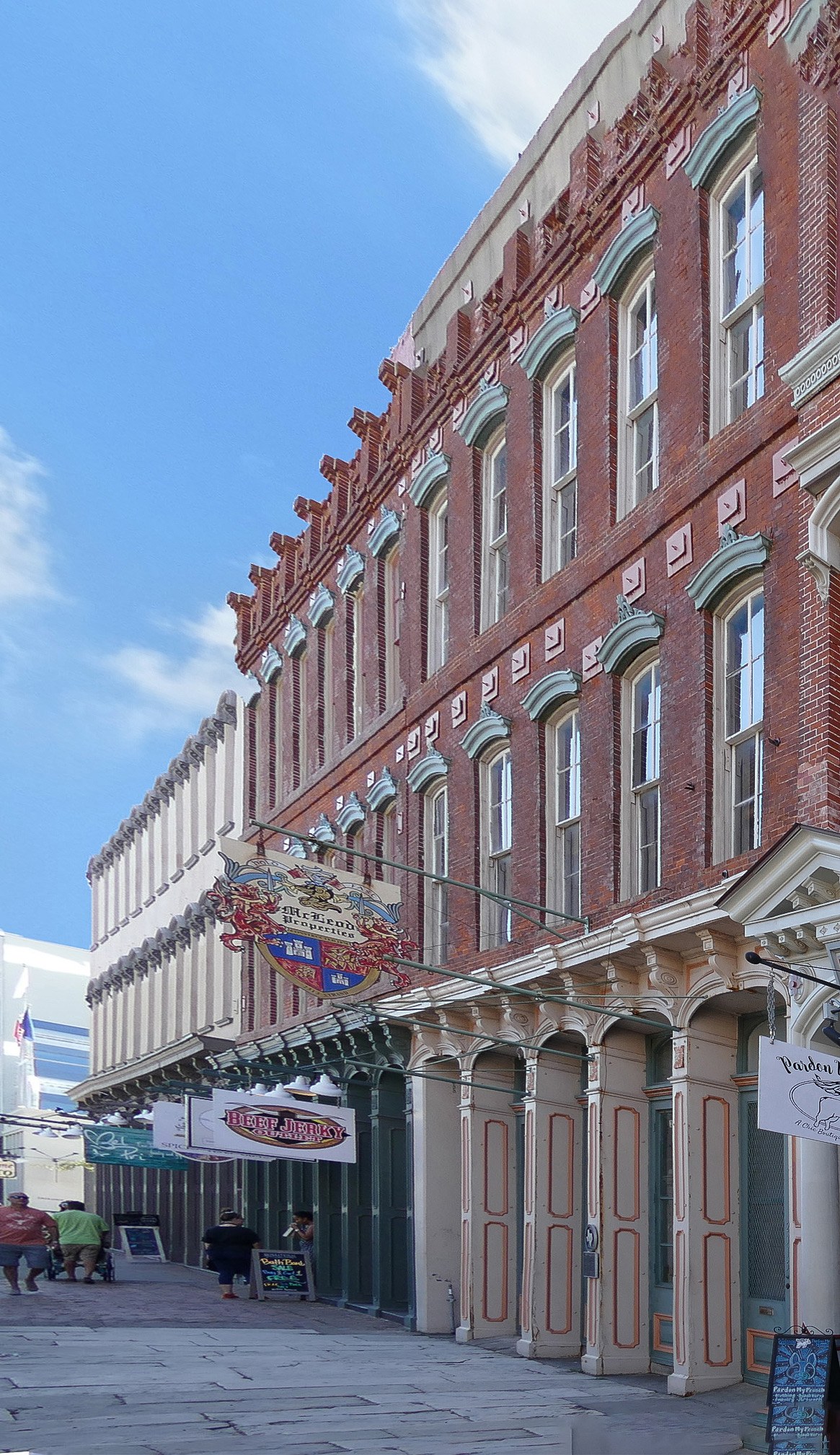
These blocks survived fire, storm, and the long decades when the port's glory moved to Houston — and what stands now is one of the best-preserved nineteenth-century downtowns in the South, working as a living district rather than a museum: galleries and bookshops, coffee and ice cream, festival streets that fill for Mardi Gras and for Dickens on the Strand each December, when the gaslights and the costumes come out. Walk it slowly. Read the plaques. The buildings earned them.
Where Galveston Eats
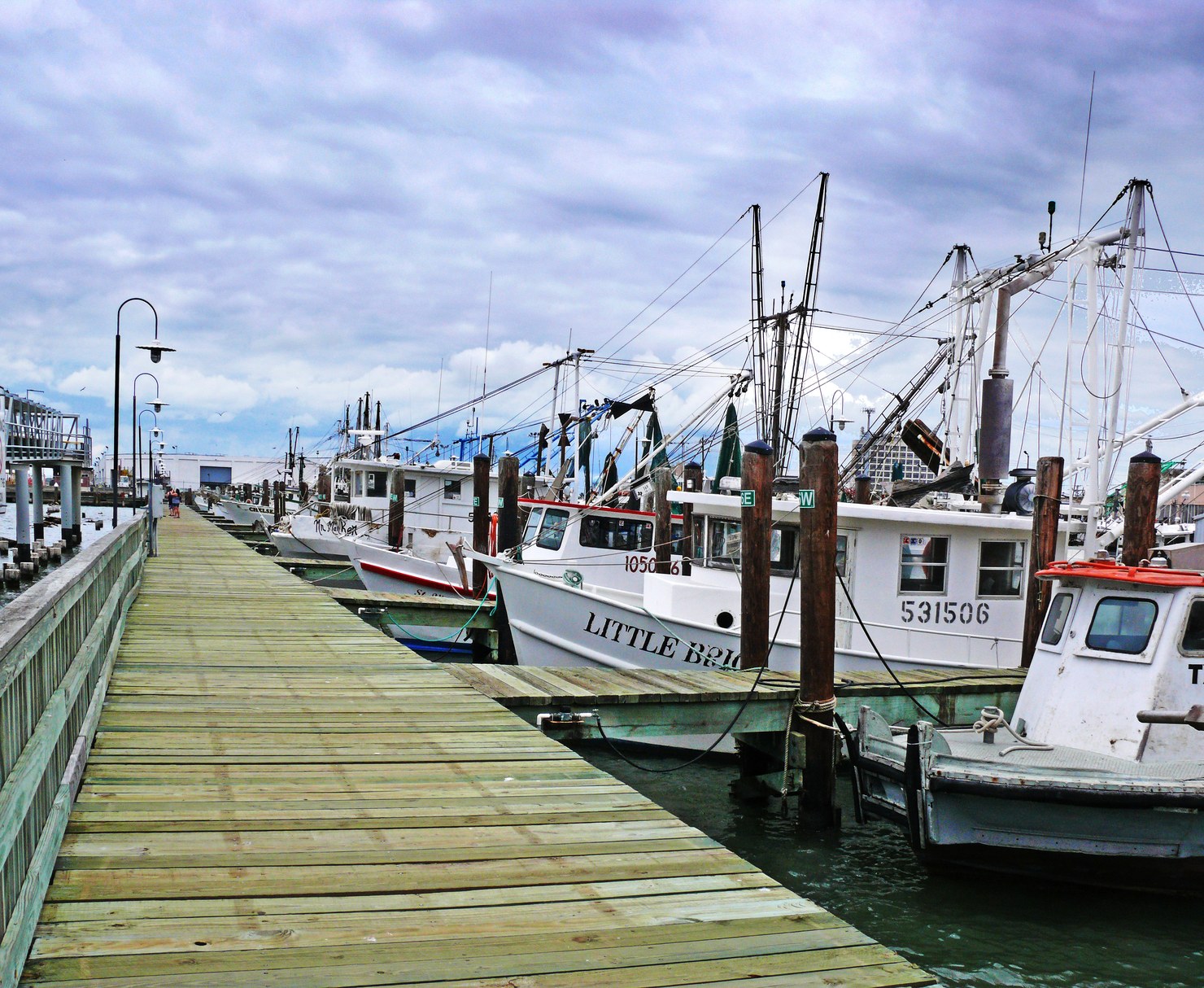
An island that has worked its harbor for a hundred and fifty years learns to cook what comes off the boats. Galveston's table is Gulf seafood taken seriously — and two rooms, in particular, are worth planning a trip around.
Little Daddy’s Gumbo Bar, on Postoffice Street, is built around a conviction executed in public. The gumbo kitchen works in view of the room, over a dark roux, and chef Mundo Rodriguez cooks the shrimp, oysters and crab directly in the pot, reasoning that cooking the seafood separately keeps it from tasting the way it should. The house seasoning is a fifteen-spice blend, and the front-row seat is half the pleasure. This is gumbo as a craft with the hood up.
Benno’s Cajun Seafood is the Seawall's institution: a family house founded by Benno Deltz and run today by his son Tracy, counter-ordered, number-called, red-basketed, with the Gulf across the boulevard doing the decorating. The crabs come from Galveston crabbers and go out in the house's preparations — boiled in seasoning, garlic butter, fried, or in the Cajun "barbecue" style on today's menu — jumbo blues in the warm months, when the catch runs heaviest, March through October and the line out the door is simply part of a summer evening. Benno's does not perform fine dining and does not need to: it performs forty-three years of knowing exactly what a boiled crab, a cold Tiki Wheat from the island's own brewery, and a picnic table at sunset are for.
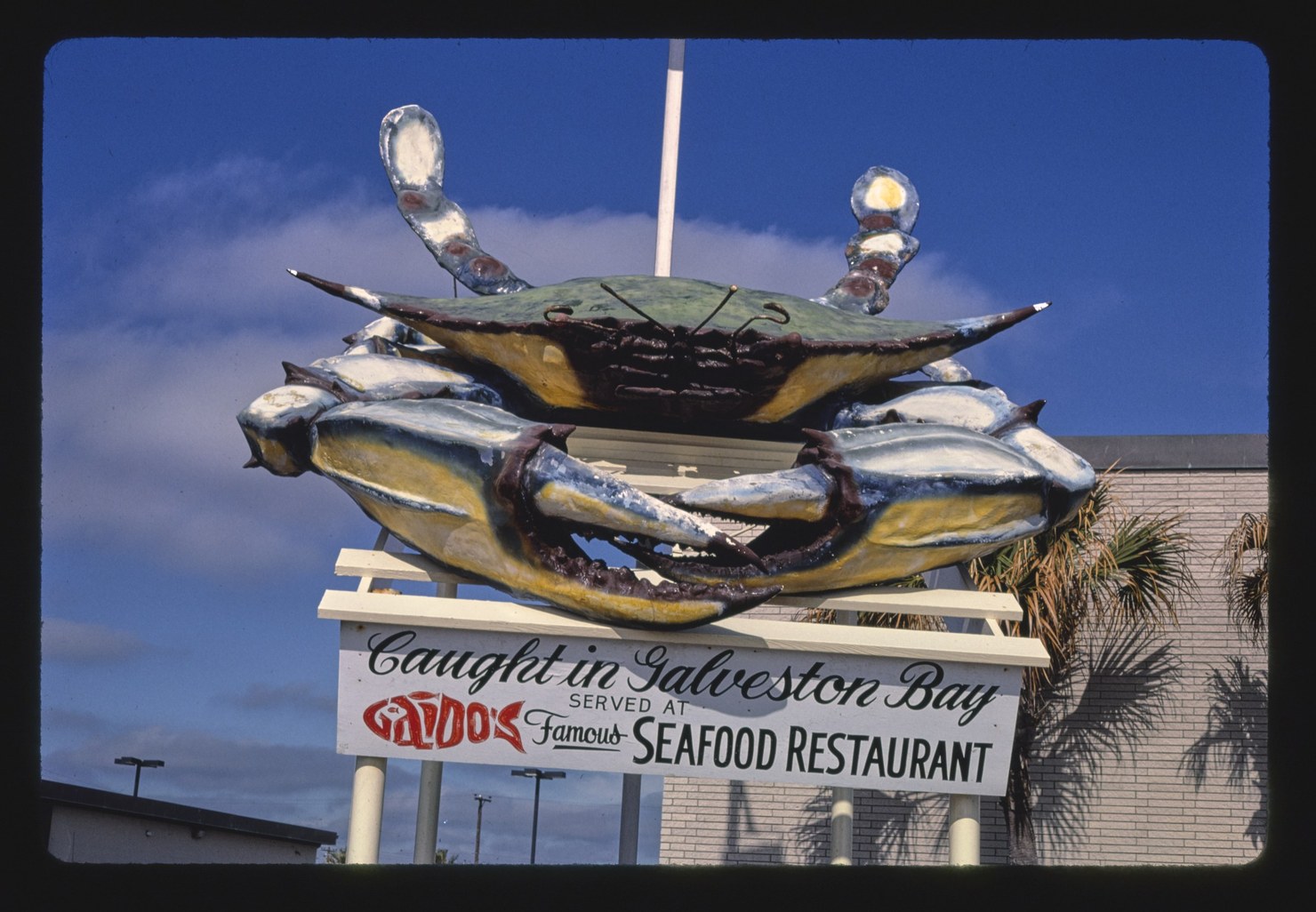
The bench behind those two is deep. Gaido’s, serving since 1911 and now in the family's fourth generation, received the James Beard Foundation's America's Classics Award in 2025 — white tablecloths, Gulf snapper, shrimp peques (bacon-wrapped, jalapeño-stuffed), and a dining room that looks out at the water the fish came from. On Wharf Road at Pier 19, the Guindons run the shortest supply chain on the island. Katie’s Seafood Market, opened in 1998 by Buddy Guindon, his wife, Katie, and his brother Kenny, sells the catch straight off the family fleet, which ties up at the Pier 19 dock. Next door, Katie’s Seafood House opened in September 2019, supplied by the market, and its kitchen works that catch fin-to-tail — snapper wings, golden tilefish, stocks built from the bones. And on Market Street, Maceo Spice & Import builds the muffuletta the family way, four layers deep, the recipe the family traces to Tony Lavoi's bakery — order the half, with a cannoli, and thank the deli case that surrounds you.
One calendar note for the table: Gulf oysters run November through April, and the crab season peaks in the warm months. Galveston will feed you well in any month — it just changes the menu's center of gravity with the water temperature, the way a port town should.
- A dark-roux gumbo with the seafood cooked in the pot — Little Daddy’s Gumbo Bar
- Fried barbecue blue crab and a hubcap platter of crawfish — Benno’s Cajun Seafood
- Red Snapper Michael and shrimp peques, since 1911 — Gaido’s
- The day’s catch, fin-to-tail — Katie’s Seafood House
- Ten miles of front porch — the Seawall at sunrise
- Rides over the surf — Pleasure Pier
- Three glass pyramids in the marsh — Moody Gardens
- A Victorian Christmas in the historic district — Dickens on the Strand
Things to do in Galveston
- Galveston: Dolphin-Watching Cruise · 45 minutes
- An Elegant Sunset Cruise Experience Crafted For Adults · 1 hour