Things to See & Do in Jamaica
Six Stops Beyond the Resort Gates
Waterfalls, jerk smoke, mountain mornings, and one very quiet lagoon — six stops that show what the island keeps beyond the resort gates.
The resort gate is a starting point, not an itinerary. Six stops that show what the island keeps beyond it — two waterfalls, the food that actually matters, a mountain morning, a slow river, and one very quiet lagoon.
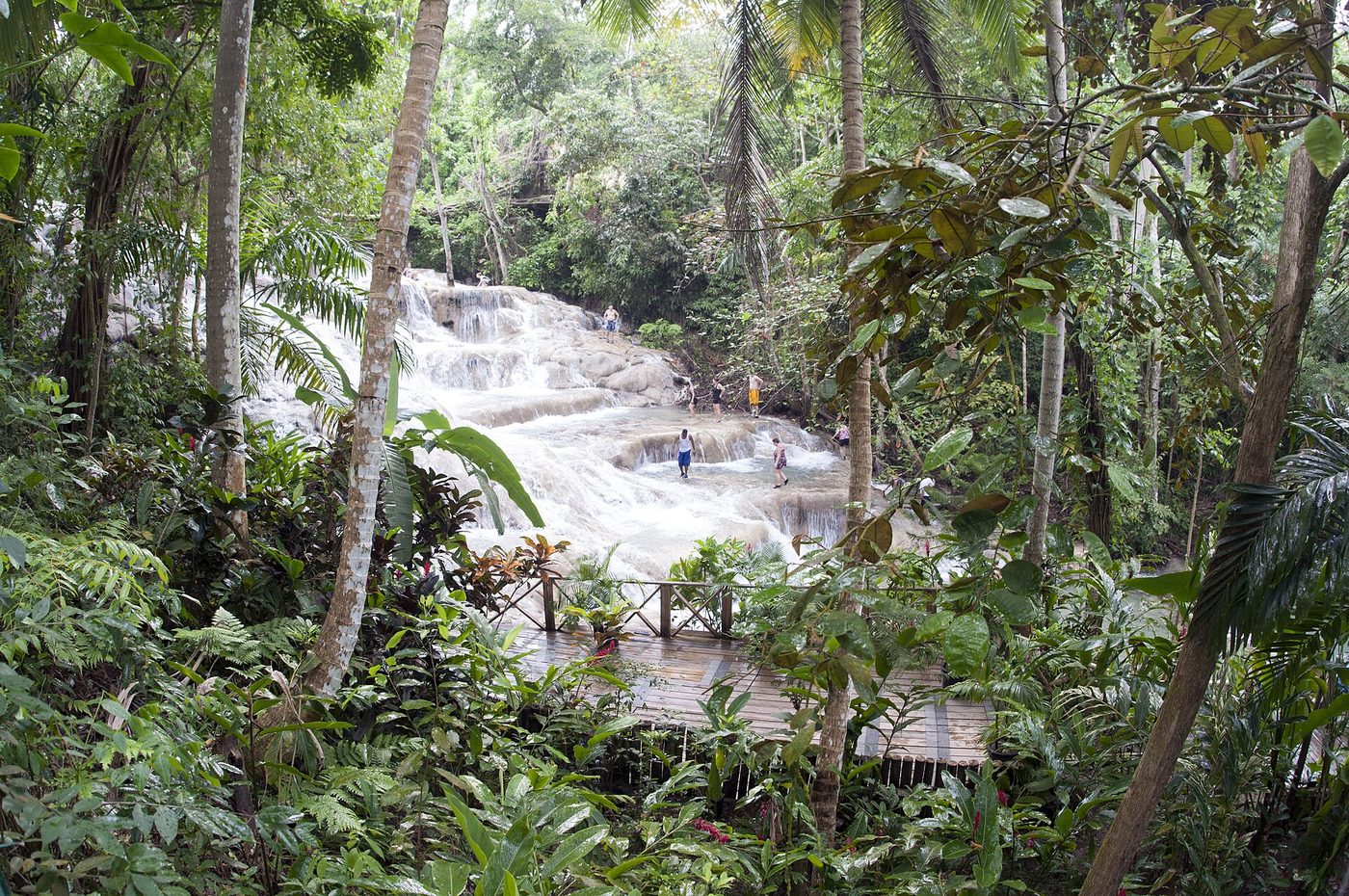
Dunn's River Falls
Iconic and busy, but still worth understanding as part of the Ocho Rios story rather than a one-size excursion.
The falls are travertine — limestone the spring water is still laying down, so the famous staircase is, geologically, still under construction. The climb is part of the attraction, with water running over the terraces all around you. It is an energetic, often busy experience; travelers who want a quieter waterfall morning may prefer Konoko. The Spanish knew this coast as Las Chorreras — "the waterfalls" — and the falls have been part of Jamaica's screen image since Dr. No. Dunn's River Falls carries the current visitor information.
Jerk, Patties & Escovitch
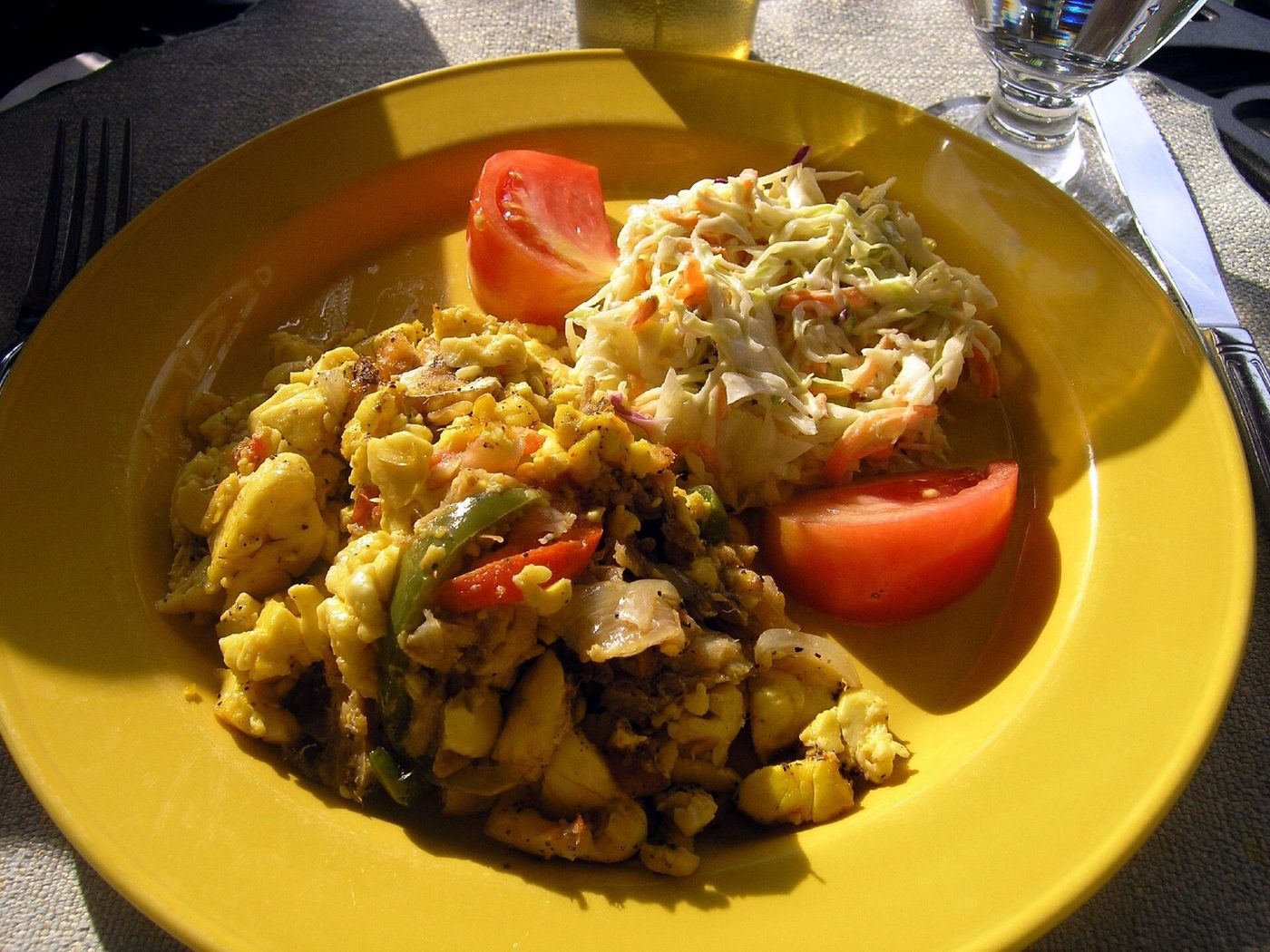
Jerk chicken and pork matter, but so do patties, curry goat, festival, and the everyday places that feel like food, not a themed dinner.
The short version: jerk starts with the Taíno and the Maroons, runs on pimento wood and Scotch bonnet, and Boston Bay — east of Port Antonio — is where it is said to have first been sold to the public. Escovitch carries the Spanish in its name — escabeche, fish fried then pickled in vinegar with onion, carrot, and pepper. The patty, Spanish and Cornish by ancestry, was perfected by Chinese Jamaican bakeries in the 1960s and '70s and is properly eaten tucked inside coco bread. And the plate in the photo is the other end of the day: ackee and saltfish, the national dish.
Konoko Falls & Gardens
A quieter, less-touristed waterfall stop near Ocho Rios, with botanical gardens attached for a slower morning.
The gardens sit in the hills minutes above Ocho Rios — close enough to pair with Dunn's, calm enough to feel like a different island — with a small museum, a river garden, birds and animals native to Jamaica, and a falls climb at a fraction of the famous one's crowd. When the cruise buses roll into Dunn's, this is the Ocho Rios waterfall that keeps its morning quiet.
Blue Mountain Mornings
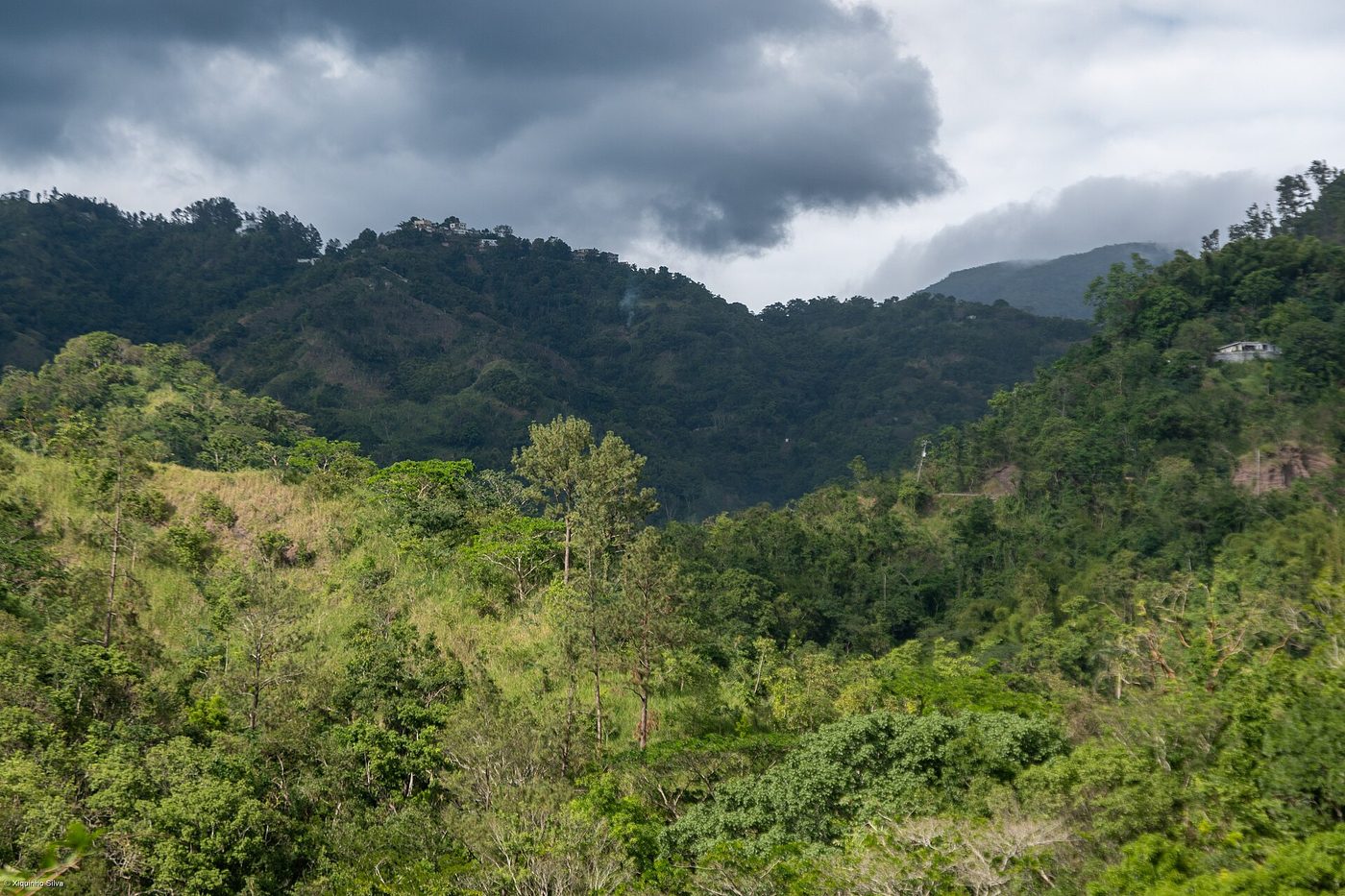
A completely different visual language from the coast, and an easy reason to give the itinerary more range.
The range tops out at Blue Mountain Peak, 7,402 feet — the highest ground in Jamaica — inside the Blue and John Crow Mountains, a UNESCO World Heritage Site since 2015. The blue in the name is the mist that hangs on the ridges. The Maroons held these mountains as strongholds of freedom, and the coffee grown on the lower slopes is among the most prized, and priciest, in the world. Serious hikers leave in the dark to summit at sunrise, three and a half to four hours up — and on an exceptionally clear morning, the view is said to reach Cuba, some 90 miles north.
River Rafting, Martha Brae
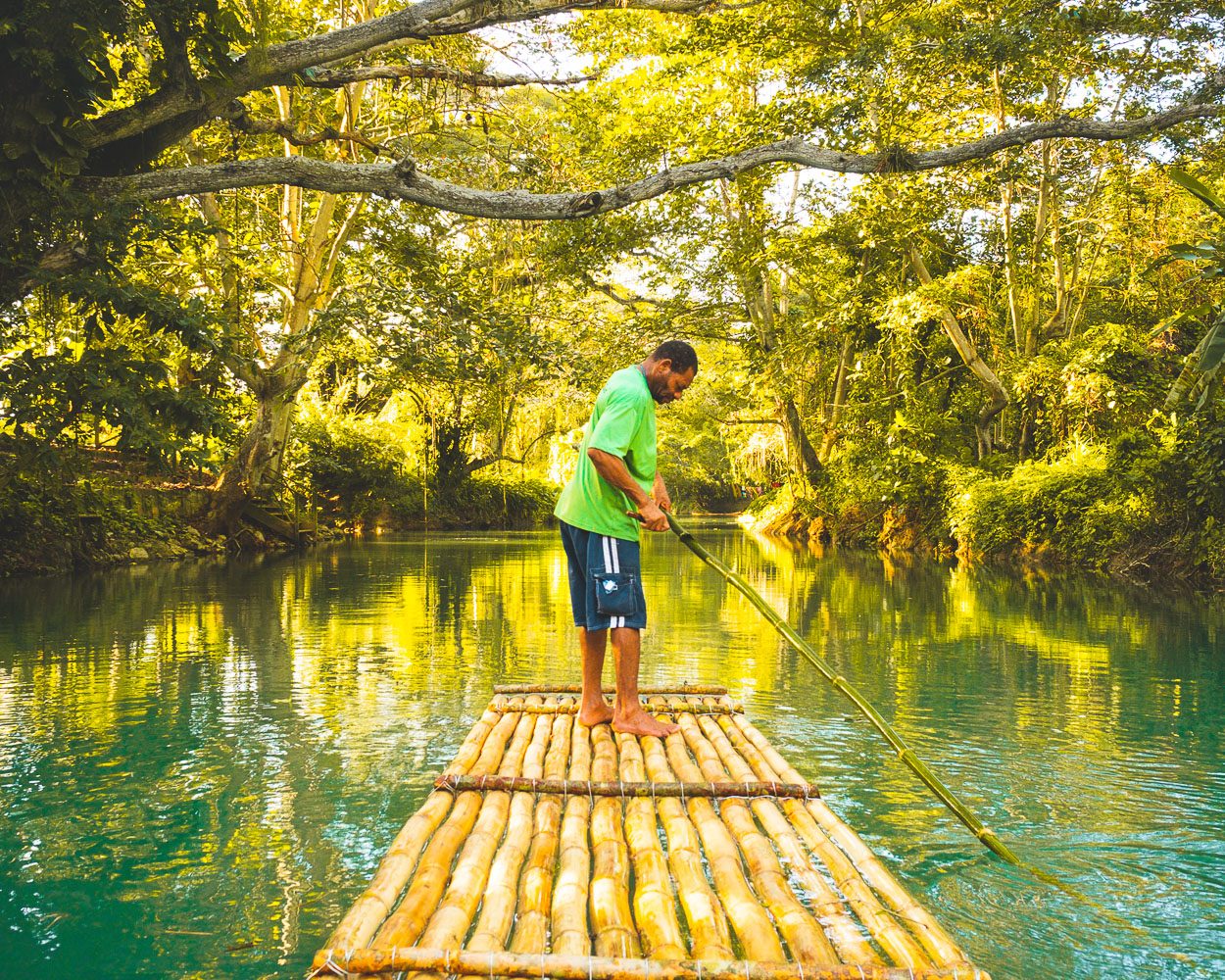
A slow bamboo-raft float down the river — the classic pace-changer excursion out of the north coast.
The rafts are 30 feet of bamboo, poled by licensed captains. The run takes about an hour and a quarter over three miles, with a swim stop if you want one and Miss Martha's Herb Garden waiting at Rafter's Village. The captains will tell you the legend the river is named for: Martha Brae, a Taíno woman who, the story goes, lured gold-hunting Spaniards to the water and drowned them in it. Legend, labeled as such. The working rafts underneath it were real — bamboo carried the plantations' produce down to Falmouth long before it carried visitors.
Blue Lagoon, Port Antonio
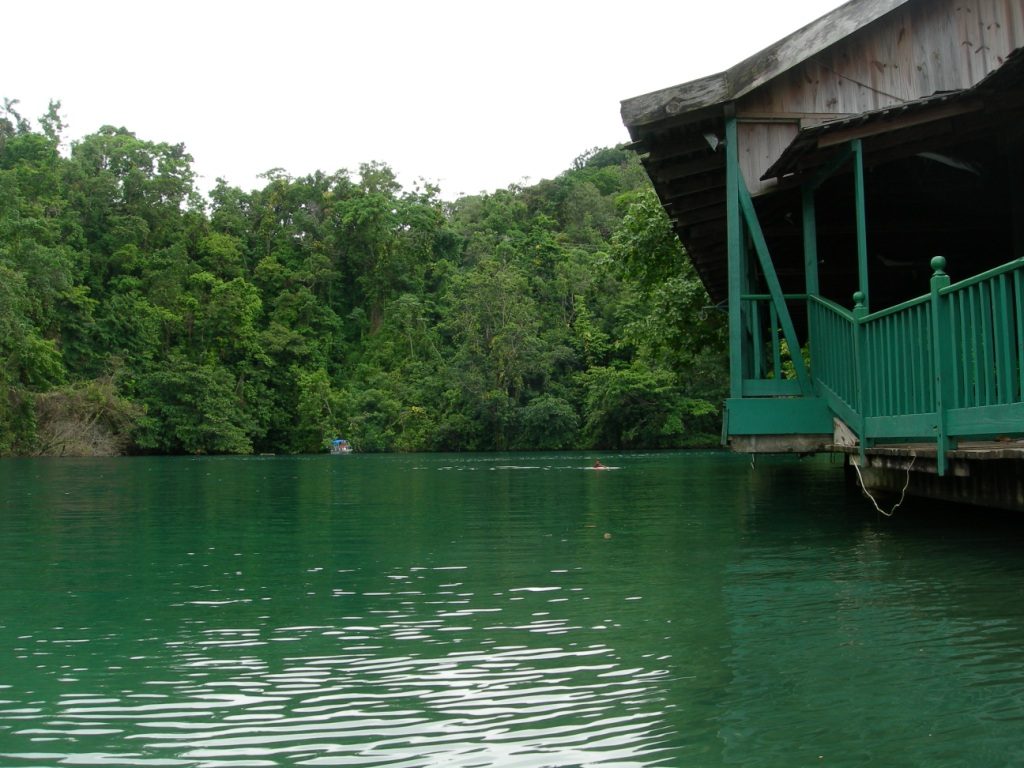
The quiet-side payoff: a deep mineral-spring lagoon well outside the resort-coast crowds, in the parish of Portland.
It was called the Blue Hole for generations, and locals swore it was bottomless — with, some said, a dragon in it. It measures out at roughly 180 to 200 feet, deep enough to keep the mystery respectable. Freshwater springs and the sea mix in it, so the color changes with the sun — turquoise in the morning, deep sapphire by afternoon — and swimmers pass through warm and cold layers as they go. The name changed after the 1980 Brooke Shields film made "Blue Lagoon" famous around the world. The lagoon itself never needed the publicity.
Things to do in Jamaica
- Kingston Blue Mountains Tour with Coffee Tasting · 4 to 9 hours
- Ocho Rios: Dunn's River Falls Tour from Ocho Rios · 5 hours
- Ocho Rios: Konoko Falls and Beach with Pickup · 1 day
- Martha Brae Rafting Adventure · 3 hours