

The Honest Story of the First Thanksgiving
Plymouth, Massachusetts, is more than a rock and a famous meal. Spend time on its working waterfront, walk the hills above the harbor, and listen to the Wampanoag people whose story never ended in 1621.
Editor's note — this story is more history than travel piece. Postcards usually writes about the going; this one stays with what happened. It earned its place for the holiday: the issue's one history lesson.
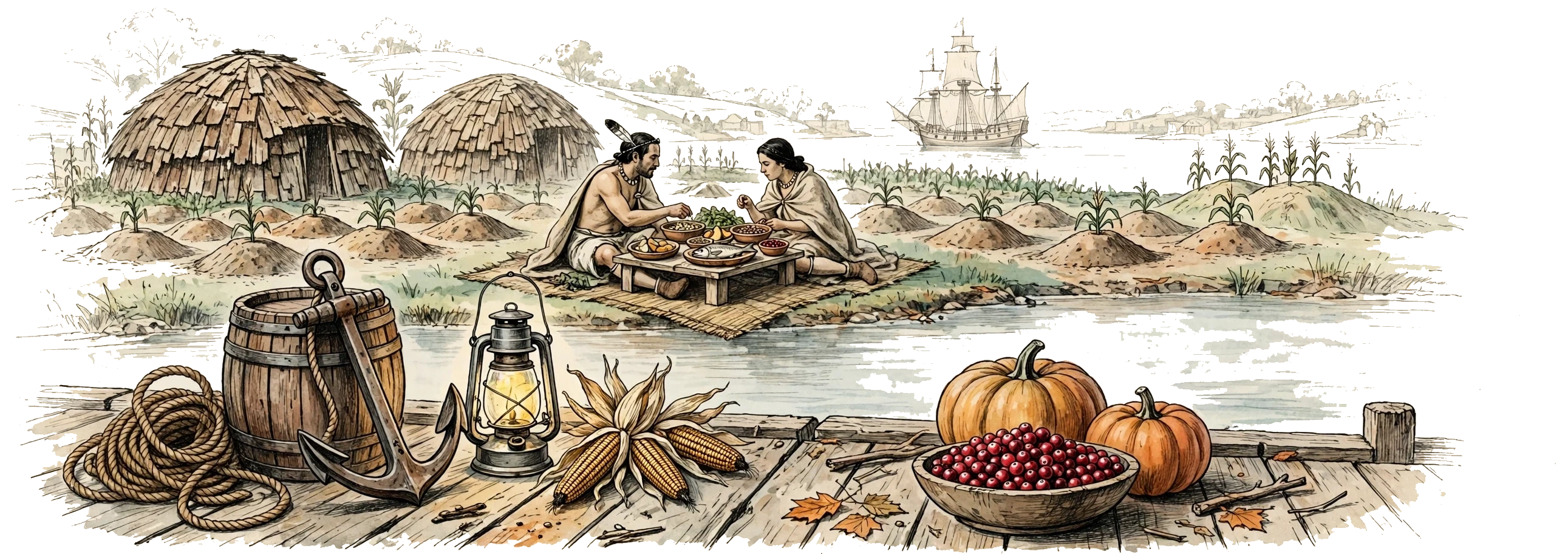
Illustration by Postcards from Paradox
The wind off Plymouth Harbor in late November has a way of finding the gap between scarf and collar. It comes across the water and follows you along the waterfront, past fishing boats and the pier where Mayflower II is moored. The replica ship was built in England and sailed across the Atlantic in 1957. Its masts rise above the road, and visitors can board, walk the decks and duck through the low doors. The original passengers crossed an ocean in something very much like this. People still work in this harbor.
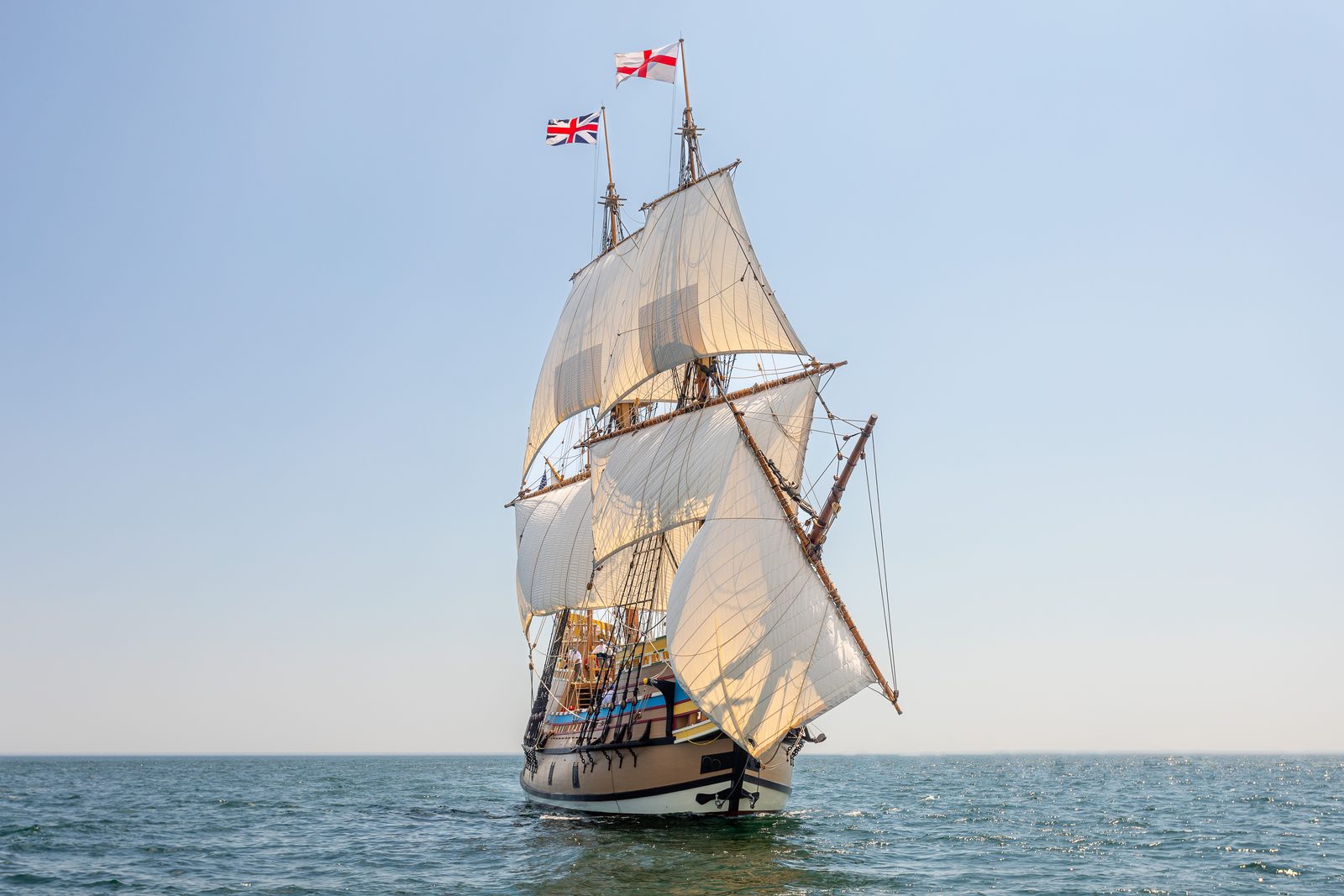 Mayflower II
Then you reach the Rock.
Plymouth Rock sits below street level, behind a railing, under a granite canopy that makes the stone look as if it is waiting to receive an important guest. The date 1620 is carved into it. There is no surviving account of anyone from the Mayflower stepping onto the rock, and the identification came in 1741, more than a century after the landing. It is also smaller than the monument surrounding it. A traveler who arrives with a school-pageant image of a grand first step into America has to make a quick adjustment.
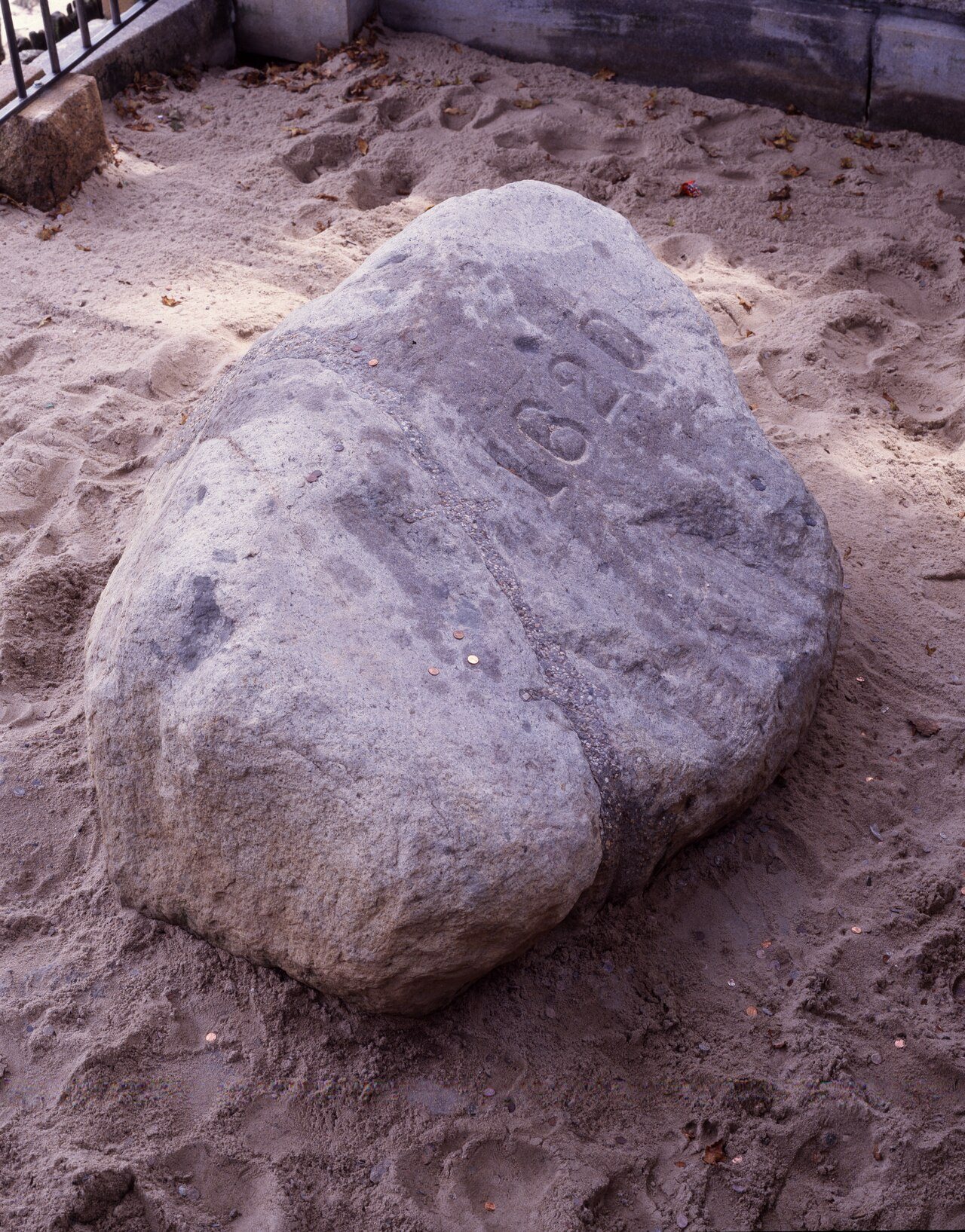 Plymouth Rock
You brought a whole national origin story. Plymouth has offered you a stone.
Stay a little longer. This is a handsome old New England waterfront with an actual working harbor behind its historic attractions. Families make the Rock-and-ship circuit in summer, when lunch often means fried seafood on the water. The promenade is quieter in November, but the town has not shut down for the season. It is getting ready for the holiday that made it famous, and the best way to understand that holiday is to leave the Rock and walk uphill.
Two Ways to Remember, One Short Walk
Cole's Hill rises just above the harbor. It is a small climb from the Rock, enough to change what you see: water and roofs below, monuments close together on the ground above. A granite memorial marks remains believed to be those of the English colonists who died during their first winter. Near it stands a statue of Ousamequin, the Wampanoag leader the English called Massasoit. Another marker commemorates the National Day of Mourning, when Indigenous people and supporters gather here every Thanksgiving at noon.
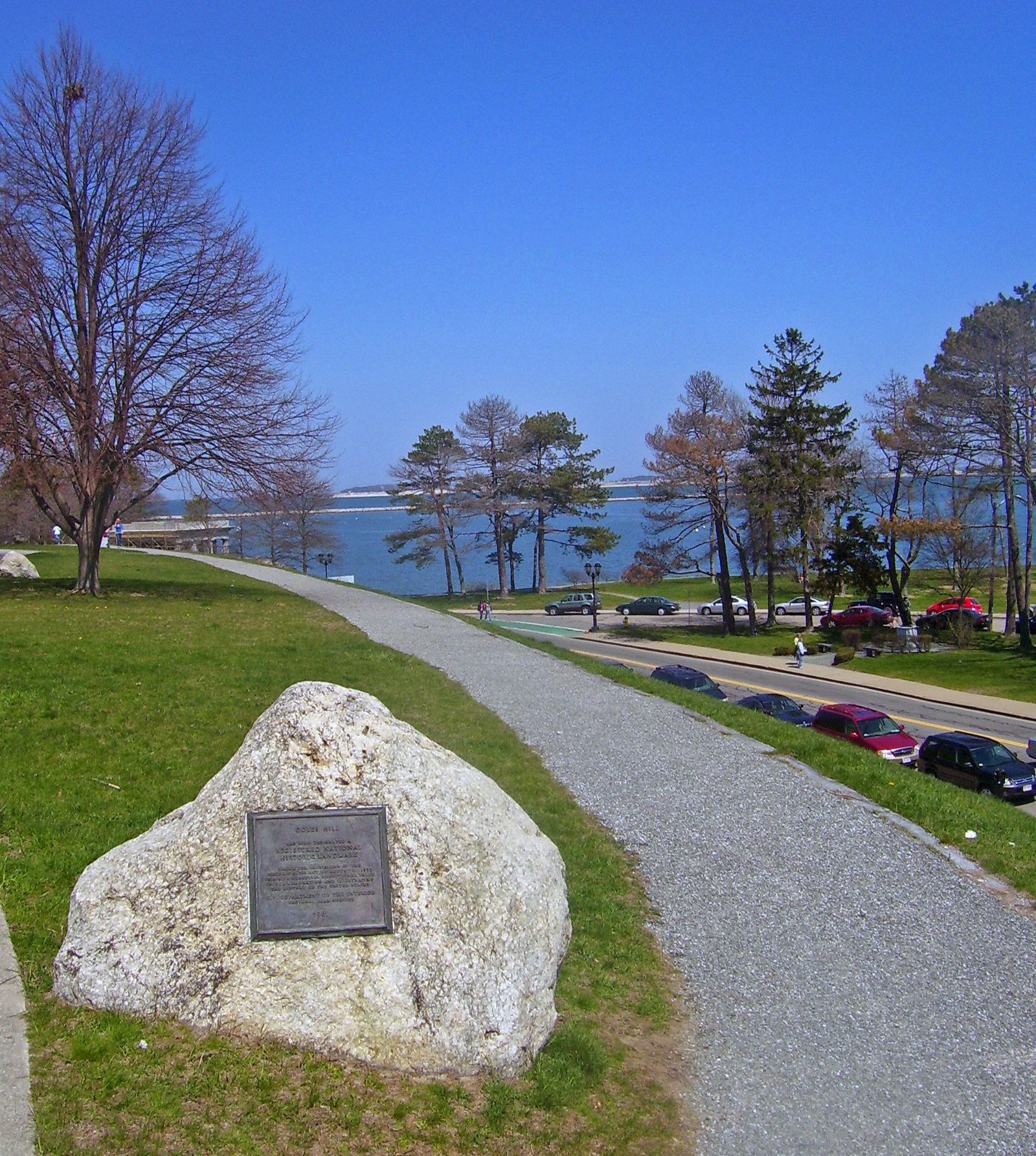 Cole's Hill
On Saturday, November 21, 2026, Plymouth's Thanksgiving parade will send floats, bands and costumed chapters of American history through town. The National Day of Mourning is five days later, on Thursday, November 26. The two gatherings fall on different days, but the route between their settings is short. Stand near the waterfront where the parade passes; walk up to the hill where people will gather at noon. The town is compact enough to let you hold both accounts of Thanksgiving in view.
The first tells of a settlement surviving a desperate year and sharing a harvest with its Native neighbors. The second asks what it cost Indigenous people when that settlement became a colony and, eventually, part of a nation. The hill holds the dead of one people and the names and testimony of another. Both accounts deserve to be understood on their own terms.
To understand why this particular hill matters, go back down toward the water. The place itself will show you where the familiar story starts leaving things out.
The Place Was Patuxet
Follow Town Brook inland from the harbor and you begin to see where the old story unfolded. The stream passes through Brewster Gardens and on toward the Plimoth Grist Mill, where a mill still grinds along a waterway the English colonists later dammed. The brook and the low ground around it are part of a landscape people knew long before an English town was laid out here.
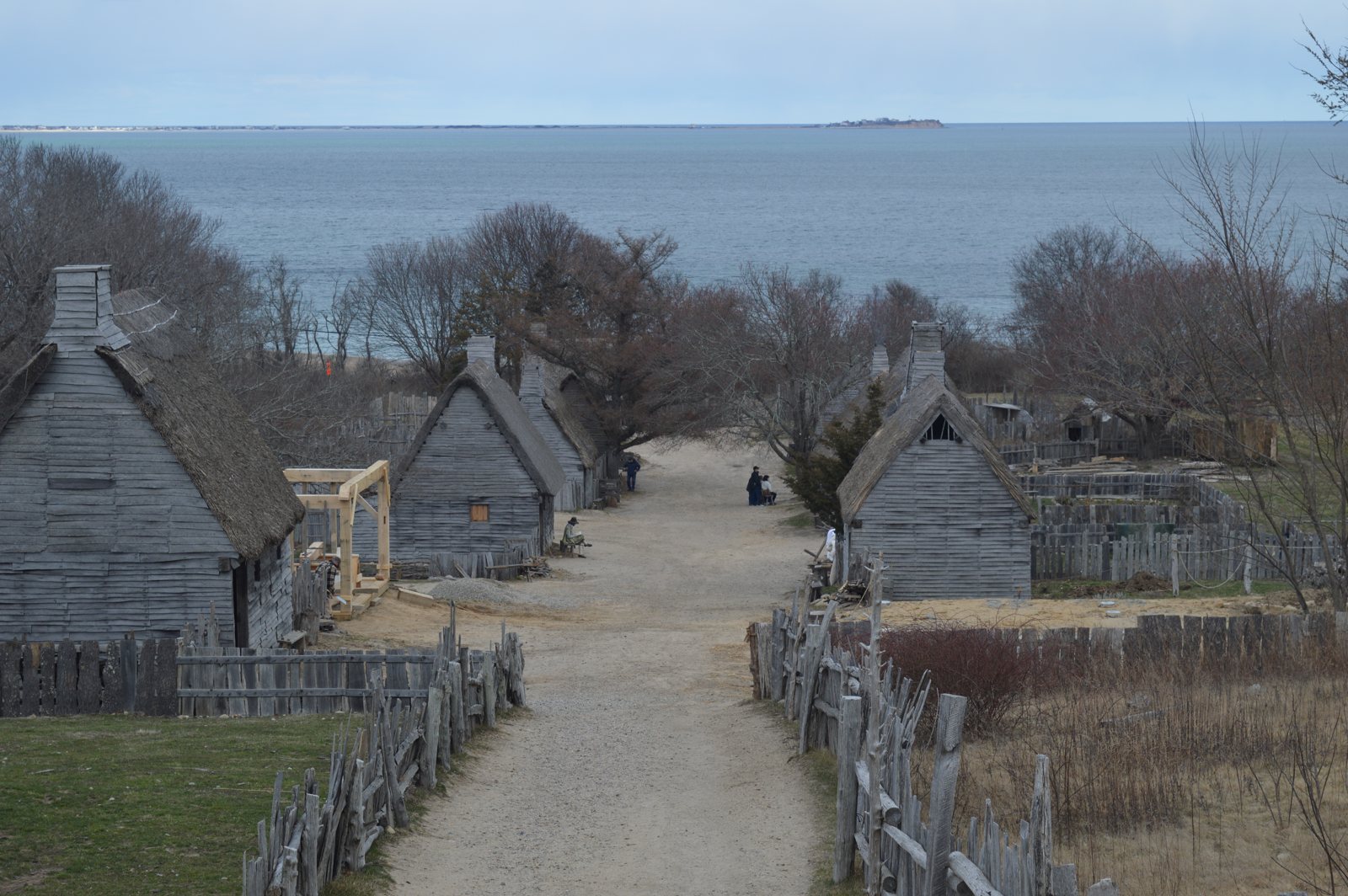
The Mayflower passengers established their settlement in December 1620 after first anchoring off Cape Cod. They called it Plymouth. The Wampanoag knew the place as Patuxet, a village of roughly two thousand people, with established fields and access to the harbor's fish and shellfish. It was a homeland. The planting ground the colonists found had already been cleared by the people who lived there.
An epidemic between about 1616 and 1619 had devastated Patuxet and neighboring communities. English sources called it a plague, but the particular disease remains disputed. Some estimates put mortality as high as 90 percent in certain places, though the true rates remain uncertain. The newcomers found stored corn and the remains of people who had died. Then their own first winter brought hunger and death. About half of the English passengers did not live to see spring. Tradition holds that their graves on Cole's Hill were levelled and sown over to conceal the settlement's losses from Native observers.
Paula Peters is a citizen of the Mashpee Wampanoag Tribe and co-owner of SmokeSygnals, the Indigenous production company behind the "Our" Story: 400 Years of Wampanoag History exhibit and the film Captured: 1614. She is Communications and Programs Manager at the Native Land Conservancy, after more than a decade as a journalist. She spoke by phone with Postcards editor Brian Voyles on November 8, 2026. Patuxet, she said, "became a ghost town." The great dying, as she called it, spread along the coast from Maine to the tip of Cape Cod. She compared its spread to COVID, describing how easily it passed through a population with no immunity. She said it was possibly carried by the Europeans. When the Mayflower came, she said, part of what drew the English to this shore was a harbor with land already cleared, so there were no trees to cut. "They swept away the bleached bones of the dead," she said they recorded, and they took it as providence. In her telling, the English felt it was "a gift from God," that the plague had been sent "to make way for their godly selves." People had died on their homeland.
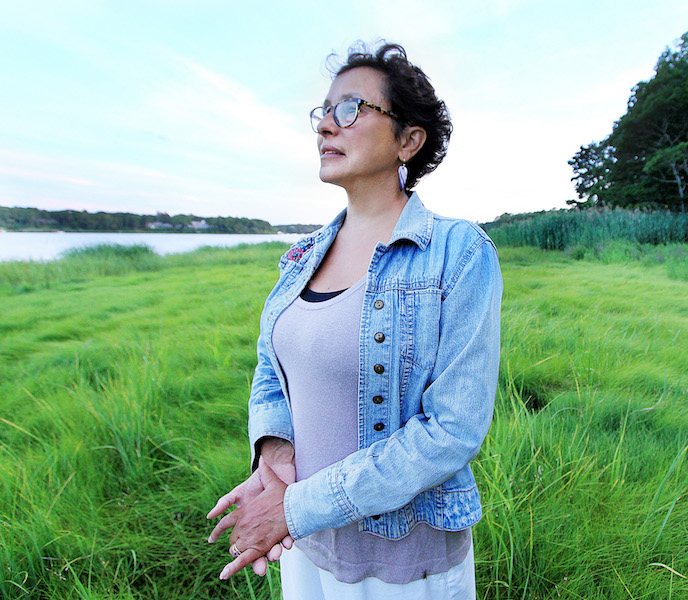 Paula Peters
Now put one man back into that landscape. Tisquantum, called Squanto by the English, was from Patuxet. He was not there when the epidemic struck. In 1614, Captain Thomas Hunt lured him and other Wampanoag men aboard a ship — Mourt's Relation counts him "one of the twenty Captives" — then carried them to Málaga, Spain, intending to sell them into slavery. By the accounts of Bradford and Mourt's Relation, he made his way to England, where a London merchant, John Slany, took him in, and there he learned English.
For Peters, the events of 1614 are where this story must begin. "The story of the kidnapping of the men from Patuxet is a critical back story to colonization of Plymouth," she told Postcards, "and so many people don't know the truth about Tisquantum." She said that history explains how Tisquantum learned English and came to understand the colonists: he had lived among them. He was not the only one taken. Peters put the number taken from Patuxet at about twenty men and said European sailors and explorers carried out many other kidnappings in those years. That, she explained, is why the English landing was not a first meeting. The "Our" Story exhibit takes the same approach, beginning with the abductions rather than the Mayflower. For visitors who know the familiar Thanksgiving story, the exhibit offers an essential correction.
As Peters put it to Postcards, “You can't start learning about Plymouth Colony by starting when they stepped on the rock.” The rock has its place on a walking route. It cannot be the beginning of the history.
Another Wampanoag man had seen the strangers' world from the inside. Epenow, from Noepe — Martha's Vineyard — was abducted by Captain Edward Harlow in 1611 and taken to London. After about three years there, he told the English a story they were eager to believe: his island had gold, and he could lead them to it. An expedition took him home in 1614. When the ship reached Noepe, his brothers and cousins came out to meet it with a plan to free him. Under a hail of arrows, Epenow dove into the water and swam to safety. The Wampanoag Tribe of Gay Head (Aquinnah) preserves the story of his escape.
Tisquantum's way home was longer. In 1619 he came back to Patuxet with Captain Thomas Dermer, after five years away, and found what the Plimoth Patuxet Museums' account describes as "deserted wetuash (homes) and overgrown cornfields." Dermer's own letter, as quoted by Nathaniel Philbrick, says of Patuxet: "we found all dead." He had come home, after five years and an ocean, to a village with no one in it. The villagers' remains were still there a year later, when the English came ashore and, as Peters put it, "swept away the bleached bones of the dead." The English he had learned in London was no use to him there.
Epenow and Tisquantum were not two versions of a grateful Native helper. They were men who had survived captivity and made different choices under different conditions. Their stories belong before the handshake in the schoolbook.
A Diplomat Walks Into Plymouth
Today, the old settlement and the harbor form a compact historic district. In the spring of 1621, the English were a small, vulnerable group living within a much larger Indigenous political world. Ousamequin, the Pokanoket sachem, had people to protect and rivals to consider.
The contact began with a strange scene. On March 16, 1621, Samoset, an Abenaki man from the Maine coast who had learned English from fishermen, appeared among the colonists and greeted them in their own language: "Welcome, Englishmen." Six days later, on March 22, Ousamequin came to negotiate, accompanied by his men. Across from him was Governor John Carver. Between them stood Tisquantum, back on the ground of Patuxet, interpreting for both sides.
What would a leader do with a small English settlement in his territory, one that might bring either new dangers or a useful alliance? Ousamequin chose negotiation. That choice made the celebrated autumn meal possible. It was diplomacy undertaken for Wampanoag interests, not the opening ceremony of a future American holiday.
What the Treaty Said
The March 1621 agreement, recorded in Mourt's Relation, required neither side to harm the other; stolen property would be restored and offenders punished. If one party were attacked unjustly, the other would help. Ousamequin would seek to bring neighboring peoples under the agreement. His men would put aside bows and arrows when entering Plymouth; the English would put aside their guns when visiting him.
Those last terms show how cautious both sides were, despite the cordial language. Both leaders understood the weapons each side carried. The alliance held through the lifetimes of the men who made it, but it could not protect everyone who came after them.
The record only partly explains what Tisquantum did next. Bradford, who knew him, writes that after the treaty was made Ousamequin went home but "Squanto continued with them, and was their interpreter." Winslow put it down to ambition: Tisquantum's "ends were only to make himself great in the eyes of his countrymen." Bradford adds that Ousamequin's hostility later pushed him to "stick close to the English, and never durst go from them till he died," and by 1622 Bradford was complaining that Squanto "sought his own ends, and played his own game." Plimoth Patuxet's account also offers a different interpretation, from Wampanoag historian Nanepashemet: Tisquantum used the skills hardship had given him to carve out a place in a changing world. All these interpretations share the same starting point. The village that would have been his was dead. The Wampanoag world around it, under Ousamequin, had been weakened by the same epidemic and was pressed by the Narragansett, who had suffered less. And the English had guns, and no one who could speak for them in this country. A man who could speak both languages was the one person all of them needed.
That spring, Tisquantum taught the English where to fish and how to grow corn in the soil he knew: setting it in hills, and setting fish with it, because, as Bradford recorded, without fish "in these old grounds" the corn "would come to nothing." Bradford credited him with helping the colony survive. That knowledge had passed through Wampanoag generations. Tisquantum, a man from Patuxet, chose to share it and helped shape what happened here. The harvest of 1621 did not simply grow out of English perseverance. It grew from land already worked and skills they had to learn from its people.
By autumn, the English had a harvest. Ousamequin had an alliance to manage. The historical account records the colonists practicing with their weapons and Wampanoag men coming among them, but it does not preserve an invitation to come. "I think it is important for people to know that the Wampanoag were never invited," Peters said. Her reading: "We suspect it was because when the colonists were celebrating their harvest, they blasted their muskets. That probably was perceived by the Wampanoag to be a threat." "So they went there armed with 90 men because they were warriors. They didn't go there as guests. If they were going as guests, they would have been towing their wives and children, etc." Plimoth Patuxet Museums also cites Wampanoag and Penobscot historian Nancy Eldridge's interpretation that Ousamequin's arrival was likely a political show of force. The visitors' intentions cannot be read directly from Winslow's short letter, but neither should the gathering be dressed up as a friendly invitation.
The Feast, from the Only Eyewitness
At Plimoth Patuxet Museums, a few miles from downtown, you can attend a modern harvest dinner and hear how the holiday took shape. But no surviving account of the 1621 gathering gives us anything like a modern menu. Its only surviving eyewitness description is a paragraph in a letter Edward Winslow wrote that December, later published in Mourt's Relation. It is worth reading slowly, without illustrations and without somebody putting a turkey on the table for you:
“Our harvest being gotten in, our governor sent four men on fowling, that we might after a more special manner rejoice together, after we had gathered the fruits of our labors. They four in one day killed as much fowl as, with a little help beside, served the Company almost a week. At which time, amongst other recreations, we exercised our arms, many of the Indians coming amongst us, and among the rest their greatest king Massasoit, with some 90 men, whom for three days we entertained and feasted, and they went out and killed five deer, which they brought to the plantation and bestowed on our governor, and upon the captain, and others.”
Begin where Winslow does: the harvest is in. Four English hunters go out for birds, and their catch will feed the little company for days. The colonists practice firing their weapons. Wampanoag men come among them, including Ousamequin with about ninety men. They stay for three days and bring back five deer for the gathering. There were roughly fifty-three surviving English colonists. The Wampanoag party was larger than the settlement it joined.
The sound and scale of that scene are more interesting than a perfect painted table: weapons being exercised, food gathered from fields and woods, a sachem with his people on ground they know. Neither the record nor the later mythology tells you what every person thought. What the record does show is that Wampanoag hunters made a substantial contribution to the meal and that Ousamequin came in his capacity as their leader.
Once they arrived, Peters said, the Wampanoag were invited to stay and feast. The Wampanoag men, she noted, brought venison, and the English letter mentions fowl that may or may not have been turkey. It is a stretch, she said, to get from that to the holiday. "I think it was more like a measure of one another." The English and the Wampanoag had a treaty, but there were weapons, uncertainty and difficult judgments about what the other side might do next. Turning it into a picture of uncomplicated friendship removes the decisions that made it possible.
The foodways interpreters at Plimoth separate what can be documented from what must be inferred. Wildfowl, corn and venison are in the record. Bradford wrote of wild turkeys in the region that autumn, not necessarily on this table. Goose or duck may be more likely; seafood was also available in these waters, though the feast account does not mention it. There is no need to force cranberry sauce or pumpkin pie backward into the scene.
More telling is what Wampanoag kitchens and fields had long supplied. Corn, beans and squash grew together; fish and shellfish came from the coast, along with food from hunting and gathering through the seasons. Nasamp, a corn porridge, and sobaheg, a stew of corn, beans, squash and meat or fish, are among the preparations museum educators use to explain that food culture. The red cranberry bogs farther inland are part of the same regional landscape; Wampanoag communities gathered wild berries long before the modern sauce became a holiday expectation. The original feast drew on food traditions the Wampanoag had developed long before the English arrived.
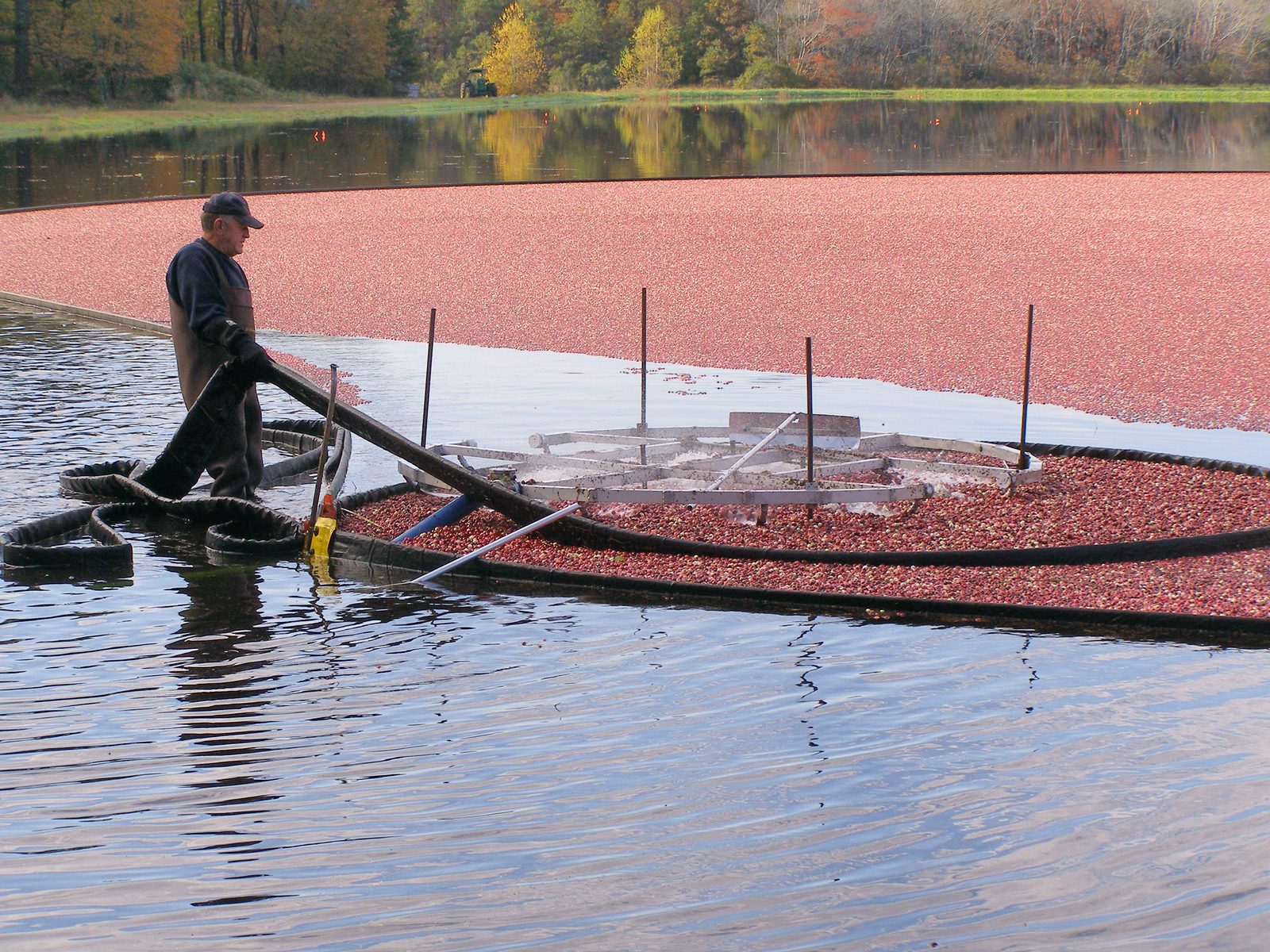 Cranberry harvest
Giving thanks was also a longstanding Wampanoag practice. Wampanoag seasonal tradition included Keepunumuk, the harvest time of gratitude, long before the English arrival. Linda Coombs, an Aquinnah Wampanoag historian and consultant to the National Museum of the American Indian's Native Knowledge 360° project, has described the Wampanoag as people who "had and still have a deep knowledge of tending to the land and a reciprocal relationship with all living beings," in the museum's published account. The modern holiday did not introduce gratitude to Patuxet. The holiday grew out of a story about people who already practiced gratitude.
For Peters, thanksgiving has never been confined to one harvest meal. "The giving of thanks was something that we did and still continue to do more than just one time a year." In Mashpee, she said, "We have Thanksgiving celebrations around the arrival of the herring in the spring … It marks a passage into spring and into our planting season." Herring swim up the Mashpee River to spawn in Mashpee Pond, and the ones that survive go out to sea and come back years later to the same water. The Mashpee Wampanoag Tribe's Herring Day gathering honors that return with community learning, song and time together. "We also give thanks for the first fruit of the season. We have what's called a strawberry thanksgiving." The tribe's Strawberry Thanksgiving has brought families together to recognize the season's first fruit through food, games and dance. "It's just an all the time thing. It's not something that happens one time a year." These are not side dishes in a story about an English feast. These are the ways Wampanoag communities live and mark the seasons on their own land.
As summer gives way to fall, the corn harvest brings another reason to gather and give thanks. The Smithsonian's Native Knowledge 360° research, developed with Wampanoag knowledge holders, identifies corn and cranberries among the autumn harvests still recognized by Wampanoag families. On Martha's Vineyard, the Wampanoag Tribe of Gay Head (Aquinnah) continues Cranberry Day. Elders and younger relatives harvest together, share stories, then gather to celebrate and thank the Creator for another year's fruit. These observances belong to particular communities and times of year, and are not arranged around the Thanksgiving traveler. The National Museum of the American Indian's Native Knowledge 360° Thanksgiving inquiry makes the essential point: Wampanoag harvest traditions are living practices, not relics that ended in 1621.
Peters asked that people take that learning beyond November. She specifically recommended Linda Coombs's Colonization and the Wampanoag Story, which tells the history through Indigenous perspectives, and resources created with Wampanoag educators. A reader can follow those voices after leaving the harbor. That is a better souvenir than a certainty the historical record does not support.
Even the familiar name was applied afterward. In English religious usage, a thanksgiving often meant a day of prayer, and Winslow did not call this harvest gathering that. Boston minister Alexander Young printed the letter in 1841 and labeled the event “the first Thanksgiving” in a footnote. Lincoln's national proclamation followed in 1863, during the Civil War.
114 words. The holiday is the footnote that swallowed the letter.
The label stuck because it got printed — a fact any magazine can appreciate. Postcards asked Peters what she wishes journalists would stop doing with this story. "I think that it would be great if journalists … would stop just trying to recognize us in November. Because we are important all year round. … The Wampanoag people are still a thriving, vital community of people. … So just recognizing that we are still here is very important."
The history of the holiday is longer and more layered than the three-day gathering that later came to stand for it.
The Town Beyond the Rock
There is plenty of Plymouth worth seeing before returning to the hard history on Cole's Hill. Walk up Leyden Street, laid out in the early colony and now lined with ordinary private homes. The first English streets have not been turned into a museum set. People still live on them. Climb to Burial Hill—not Cole's Hill—and you reach an old burying ground with weathered markers, William Bradford's memorial and broad views across the harbor. It is a different kind of monument from the Rock: less theatrical, more useful for understanding how the old town sits on the land.
Back below the hill, Town Brook runs through Brewster Gardens toward the waterfront. Follow it toward the Plimoth Grist Mill to see the town's colonial milling history at work. Or take the separate trip to the National Monument to the Forefathers, an imposing granite structure on a residential rise away from the waterfront. It is not on the Rock-and-ship circuit, and that is part of its appeal: Plymouth's elaborate nineteenth-century memory of the Pilgrims did not all fit on the shore.
The strongest excursion, though, goes to the Historic Patuxet Homesite at Plimoth Patuxet Museums. The museum's reconstructed seventeenth-century English Village gives one perspective; at the Homesite, Indigenous educators interpret Native life and knowledge from the people to whom that history belongs. There are living Wampanoag nations and families behind that work. Go for the history and listen for the present tense.
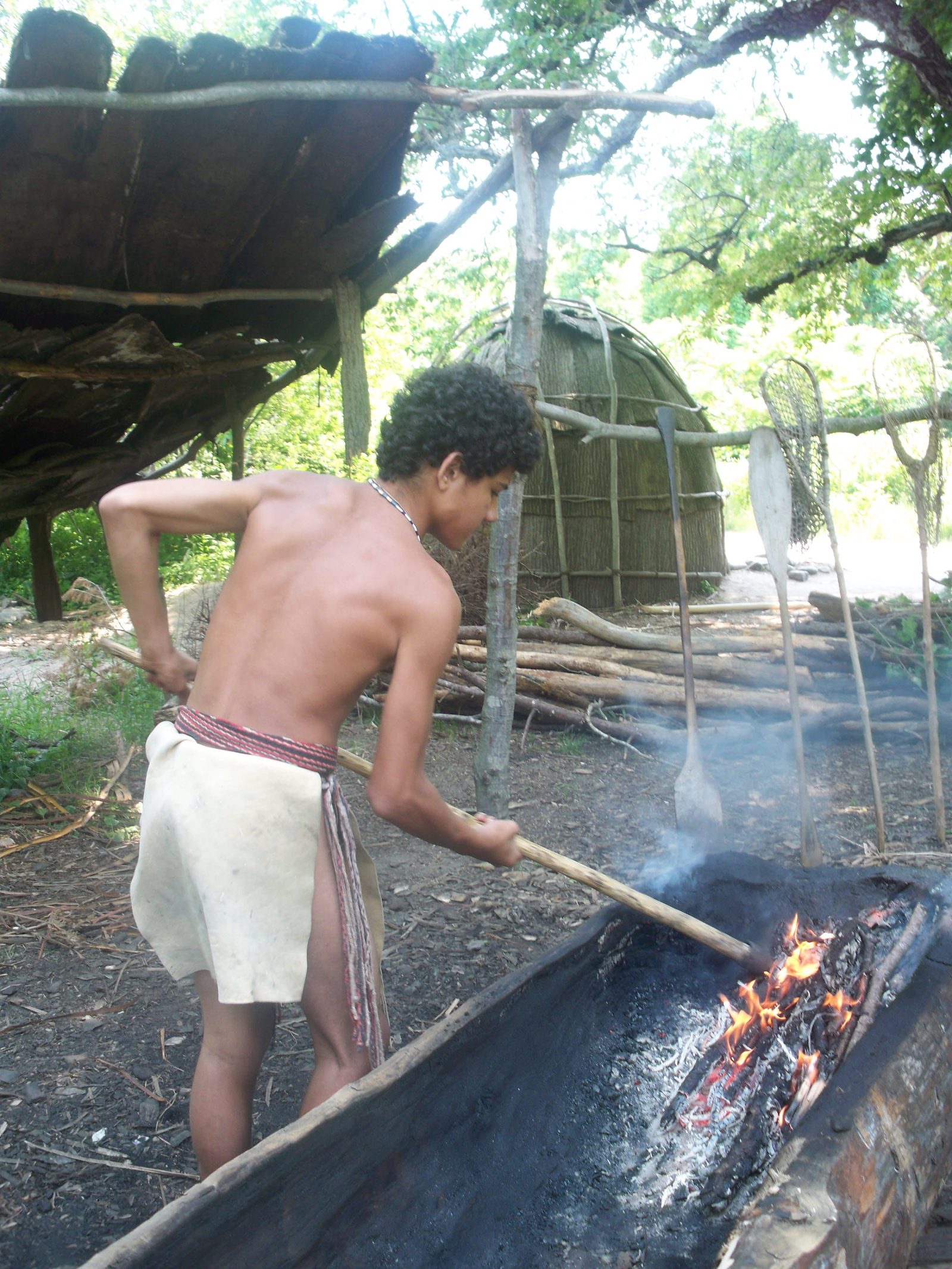 The mishoon
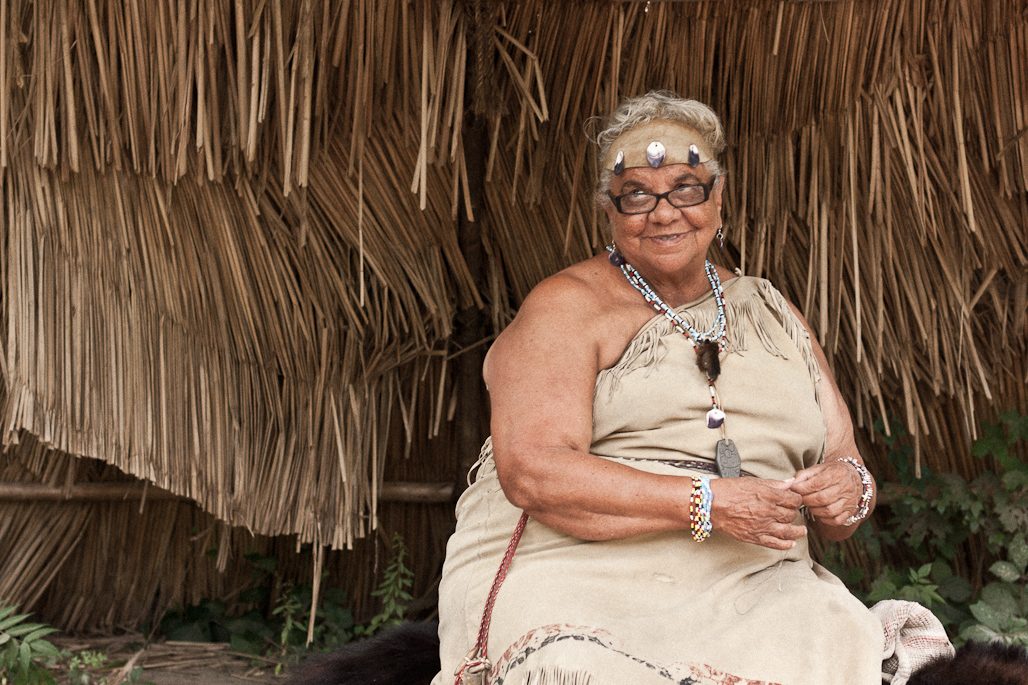 At the Homesite
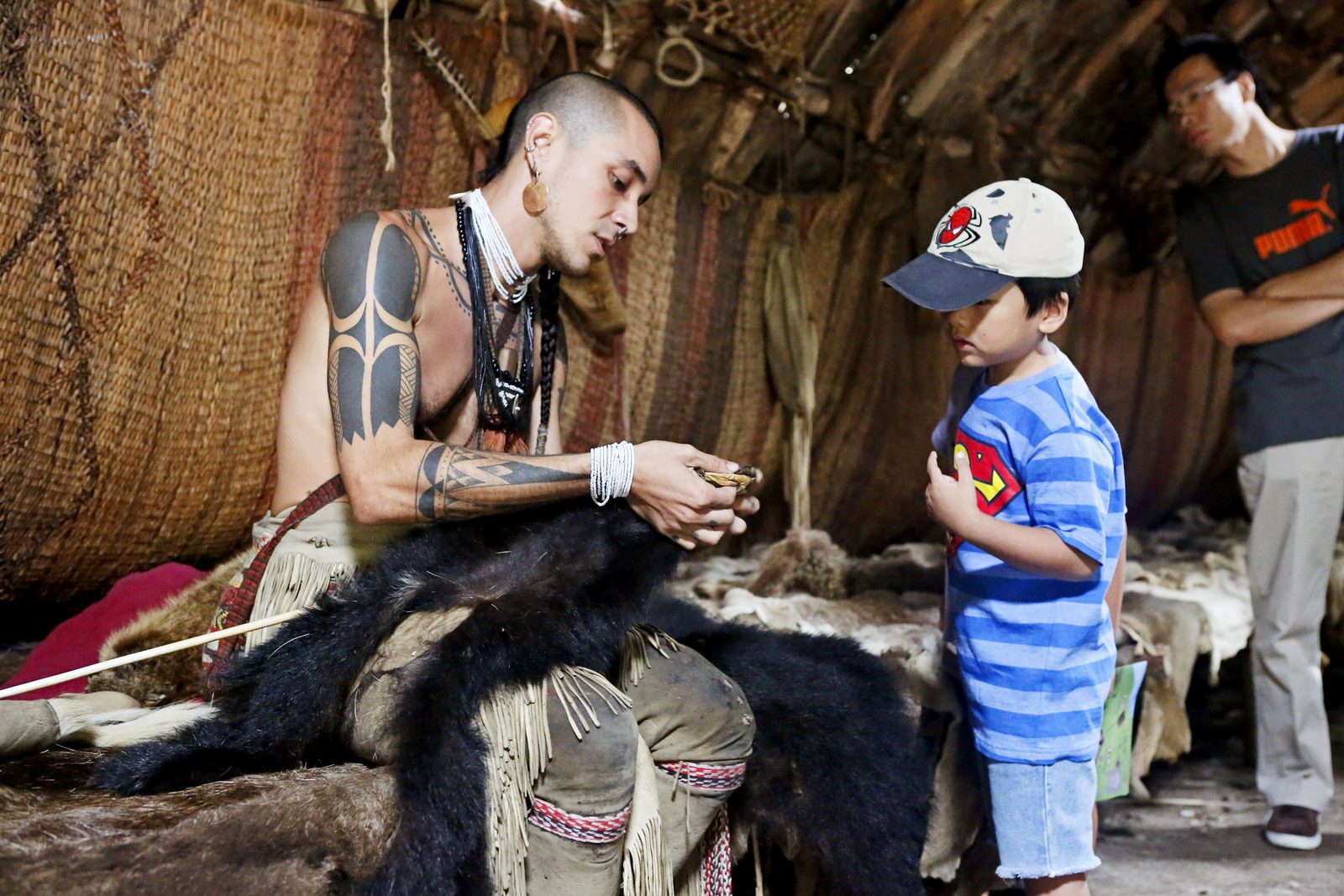 Inside a wetu
When it's time to eat, head back to the waterfront. Wood's Seafood on Town Wharf is one of the town's longstanding places for fried fish and shellfish, with the working harbor nearby. Lunch beside the fishing boats is simply a meal in present-day Plymouth, rather than a reenactment of a historical feast or a holiday ritual.
If you want to stay downtown and make the waterfront walks without constant driving, the John Carver Inn on Summer Street puts the Rock and Cole's Hill within reach. It bears the name of the governor who negotiated the 1621 treaty and died that first April. Its family amenities include a Mayflower-themed indoor pool area, refreshed in a recent renovation. The museum also runs autumn dining experiences, including a holiday meal paired with historical interpretation and a New England Harvest Feast; check its current schedule for dates.
There is plenty in Plymouth to justify a longer visit. It also has a habit of turning every corner into a memorial. That can be illuminating or exhausting, depending on how much time you give the living town between the plaques. The best version of this trip leaves space for a waterfront meal, a brookside walk and a real conversation—not just another photograph of a stone.
What the Hill Hasn't Finished Saying
Back at Cole's Hill, Ousamequin's statue faces the harbor. He negotiated for his people's interests in 1621, and for decades the alliance held. But his diplomacy could not keep colonial settlement from expanding or protect the sovereignty of later Wampanoag generations. His eldest son Wamsutta was taken to Plymouth by colonial authorities in 1662 and died soon after, under circumstances Wampanoag people considered suspicious. His younger son Metacom—called King Philip by the English—led a coalition of Native nations into the war of 1675–76 against the erosion of their lands and authority.
The war devastated Indigenous communities and English towns. Metacom was killed in 1676, and his head was displayed in Plymouth for more than twenty years. His wife and young son were sold into slavery. Those facts explain why the 1621 treaty cannot be the last page in the account, and why it would be wrong to judge Ousamequin's decision only by what later colonists did.
The Mashpee Wampanoag Tribe and the Wampanoag Tribe of Gay Head (Aquinnah) are federally recognized today, and communities at Assonet, Herring Pond and Chappaquiddick remain active. Their persistence is not a footnote to the colonial story, and not a consolation after it. Their history continues in the towns and communities where they live today. The Native Land Conservancy, a Native-led organization protecting and restoring land and water, carries that commitment to the land into the present.
A plaque a few steps from the older Plymouth monuments brings that story closer to the present. Unlike the monuments to earlier centuries, it marks a refusal within living memory.
Noon on Cole's Hill
The National Day of Mourning plaque sits on Cole's Hill today. Its words mark a gathering that began because a Wampanoag leader refused to deliver the speech officials wanted. In 1970, Massachusetts was preparing a banquet for the 350th anniversary of the Mayflower's arrival. Wamsutta Frank James, an Aquinnah Wampanoag leader, had been invited to speak. His submitted speech described the costs of colonization, and the organizers wanted it rewritten. He refused. Instead of softening his speech for the banquet, he delivered the words the official celebration would not accommodate at a public Thanksgiving gathering on Cole's Hill.
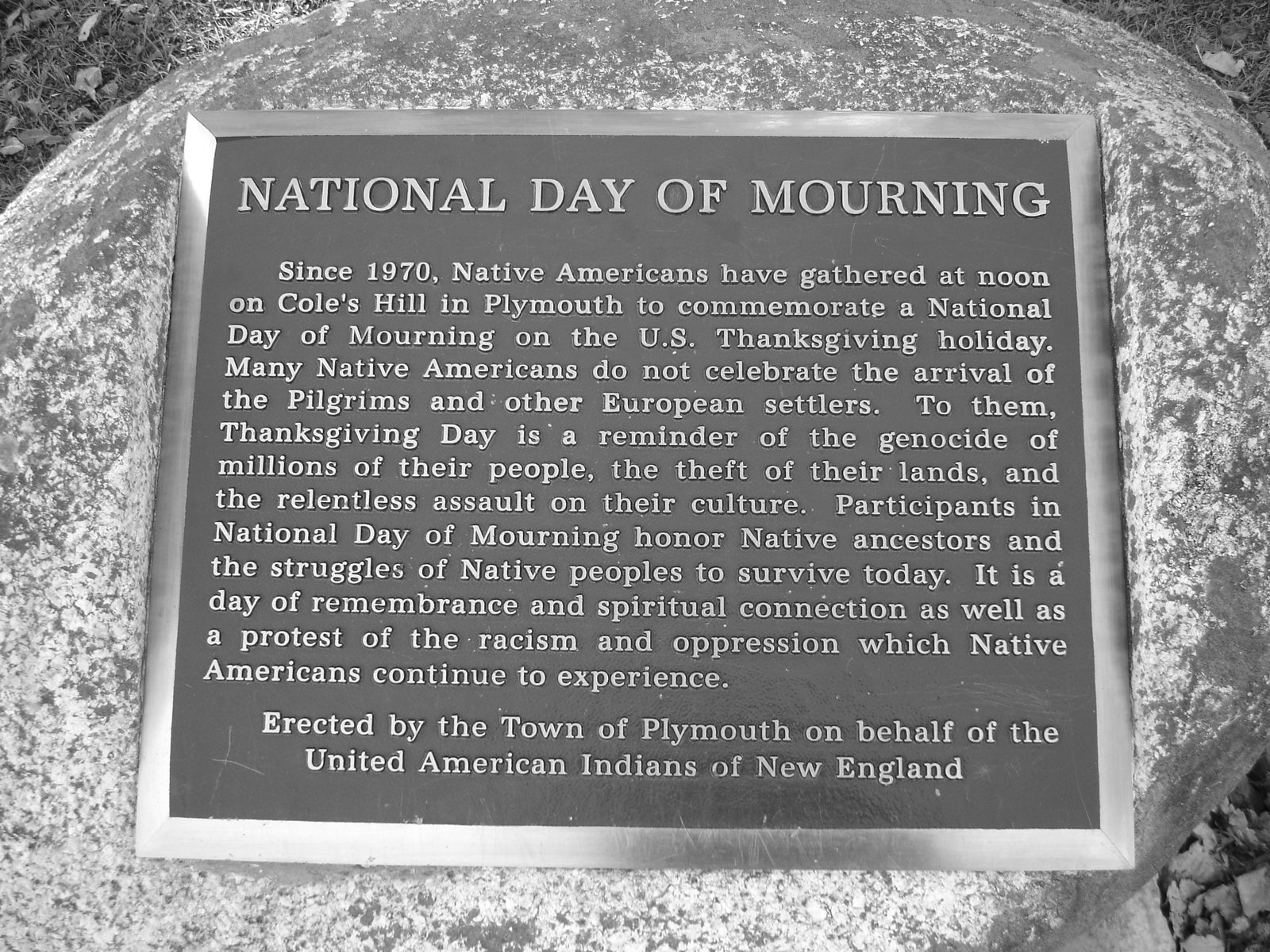 The National Day of Mourning
Protesters that day buried Plymouth Rock in sand and boarded Mayflower II. The speech and the observance it began asserted a right that Native people continue to exercise: to tell their own history, including its consequences, regardless of the anniversary committee's objections.
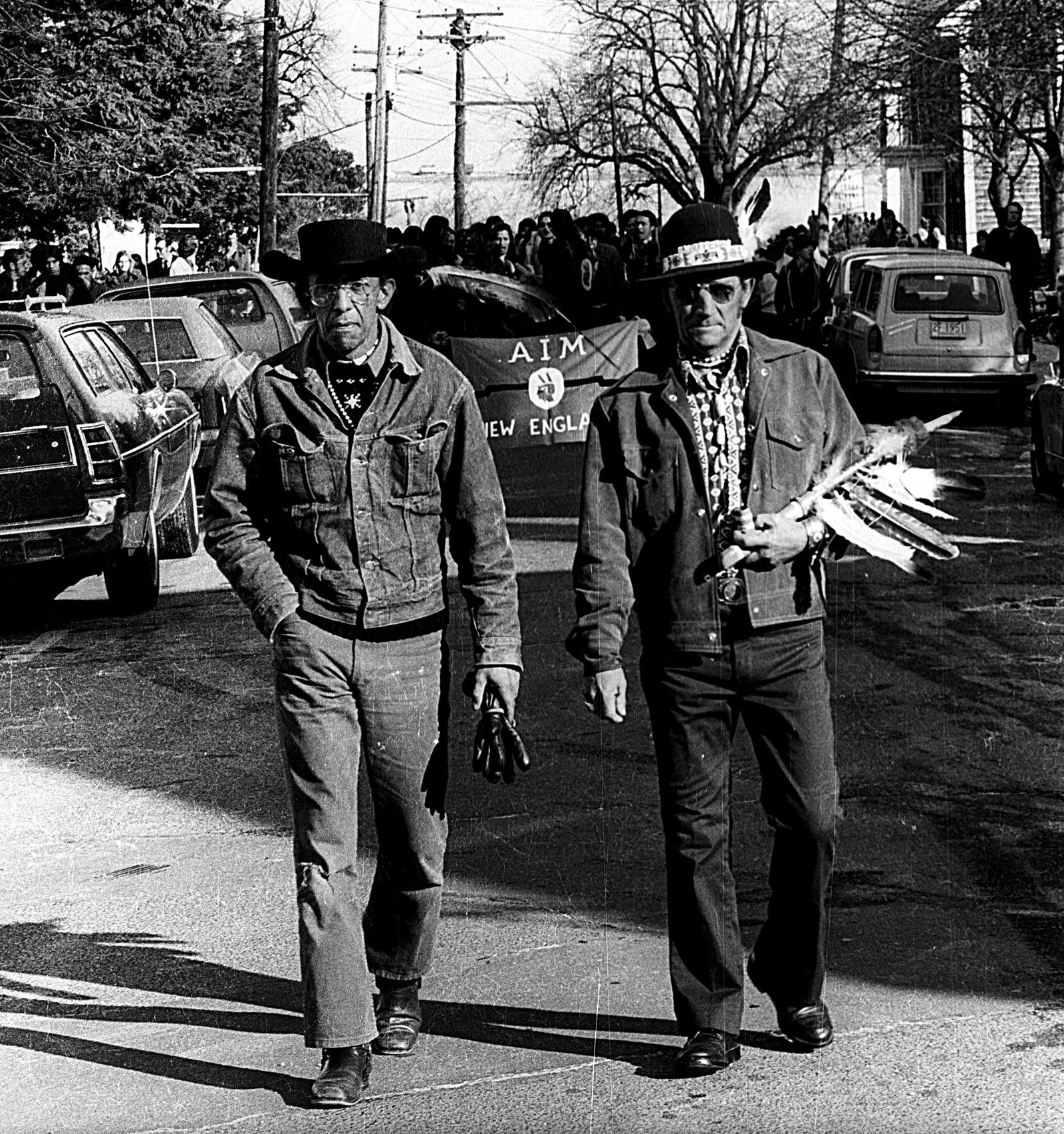 The National Day of Mourning
United American Indians of New England has organized the National Day of Mourning every Thanksgiving since. Wamsutta's granddaughter, Kisha James, an Aquinnah Wampanoag and Lakota organizer, helps carry on the observance today. In 1998 Plymouth installed the plaque on the hill after a legal settlement, formally acknowledging an observance that challenged the town's familiar commemoration.
This year the gathering is scheduled for Thursday, November 26, at noon. Indigenous speakers address their ancestors' history and ongoing struggles, and a march follows through the historic district. UAINE calls it remembrance, spiritual connection and protest. If you attend, listen and follow the organizers' guidance. The speakers are there to remember, speak and protest on their own terms.
The distance down to the Rock is still short. One monument remembers English losses. Another honors a Wampanoag diplomat. A third records a Native gathering whose organizers refused to let the American holiday settle the story for them. A visitor moving between the parade route and Cole's Hill can now recognize what the familiar picture leaves out. The people at noon are telling their own story, not supplying a second act to the parade.
Still Here
Peters has been insisting that the Wampanoag are still here since second grade. In an interview with TIME, she recalled a classmate asking what had become of the Wampanoag and a teacher saying they were all dead: "I raised my hand, and I said no that's not true, I'm a Wampanoag, and I'm still here." The spring herring, summer crops and fall harvest do not wait for the national holiday. Neither do the work of protecting land and water, teaching Wôpanâak, or keeping communities together. Those stories belong in the present tense all year.
It is the most useful correction to carry back down the hill. Tisquantum used his own language and knowledge in a world that had taken his home. Epenow turned a captor's greed into a route back to Noepe. Ousamequin chose diplomacy for his nation. Wamsutta and Metacom resisted what followed. Wamsutta Frank James refused to lend his voice to a false anniversary, and Indigenous leaders continue to speak on that same ground. These are people making decisions, not extras surrounding someone else's feast.
And there is still a trip worth taking. You can board the replica ship, find the original town's contours in the streets and brook, meet the museum's Indigenous educators and eat seafood beside boats that still work the harbor. Then climb the hill. A traveler who comes only for the easy picture misses what the place and its people have to say.
None of this is a reason to sit Thanksgiving out — not this year, not any year. Set the table. Gather whoever you gather. The harvest meal at the heart of the holiday was real, and gratitude is a practice the Wampanoag were keeping long before a name was borrowed for it. Just let the day carry what actually happened: without Tisquantum's teaching — where to fish, how to set corn in hills in soil he knew — we don't know what the outcome might have been for the little colony on Patuxet's shore, or whether American history runs some other way entirely. The holiday might have taken a different shape, or none. What it deserves is the honest one.
So be thankful — for the meal, for the people at your table, and for a history some never stopped telling, finally heard whole. That is not a smaller Thanksgiving. It is a bigger one.
Next time you're on the shore of Plymouth, with the breeze off the water, remember the real people who shaped it, and what Paula Peters asked of the people who come after them: "We don't hold you accountable for the sins of the ancestors. We hold you accountable for the future."
Learn more about the Wampanoag people and their story
- United American Indians of New England (UAINE)
- Mashpee Wampanoag Tribe
- Wampanoag Tribe of Gay Head (Aquinnah)
- SmokeSygnals
- Native Land Conservancy
- Smithsonian NK360: The “First Thanksgiving”: How Can We Tell a Better Story? · Supporting Question 3: Building Relationships | The “First Thanksgiving” · Supporting Question 4: Conflict, Survival, and Outcomes | The “First Thanksgiving”
- Linda Coombs, Colonization and the Wampanoag Story
- Pilgrim Hall Museum
- Plymouth 400
- Plimoth Patuxet Museums