


Haunted Galveston : The True Storm, the Old Houses, and the Ghosts This Island Earned
Galveston never had to invent its ghosts. A single night in 1900 gave it more true stories than a century of legend-telling could improve — and each October, tours and the island's old houses give visitors another way to encounter these stories.
Every haunted city has to build its ghosts out of something. Galveston built its out of a single night.
On September 8, 1900, the deadliest hurricane in American history came ashore here and took the island apart. The honest count of the dead has never existed — the Texas State Historical Association puts the toll between 6,000 and 12,000, most of the dead in the city itself — and a city that loses that many people between dusk and dawn does not need a single invented ghost. It needs only memory, and Galveston has kept its memory in brick, iron, and ritual for more than a century.
That is what makes this island's Halloween different from the plastic kind. The houses below are real, the dead in their stories are documented, and where a tale is legend rather than record, this article says so — because on Galveston, the truth has never needed the help.
The night itself
The storm erased whole neighborhoods and left the island to bury its dead for weeks. At St. Mary's Orphan Asylum, just west of the city, the Sisters of Charity did the last thing left to them: as the water rose through the building, they tied the children to their own bodies with clothesline, so that whatever happened, no child would face it alone and unheld. Around ninety children and all ten sisters died. The nuns were found still tied to the children they had refused to let go of.
The orphanage's hymn, "Queen of the Waves," was sung at the Archdiocese of Galveston-Houston's September 8 memorial, in memory of that night. Hold that fact a moment, because it explains everything else in this article: Galveston's haunting is not a performance the island puts on for visitors. It is a grief the island formalized — and then, being Galveston, roofed, restored, and learned to welcome the public into.
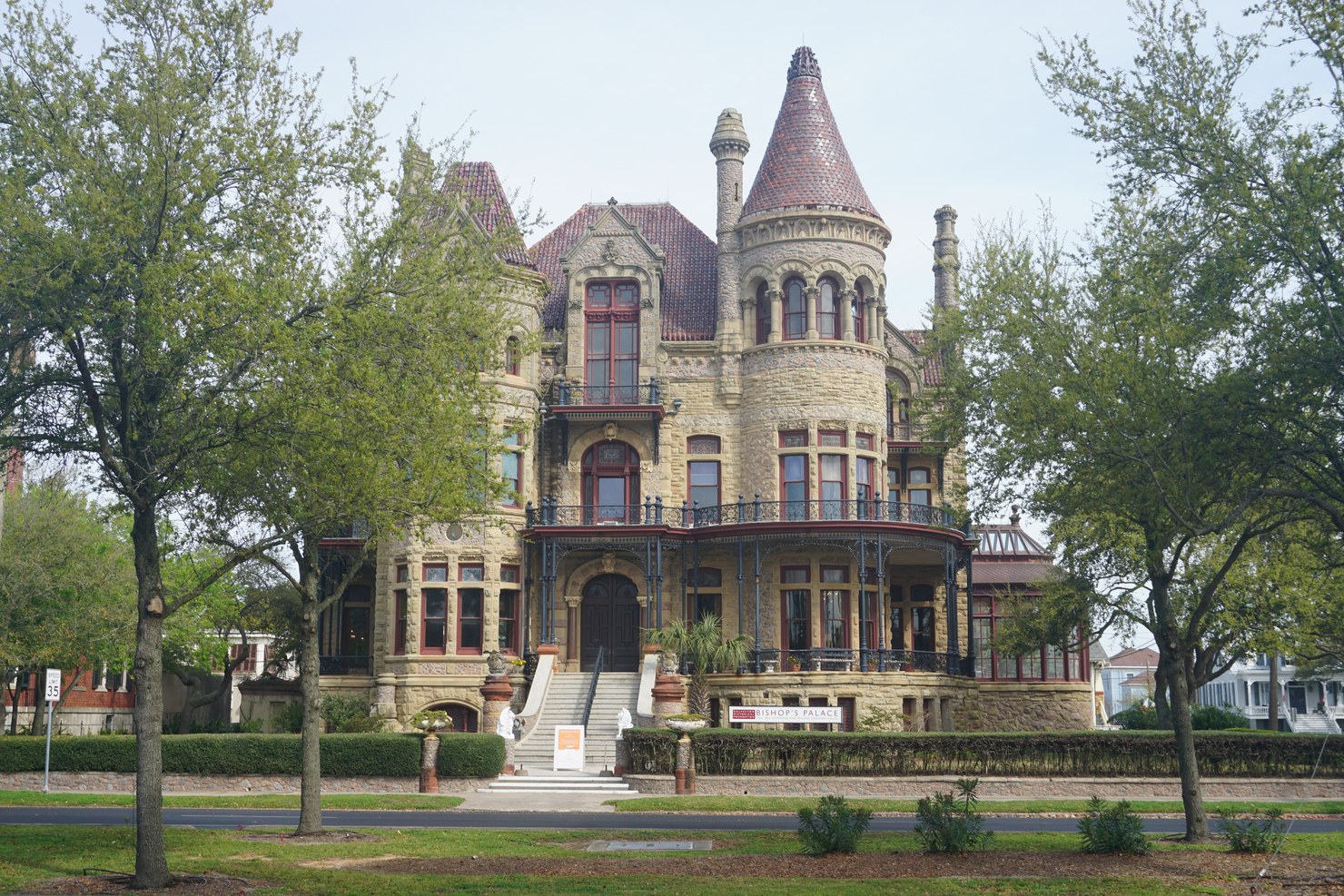 The Gresham House
Ashton Villa and Bettie Brown
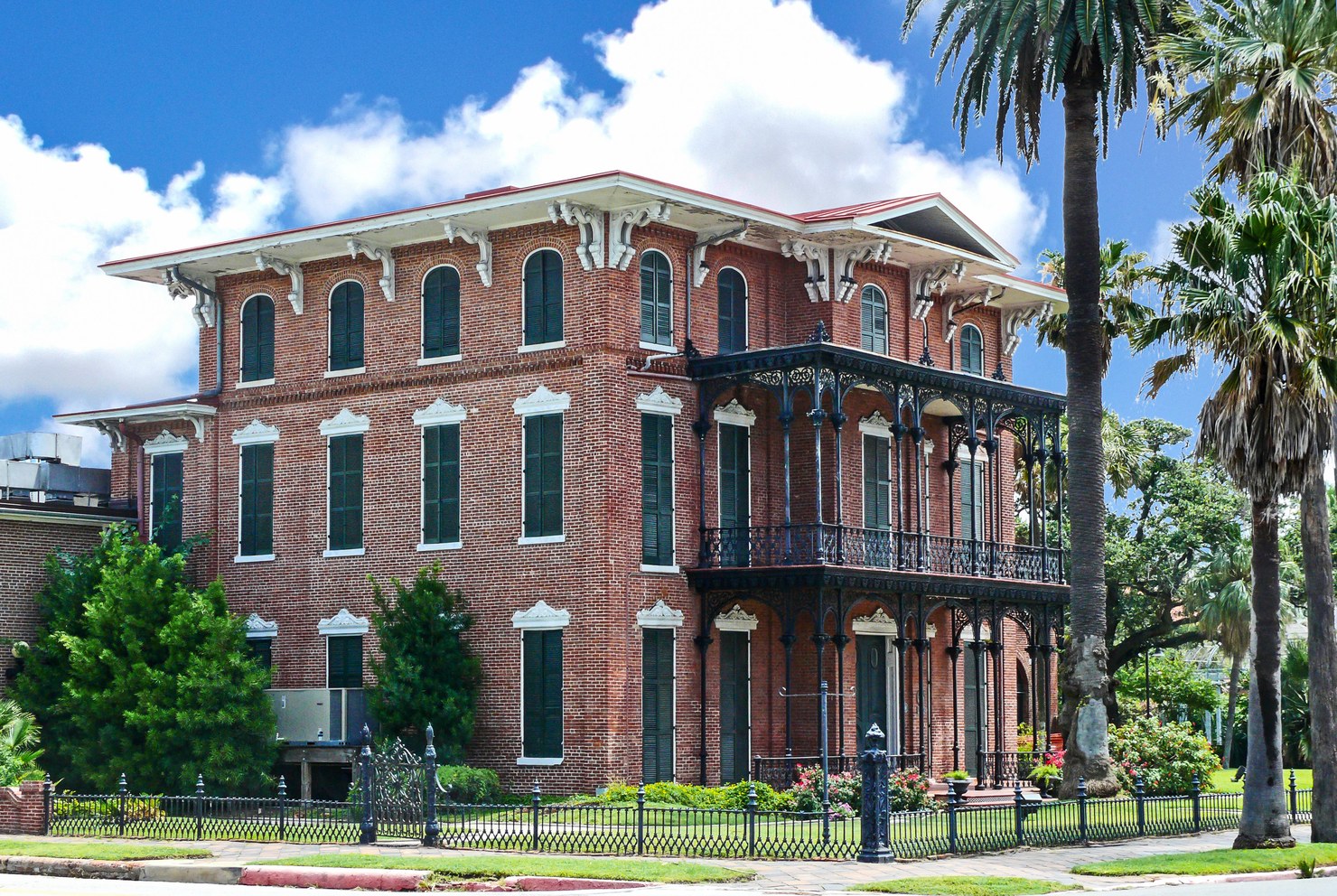
Ashton Villa rose in 1859 on Broadway, built by James Moreau Brown — banker, hardware magnate, one of the richest men in Texas — with brick walls thirteen inches thick. Those walls are why it is still standing: the villa took the 1900 storm on the chin, sheltered its family through the night, and came out the other side as one of the island's great survivors. The Galveston Historical Foundation reopened it in 1974 as a house museum, and it remains the grand doorway into the island's nineteenth century.
Brown's daughter Bettie is the bridge between the villa's history and its haunting, because Bettie Brown is entirely real — documented, painted, remembered, a formidable Galveston personality who traveled the world, shocked the drawing rooms, and came home to this house. The stories that she never left it are the island's most persistent: a figure in a turquoise evening gown, music from an empty room, the particular claim that she appears on the staircase and in the Gold Room. Legend — labeled as such. But notice what kind of legend it is: Galveston does not haunt its houses with strangers. It haunts them with the people who actually lived in them, which is why the stories hold their chill.
Bishop's Palace
Across Broadway stands the island's other great survivor: the Gresham House, known to everyone as Bishop's Palace. Congressman and railroad attorney Walter Gresham commissioned architect Nicholas Clayton to build it between 1887 and 1892 for roughly $250,000 — Victorian stone and stained glass executed at a level that still stops traffic. It weathered the storm that killed the city around it, later became the residence of Galveston's Catholic bishop, and takes its nickname from him.
The bride of the Galvez — a legend, labeled
The Hotel Galvez opened on June 10, 1911 — the "Queen of the Gulf," raised by public subscription after the storm as the island's declaration that it intended to be a resort again. It is the grand hotel of the Seawall, and it holds the island's most famous ghost: Audra, the so-called Lovelorn Bride of Room 501, said to have hanged herself in the west turret after word — false word — that her fiancé's ship had been lost, and to walk the fifth floor still.
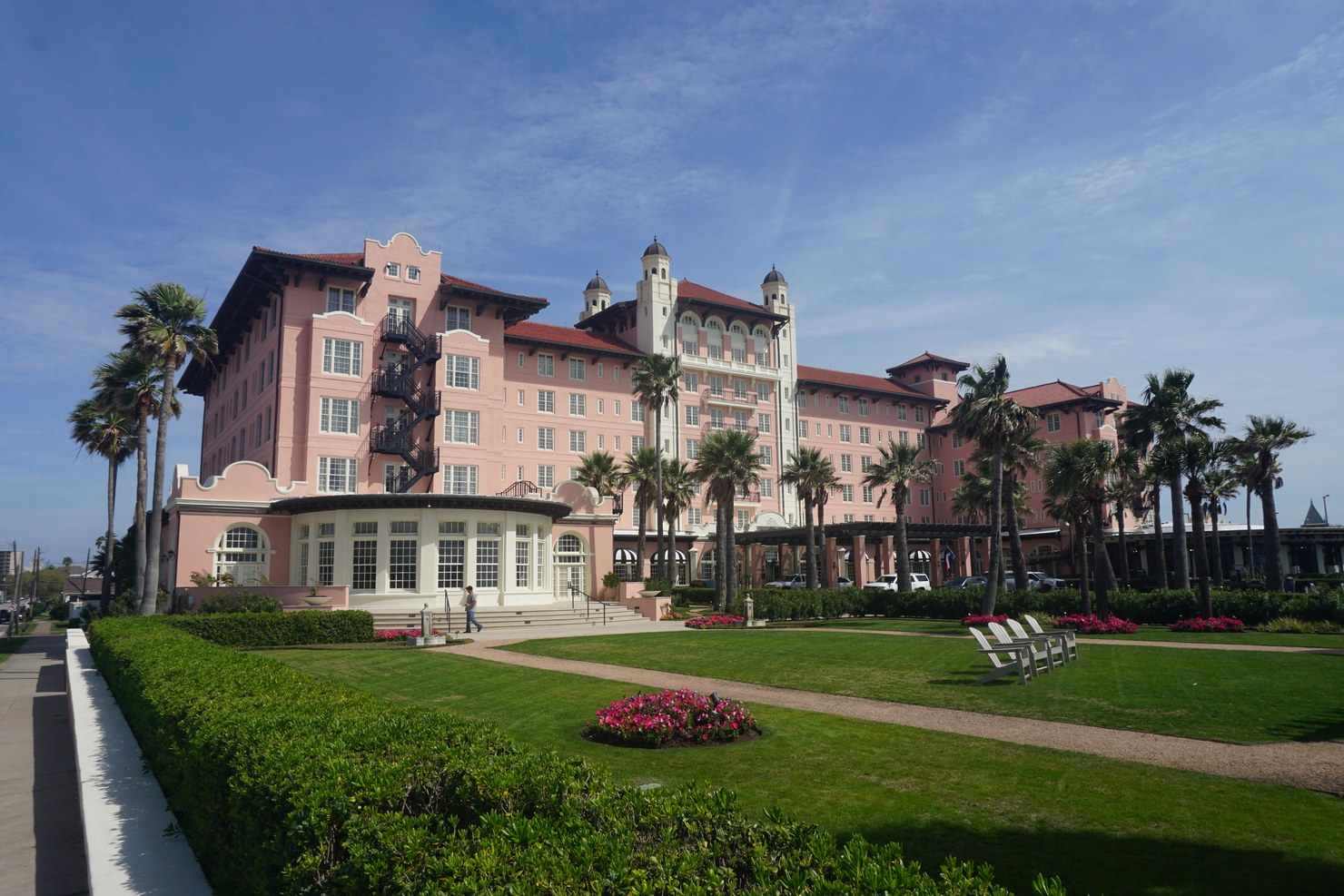 Queen of the Gulf
Here is the whole of the historical record for Audra: there isn't one. No documentation of the woman, the fiancé, or the death has ever been found, and the tale surfaces in the telling tradition rather than the archive. This magazine prints it anyway — as what it is, a legend, and a good one, attached to a real and glorious hotel. Galveston's true dead number in the thousands. Its legends can afford honest labels.
The through-line: history first, shtick last. Galveston's guides earn their praise in the telling of what actually happened here — and what actually happened here, on one September night in 1900 and in the stubborn century since, is stranger and sadder and more magnificent than anything a haunted house could build in a warehouse. Its strongest ghost stories begin in remembrance, not decoration.