



The Tremont House : Three Lives of a Galveston Landmark
Burned in 1865 and a refuge in the great storm of 1900, The Tremont House has been Galveston's grand Strand hotel three times over — from 1839, through the island's golden age, and since 1985, in the Blum Building on Ship's Mechanic Row.
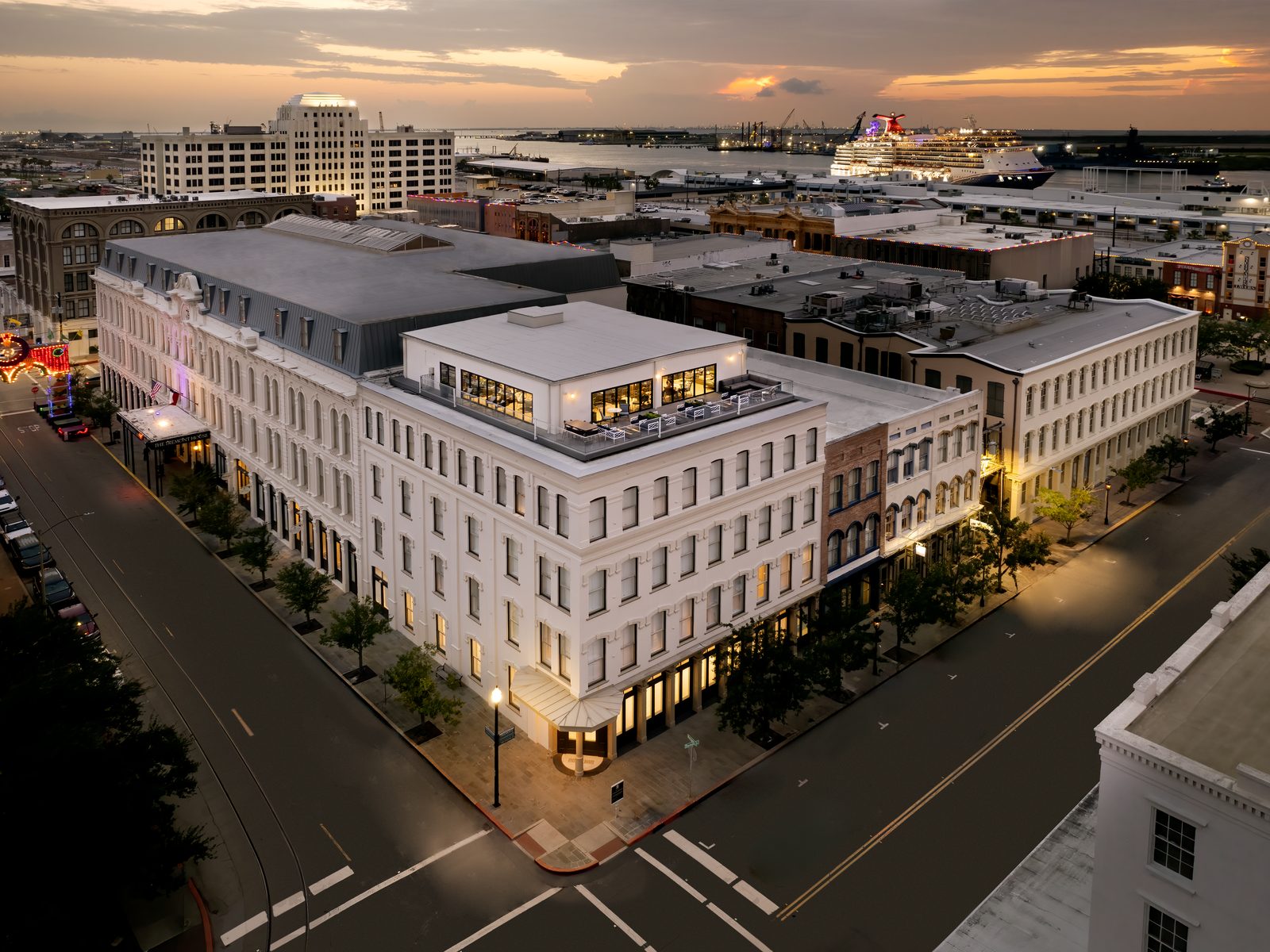
Stand on the roof at dusk, when the heat comes off the brick in waves and the harbor smells the way working harbors smell — diesel, brine, low tide, something frying down on the Strand. Below: iron fronts built when cotton was king. Beyond: the channel, the gulls, a cruise ship lighting up stem to stern like a small city that has decided to leave. The Tremont House has watched this arrangement since 1839. Three buildings. Three lives. One name. Fire took the first house. The second took in hundreds during the worst storm in American history, then faded into a long, slow goodbye. The third was a dry-goods warehouse that got a second act. Everything Galveston has been — port, palace, wreck, revival — is standing in this one building. And downstairs, the bar has the scars to prove it.
Three lives
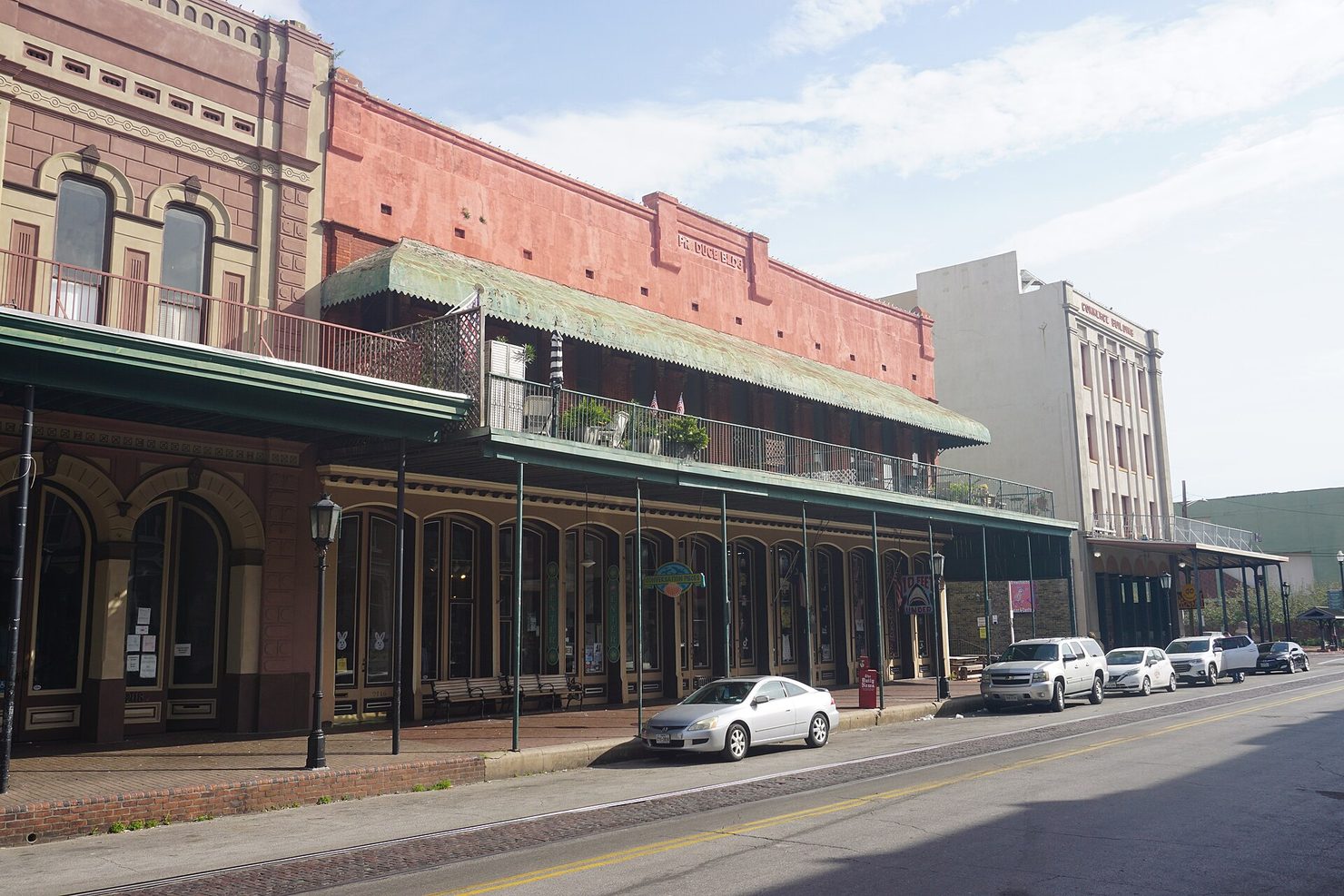 The Strand
The Tremont House starts in 1839, and it starts as itself — a hotel from its first day, the front parlor of Galveston — a young port city rich on cotton, fast becoming the busiest harbor in Texas. It opened on April 19, 1839, with a grand ball for the anniversary of San Jacinto, the battle that won Texas its independence: fifty dollars a ticket in Texas currency, twenty-five in gold. Twenty-two years later, to the day, Sam Houston stood on the north gallery and gave the last public address of his life — told the crowd secession would bring “fire and rivers of blood,” and was right about both. For twenty-six years the house did the work. Then, on June 21, 1865, with Confederate soldiers quartered inside it, the place burned to a shell. The shell stood there for five years. Ruins on the main street of a city that had just lost everything else, too.
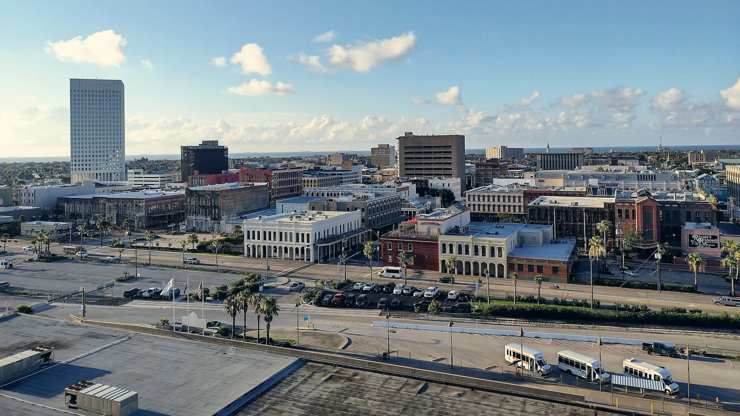 The harbor district
The island rebuilt it the way islands rebuild everything — half on credit and nerve. The money ran out at the second story. The second Tremont House opened anyway, unfinished, in February 1872, and spent the decade finishing itself around its guests: five stories, a mansard tower, an observatory at the highest point in the city. Nobody disputes what it became. Six presidents slept there. So did Buffalo Bill, Anna Pavlova, and Stephen Crane. Cotton money in the dining room, masts thick in the harbor — and from the observatory, in April 1879, the Galveston Daily News promised “the broad expanse of clean white houses, and wide sandy beaches.” The Wall Street of the Southwest had its grand hotel, and the grand hotel had the view.
Then the water came. On September 8, 1900, the Great Galveston Hurricane — still the deadliest natural disaster in American history — hit the island and killed by the thousand. The Tremont held — severely damaged, but standing, with hundreds of Galvestonians riding it out inside those walls. When Clara Barton came to run Red Cross relief, she stayed at the Tremont. What the water couldn't do in one night, time did over the next twenty-eight years: the trade drained away, newer hotels rose, the palace faded by degrees. It closed on November 1, 1928. Demolition started December 11. And then, for nearly sixty years, there was no Tremont House at all — just a name the island used to have.
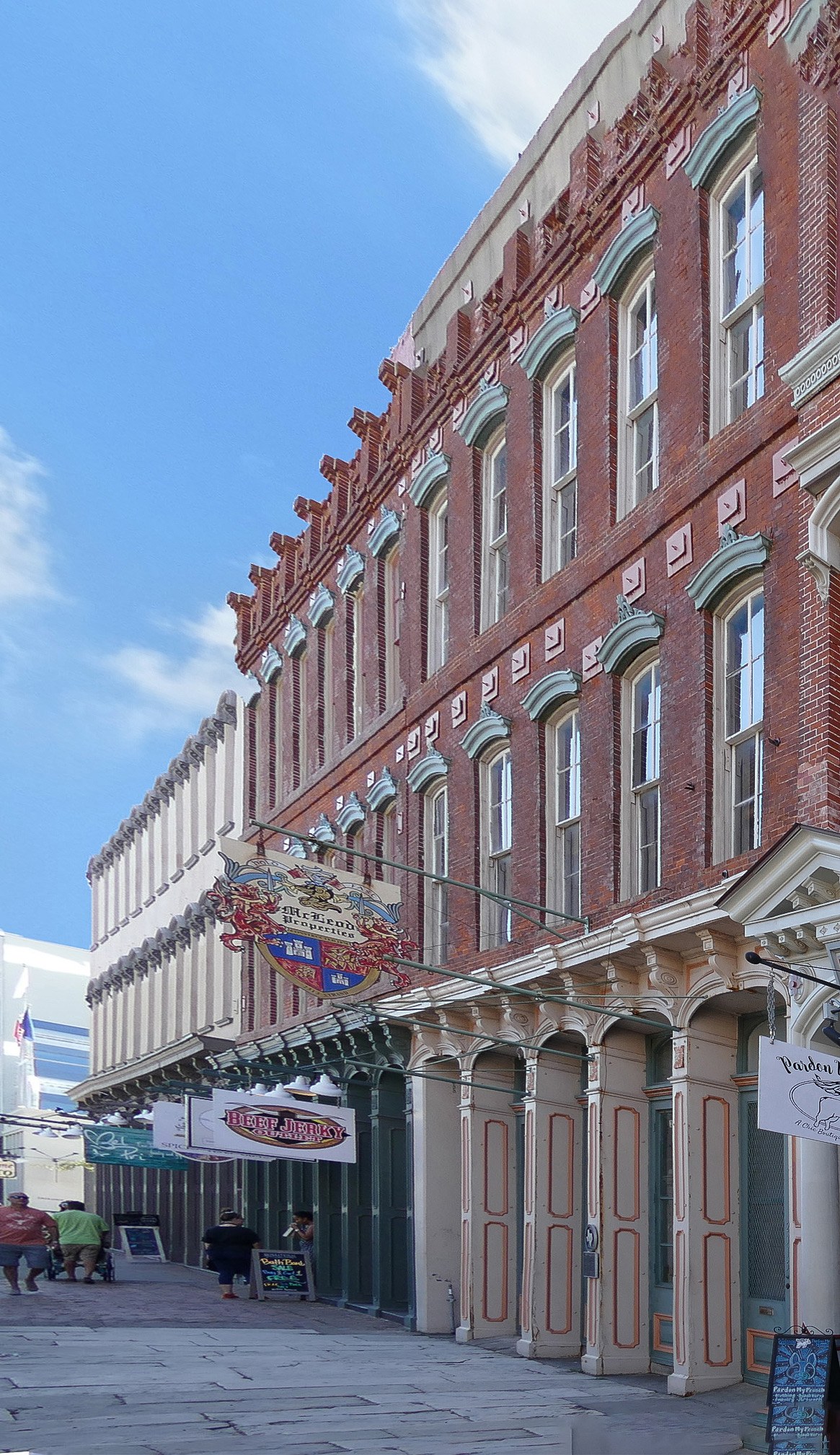 Iron fronts on the Strand
The name came back in a warehouse. The Leon & H. Blum Building on Ship's Mechanic Row was dry-goods muscle — built to store and sell, ceilings fourteen to sixteen feet, arched windows tall enough to light a storehouse floor. George and Cynthia Mitchell bought it in 1981 and spent four years turning a storehouse into a hotel. On February 16, 1985, the third Tremont House opened inside it with a gala Mardi Gras celebration, and Galveston had its grand address again. The bones never hid. They became the luxury: the height, the hardwood, the windows. It runs polished now — a Marriott Tribute Portfolio hotel — but the building keeps its warehouse soul, and the name over the door has been Galveston’s since 1839.
The Toujouse Bar
Natalie Frazier, corporate director of marketing for Harrell Hospitality Group, dates the Toujouse history to 1872. That is where the island's records begin, too: a young Frenchman named Henry Toujouse arrived in Galveston and went to work behind the bar of the Opera House Saloon, in the basement of the Tremont Opera House. In time, the saloon was his. And in 1894 he did the thing that defines him — he carried his bar — fourteen feet of hand-carved rosewood — across Tremont Street and set it up in First Henry's Café, in the Stag Hotel. The bar rode out the 1900 storm in the Stag, while the city drowned around it.
And if you find yourself at that bar, look closely at the carving. The wood gives up its strangest detail: a row of women’s faces that age as they go, young at one end, old at the other. Island lore says they are Sue Toujouse, Henry’s wife, carved across the length of a life. Nobody has ever proven it. Order the drink anyway, and decide for yourself.
Then it vanished. Decades passed without a trace — no photograph, no ledger line, nothing. In the Galveston Historical Foundation’s telling, it turned up in the 1960s, scarred and still pouring, in a saloon on Seventh Street. The Foundation took it in. In 1982, an agreement with George Mitchell brought it home to the Tremont name. It stands in the lobby today, on lease from the Foundation. Not behind glass. Not retired. Working — more than a hundred and thirty years after a Frenchman hauled it across the street, still under its maker's name.
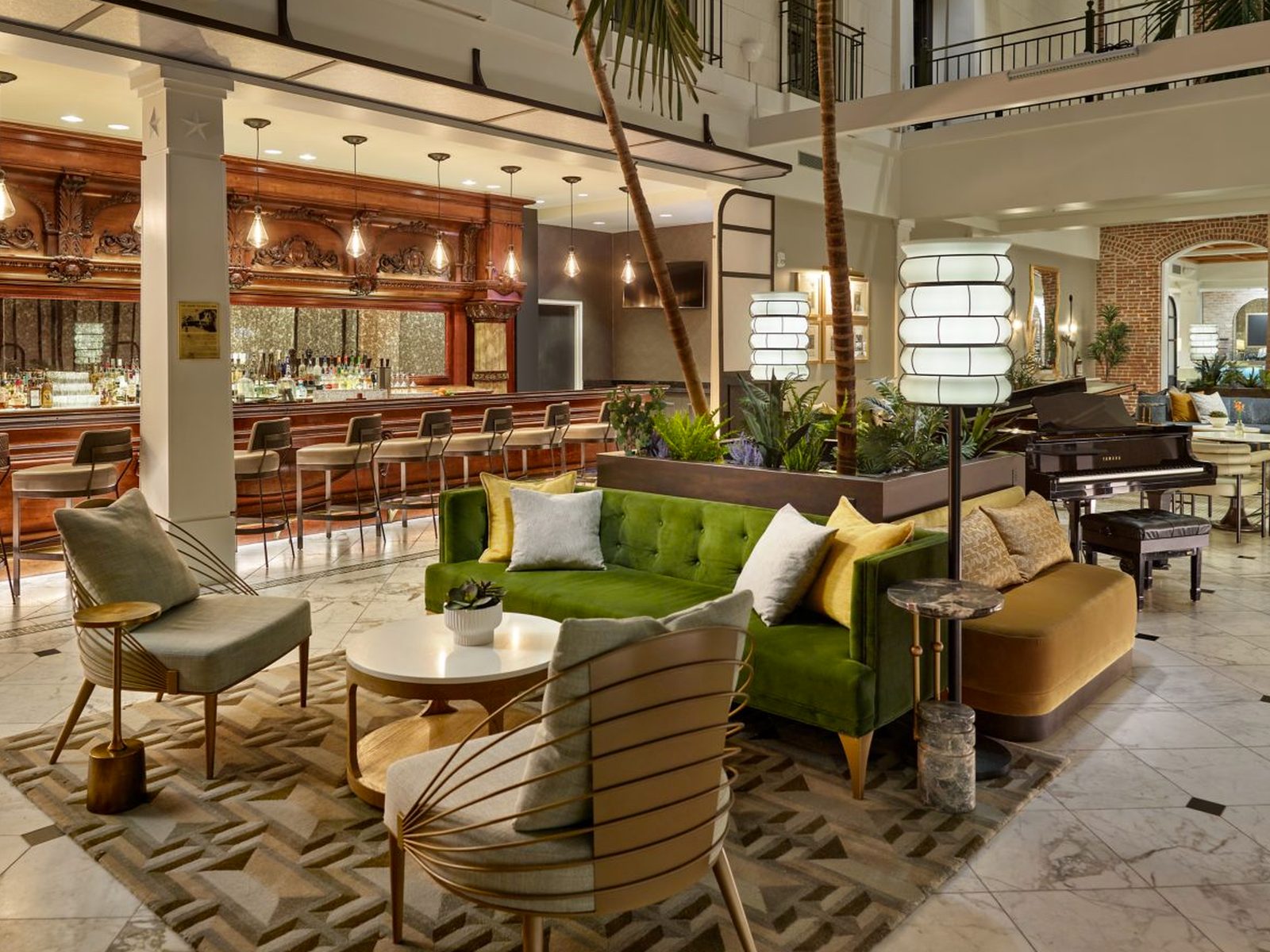 The Toujouse Bar
One hotel, three buildings
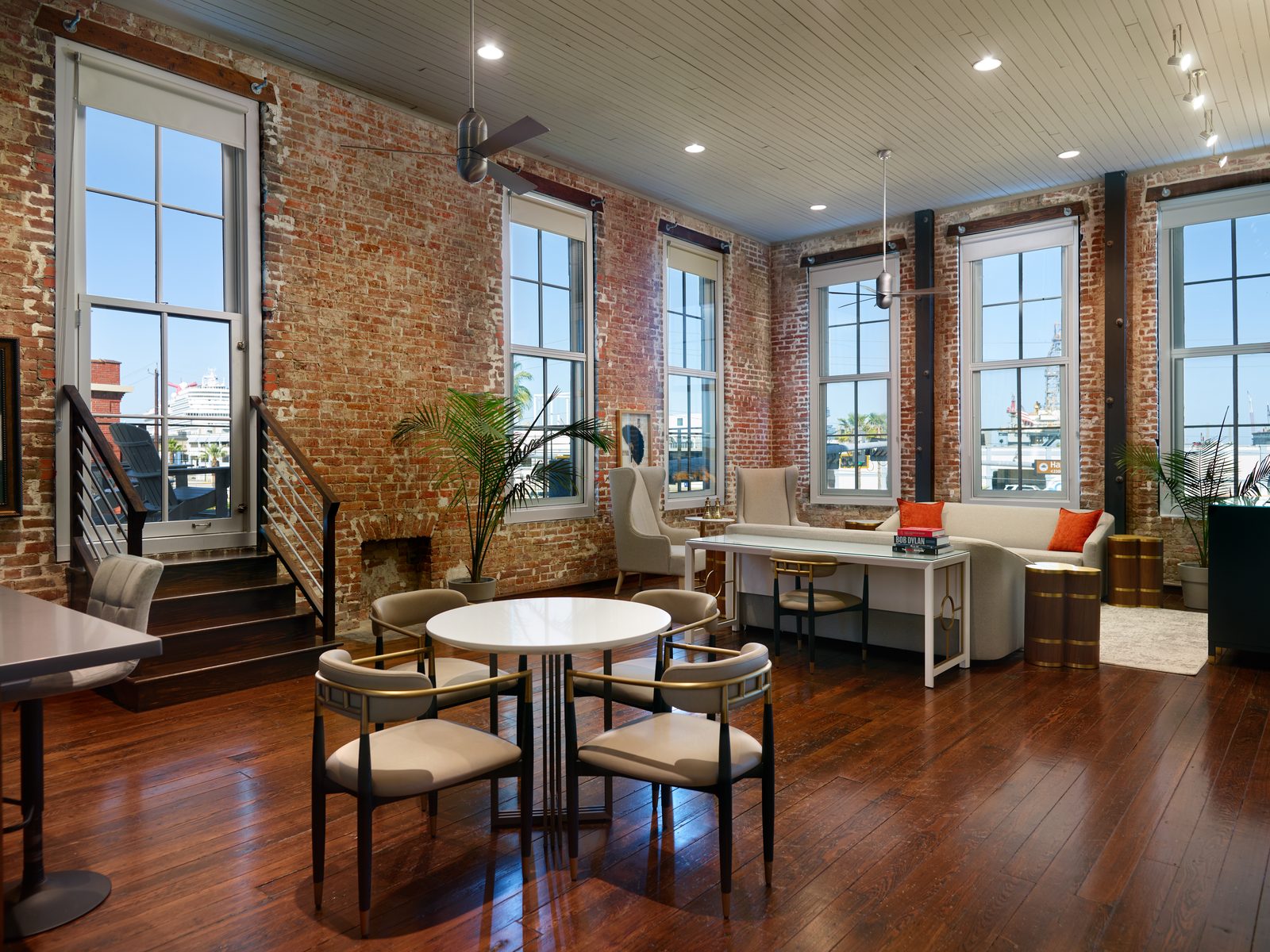 A loft suite
As Natalie Frazier explains, today's Tremont is not one building but three, run as a single hotel — full services, in-room dining, the works. The main house holds the lobby, the Toujouse, the rooftop, and the Mitchell Suites, apartment-style residences inside the Blum Building itself. Across the street, The Quarters keeps the ballroom and its own apartments. A block and a half off, Lofts by Tremont does apartment-style stays of its own, some with walk-out balconies. It is less a hotel than a small neighborhood with one name over it. The cruise terminal sits close; whether your ship fills your window depends on the room you draw.
Eat and drink where you sleep
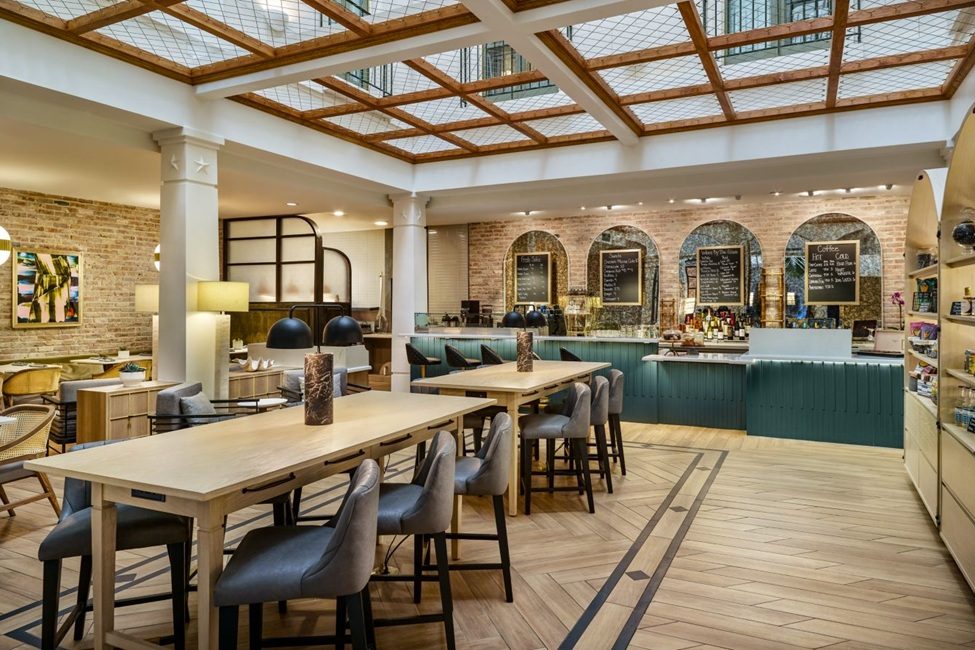 Blum & Co.
Stay here and the evening never has to leave the neighborhood. Blum & Co. works the old dry-goods floor — breakfast, lunch, dinner, urban in style, easy in manner, named for the building's first life. Above it, the Rooftop Bar: the Strand's rooftops in front of you, the ship channel beyond, the port going gold, then lit. Start downstairs, at the Toujouse, under a dead Frenchman's name. Finish on the roof. Whoever laid out this hotel's pleasures understood sequence.
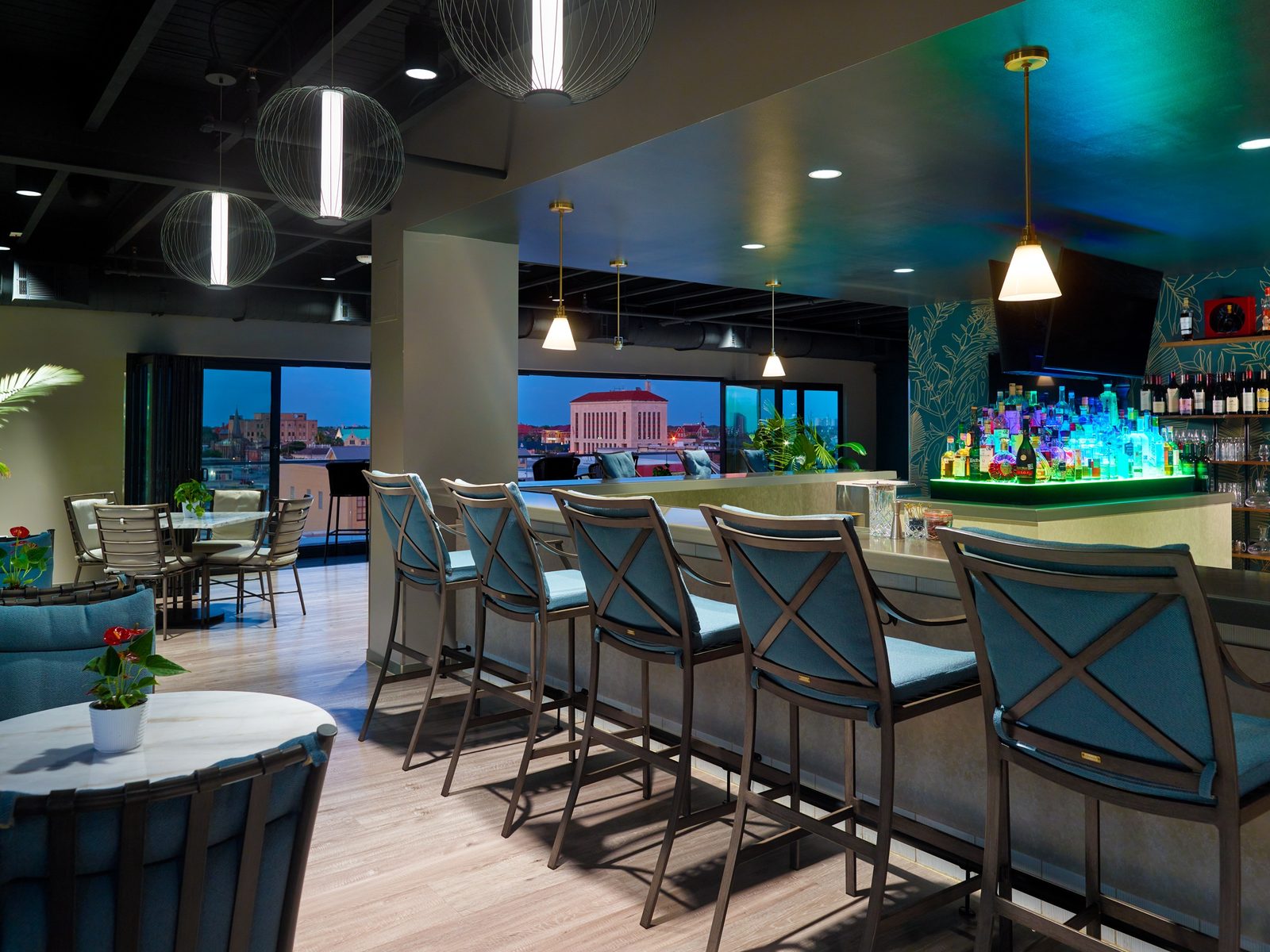 The Rooftop Bar
December belongs to Dickens
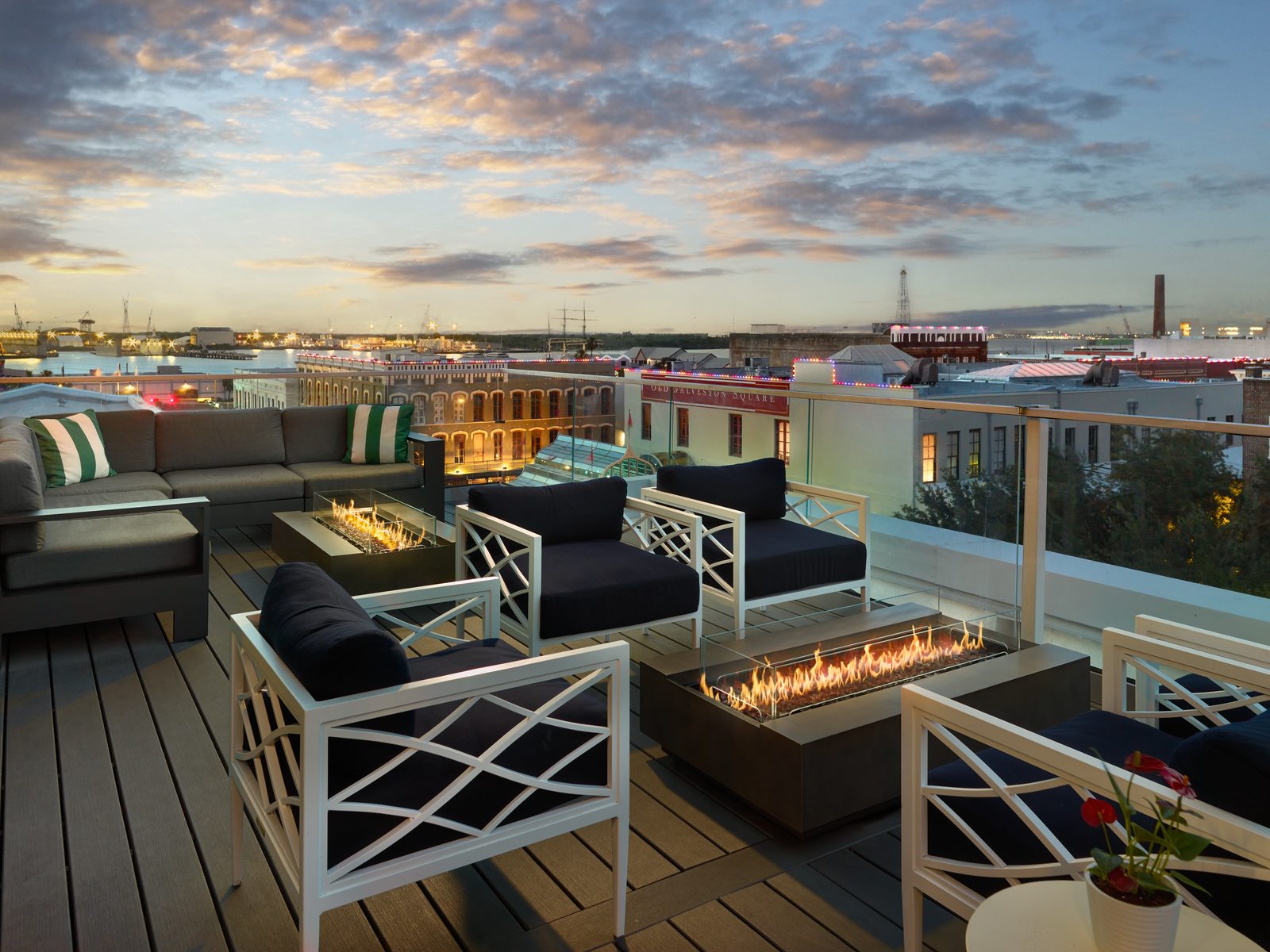 The Rooftop Bar at dusk
On December 4–6, 2026, the Galveston Historical Foundation brings the 53rd Dickens on The Strand to the streets around the Tremont, and for one weekend the nineteenth century takes the neighborhood back. Gaslight. Hoop skirts. Carolers, vendors, parades — rolling past iron fronts that were already old when the storm came. From the Tremont it is not an excursion; it starts at the front door. Day in the crowd, dinner at Blum & Co., and the night finished the modern way: rooftop fire pits, December air off the harbor, the port lit below. Festival and harbor, same short walk.
Park & Sail
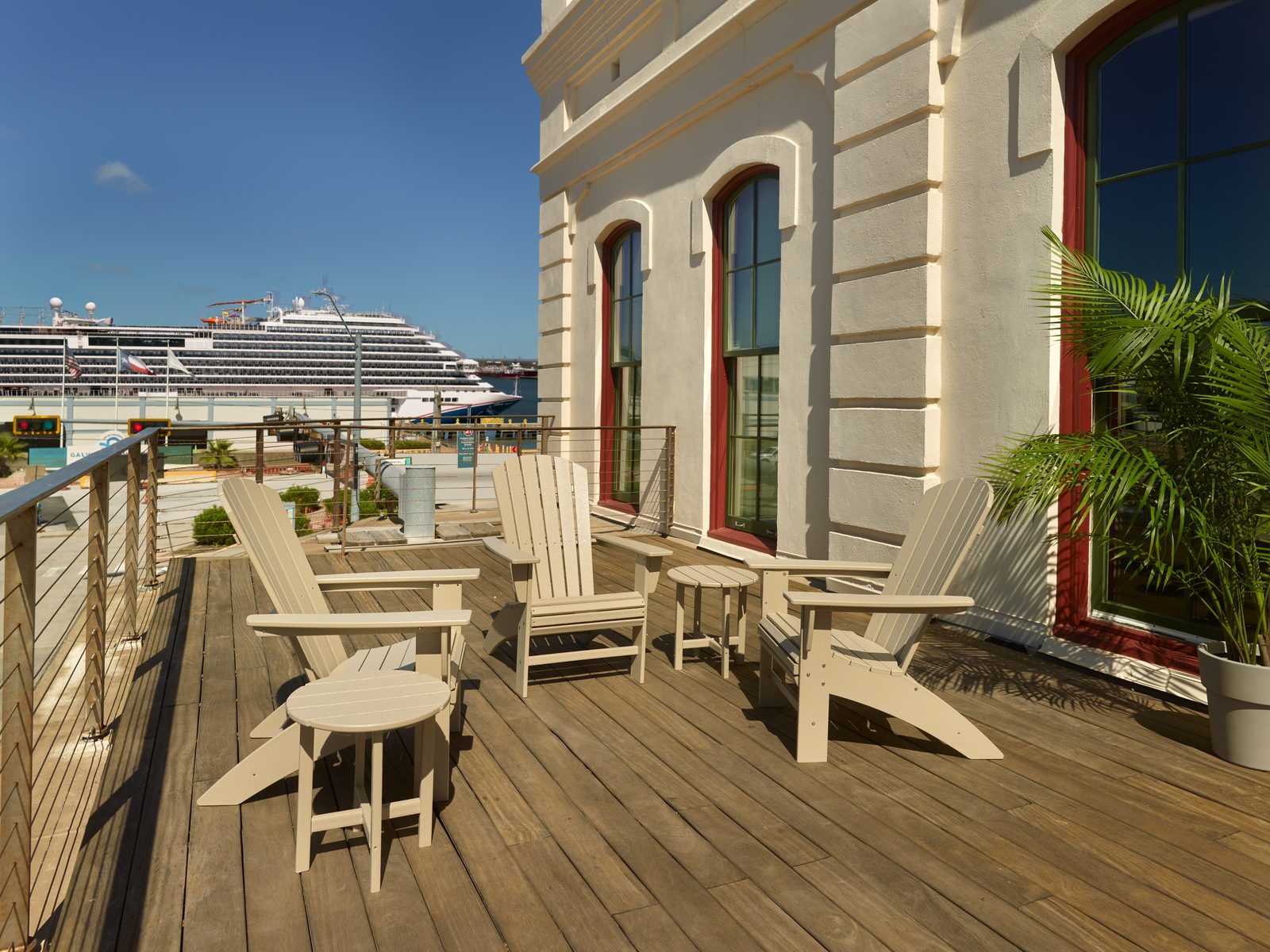 Your ship, waiting
For cruisers, the Tremont is the first night of the voyage. The hotel runs a Park & Sail for cruise guests: park at the hotel, ride the shuttle to the terminal, sail — and the car is there when the ship brings you home. Natalie Frazier, the hotel's corporate director of marketing, confirmed the current offer to Postcards in November 2026.
The buildings changed. The harbor kept working. The name outlasted both. And tonight it is all still under one name: the Strand going gold, a ship lit in the channel, and downstairs a bartender setting glasses on the Toujouse — Henry Toujouse's hand-carved bar, which came through the night Galveston drowned in 1900 and found its way home to the Tremont name. The name carries a storm record of its own: on the worst night in the island's history, hundreds of Galvestonians sheltered inside a Tremont House, and lived. So if you find yourself at the Tremont on a stormy day, take the hint they left behind. Sleep upstairs.
The Tremont House · 2300 Ship's Mechanic Row, Galveston. Three buildings under a name Galveston has kept since 1839: the Toujouse pouring in the lobby, the Rooftop over the harbor, Blum & Co. on the old dry-goods floor. Come before a cruise, come for Dickens, come for Galveston itself.